Kampa Lampa Glampground Turns De Beque Into West Slope Tourism Hub
Kampa Lampa glampground leverages proximity to Interstate 70 and the Colorado River to transform De Beque into a major West Slope tourism destination despite historic drought conditions.
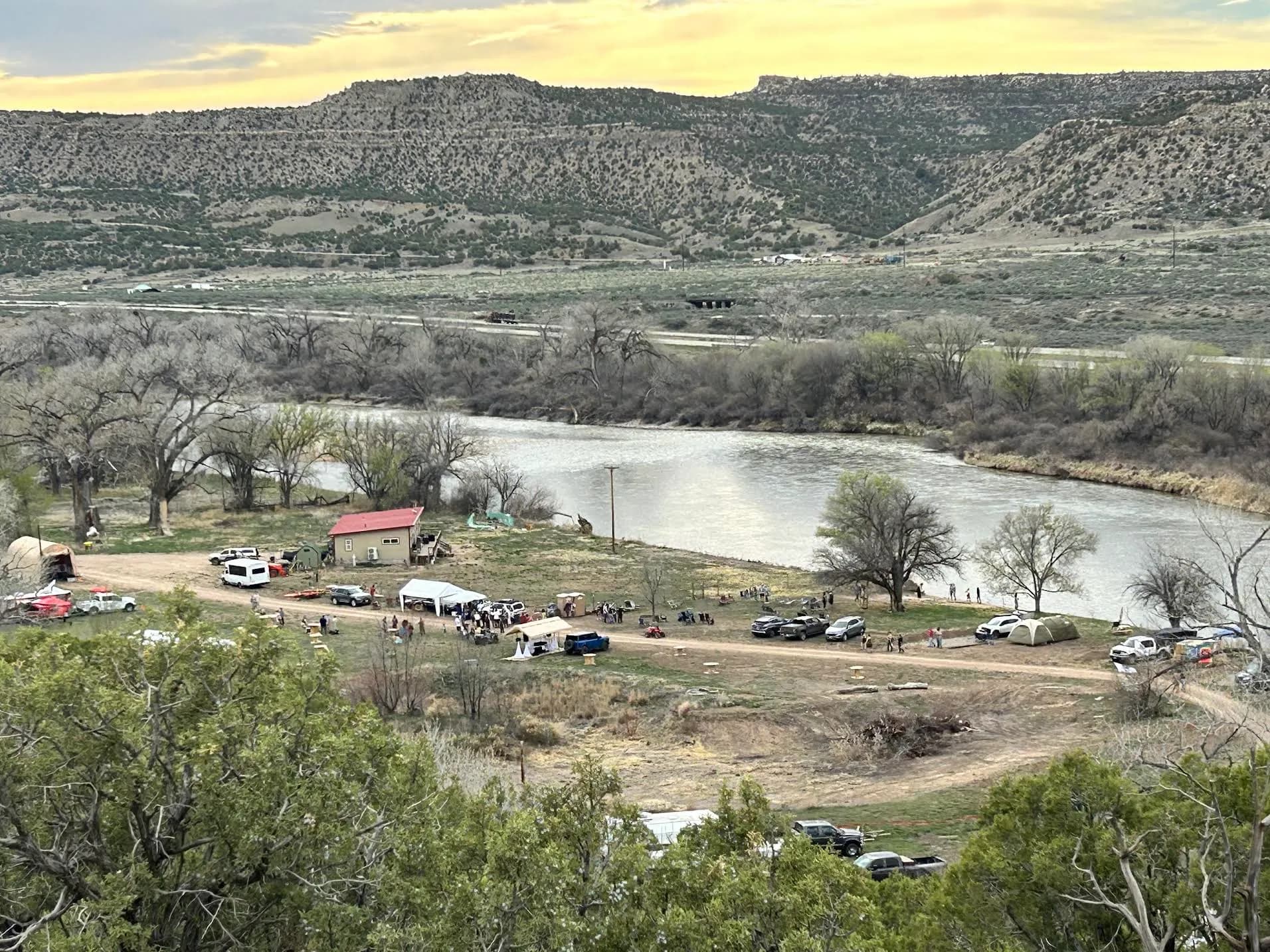
Grand Junction —The long black strip of pavement ripples just beyond the Colorado River, a heat-shimmer mirage that belies the constant, low-frequency rumble of massive trucks barreling down Interstate 70. It is a sound you feel in your chest before you hear it in your ears, a rhythmic thrumming that persists long after the sun dips below the Book Cliffs. If you are counting the semis, you will lose track by midnight. If you are trying to sleep, the owners, Kathy and John Haas, provide ear plugs. But if you are rafting the stretch from Pumphouse to Radium, or cutting through Ruby Horsethief Canyon, the train is your constant companion.
This is the reality of Kampa Lampa, a new glampground on the Colorado River that is betting big on a paradox: offering a serene, catered desert experience directly adjacent to the state’s busiest highway and its most historic drought.
While other outfitters brace for a low-water season that threatens to strand their boats on cracked mud, Kampa Lampa is positioning itself as a rare oasis. It opened in 2023, but the partnership between the Haases and Ken Murphy, founder of Adventure Outdoors and chair of the Colorado Tourism Board, solidified this year with a clear economic mission. They are trying to turn De Beque into what Fruita was two decades ago — a growing, map-worthy destination that pulls visitors out of the crowded corridors and into the red-dirt shores of the West Slope.
"You’re going to be dealing with the train running all night," Murphy says, inviting guests to set their expectations accordingly. "It’s about setting expectations."
The setup is deliberate. You don’t just pitch a tent here; you arrive in a yurt equipped with a queen-size bed, lights, a generator, a cooler, a cook kit, and Wi-Fi. Or, if you prefer the "Gilligan’s Island" approach, you claim a campsite and manage your own survival. The air blooms with the scent of sagebrush. The stars are sharp when the city lights fade. And the river, though lower than usual, still rolls past at a steady clip, offering a "true taste of desert boating" guided by Murphy’s crew.
But why here? Why now?
The answer lies in the economic lag of Parachute and De Beque compared to the more established tourist hubs further east. The region has struggled to capture the same volume of river tourism that defines other parts of the state. Murphy sees this glampground not just as a hospitality venture, but as an economic engine. By anchoring visitors in De Beque, the partnership hopes to beef up local development, bringing dollars into a community that has watched its neighbors thrive while it waited for its turn on the map.
There is a warmth to the idea of a catered dinner after a day on the water, a chef-style meal prepared from provided ingredients. It transforms a rugged, unpredictable activity into a managed experience. Yet, the contrast is stark. While the glampground offers comfort, the river itself is fighting a historic drought. The water levels are low, the mud is exposed, and the noise of I-70 is a permanent fixture. It is a gamble that visitors will trade the silence of the backcountry for the convenience of proximity to the interstate and the reliability of a guided float.
If you look closely, you can see the strategy. The Haases have developed this land near De Beque Canyon with the knowledge that the river’s accessibility is its greatest asset and its biggest vulnerability. The trucks will keep rolling. The river will keep flowing, however low. And the glampground will keep selling the dream of a desert escape that is, quite literally, just a few hundred yards from the roar of the highway.
The wind picks up, carrying the dust of the interstate and the faint, sweet smell of drying sage, settling over the yurts as the first of the night’s trucks passes by, its headlights cutting a brief, bright arc across the darkening canyon walls.
Keep up with Grand Junction
The day's Western Slope news, one email each morning. Free.
The fluorescent lights of the LIFT-UP food pantry in Parachute hum with a low, steady buzz

Club 20 Hosts 2026 Western Colorado Candidate Debates at Colorado Mesa University