Lake Mead Hits Historic Low, Pressuring Western Slope Water Supply
Lake Mead drops to its lowest level in nearly 90 years, intensifying drought stress on the Colorado River Basin. Federal officials adjust operations to protect water supplies for 40 million people across seven states.
Aspen —What does it mean for the folks on the Western Slope when the water holding tank for the entire Colorado River system hits a historic low?
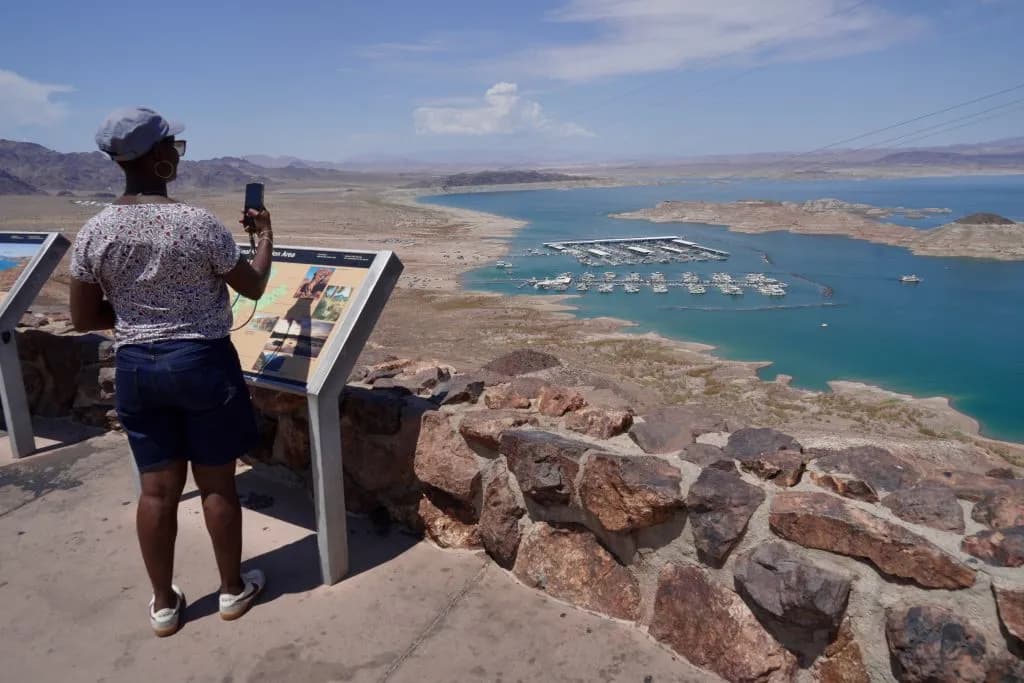
The short answer is that the pressure is already here, and it’s only getting worse. Lake Mead, the massive reservoir straddling the Arizona-Nevada border just outside Las Vegas, has slipped to 1,040.4 feet above sea level. That is the lowest it has been since it began filling nearly 90 years ago. It sits just below the previous record low set in July 2022, according to federal data from the U.S. Bureau of Reclamation.
This isn’t just a statistic for Nevada farmers or a curiosity for tourists boating on the artery. It is a direct reflection of the stress on the river that originates in our own Rocky Mountains.
“It’s extremely significant and extremely concerning,” J.B. Hamby told the Vail Daily. Hamby, chairman of the Colorado River Board of California and a board member of the Imperial Irrigation District, noted that three-quarters of the population in the basin’s watershed — some 30 million people — are directly impacted by the risks facing Lake Mead.
The problem starts at the source. The winter just passed saw the worst snowpack on record for the basin. That missing snow means less meltwater flowing down the main stem, putting immediate stress on farmers, industry, wildlife, and hydropower producers. It also puts pressure on the 40 million people across seven states, tribal nations, and Mexico who rely on the waterway.
Years of overuse, combined with rising temperatures and this year’s historic drought, have depleted both Lake Mead and Lake Powell, the country’s second-largest reservoir. Both are now at their lowest levels in nearly seven decades.
To keep the system from collapsing entirely, federal officials made a specific call this week. They announced they will not release cool water from Glen Canyon Dam in northern Arizona to protect the humpback chub, a native fish whose habitat sits between the two reservoirs. It’s a trade-off: prioritize the flow of water over the habitat of a single species to keep the broader grid and water supply intact.
The U.S. Bureau of Reclamation has also put out a short-term proposal to stave off an immediate crisis. The states, California, Colorado, Arizona, Nevada, New Mexico, Wyoming, and Utah - failed to reach a long-term agreement on how to share the dwindling resource, so the feds stepped in. The plan calls for the Lower Basin states to take less water. The Bureau said the plan is flexible, allowing for deeper cuts in drier times while giving states more time to collectively agree on managing the scarce resource.
The physical reality of the drop is already visible. In 2022, severe drought on Lake Mead exposed human remains and forced water officials in Las Vegas to pump from deeper within the reservoir to keep supplying millions of people. At Lake Powell, levels have dropped so much that it has become difficult to descend far enough to reach the water. Boat ramps have had to move, shut down, or be built anew.
The question for locals is whether this short-term federal proposal holds up as the snowpack continues to underperform, or if we are looking at a long-term contraction of the water we’ve come to rely on.
Hamby argues that the solution requires action from the users. He said it is vital for states that use the river’s water to reduce consumption. The math is simple: the artery is shrinking, the reservoirs are emptying, and the people who depend on it are still growing.
Keep up with Aspen
The day's Western Slope news, one email each morning. Free.