Latino Voters in Colorado's 8th District Abandon Trump Over Cost of Living
A new poll shows a sharp drop in Trump approval among Latino voters in Colorado's 8th District, with cost of living driving political defection ahead of the election.
The conventional wisdom on the Western Slope is that economic anxiety drives voters to the party promising stability. But in Colorado’s 8th Congressional District, a district where roughly 40% of the population is Hispanic, the data suggests something else entirely: the cost of living isn’t just a policy issue, it’s a political defection.
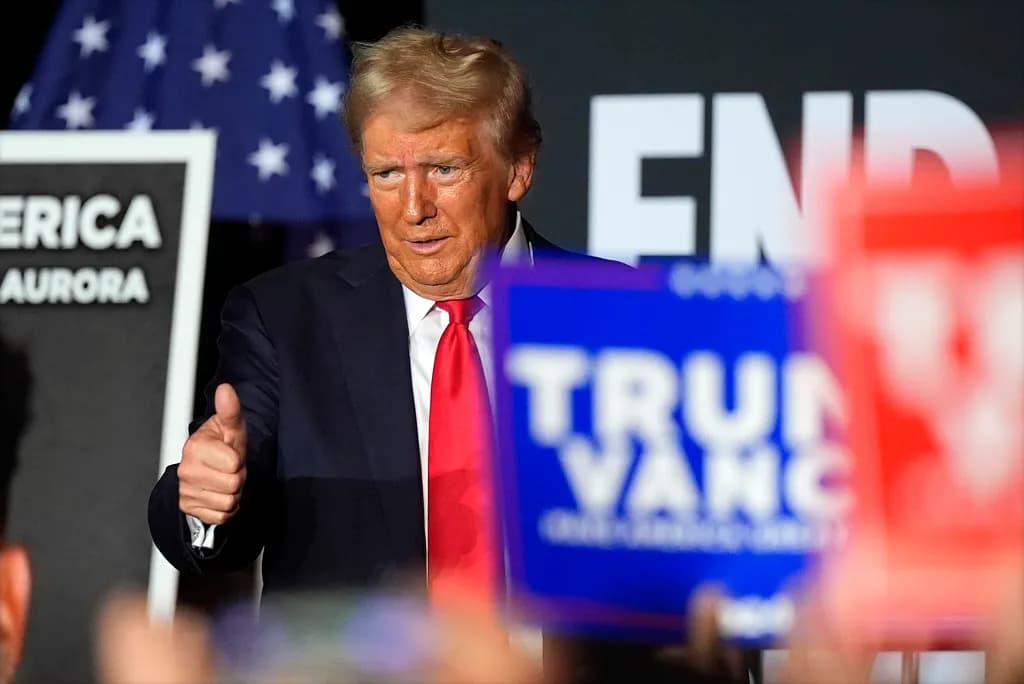
To hear them tell it, the shift is abrupt and measurable. A new poll from BSP Research, conducted between July 1 and Aug. 11 among 1,606 Latino registered voters across the state, shows a dramatic collapse in support for President Donald Trump among this demographic. In the district specifically, an oversample of 288 Latino voters revealed that 61% now disapprove of the president, while only 37% approve.
That is a stark reversal from the summer of 2025, when 48% disapproved and 54% approved. The job performance numbers tell an even starker story. Last year, a slight majority (54%) approved of Trump’s performance; this year, 70% disapprove.
Gabe Sanchez, a pollster for BSP Research, called the movement “a pretty significant shift” during a Tuesday news conference. He noted that when numbers jump more than 10% in a single year, the change is statistically significant. The poll was commissioned by the Colorado Latino Policy Agenda, an initiative backed by liberal-leaning Hispanic advocacy groups including Voces United de las Montañas and the Colorado Organization for Latino Opportunity and Reproductive Rights. While BSP Research typically works for Democrats, it is considered a reputable pollster that accurately measures voter opinions. The district results carry a margin of error of 5.8 percentage points, larger than the state-wide margin of 2.4 points due to the smaller sample size.
The question is whether this shift will translate into votes for Republican U.S. Rep. Gabe Evans, who is not shying away from his ties to the White House as he seeks reelection. In 2016, Trump won the district by two percentage points. In 2024, he again won by two points — a larger margin than Evans’, who unseated Democratic incumbent Yadira Caraveo by less than a percentage point. Biden won the district in 2020 by five points, according to an analysis by The Downballot.
Evans currently holds a narrow lead among Latino voters in the district. In this year’s poll, 42% approved of him, while 34% disapproved. A significant 24% said they didn’t know how they felt about him. That block of undecided voters is where the election will likely be decided.
The drivers of this political realignment are mundane and immediate. Latino voters in the 8th District identified the high cost of living, inflation, wages, and affordable housing as the top issues Congress must address. Forty-four percent said their financial situation had generally gotten worse in the past year. These are not abstract policy debates; they are monthly realities for families in towns like Greeley, Fort Lupton, and Loveland.
The poll was paid for by the Colorado Latino Policy Agenda. The results suggest that for a critical slice of the electorate in one of the most competitive districts in the country, the economic message is no longer landing with Republicans.
Gabe Sanchez offered a final assessment of what these numbers mean for the race, noting that such rapid movement in public opinion is rare.
“It’s a pretty significant shift,” Sanchez said.
Keep up with the Western Slope
The day's Western Slope news, one email each morning. Free.