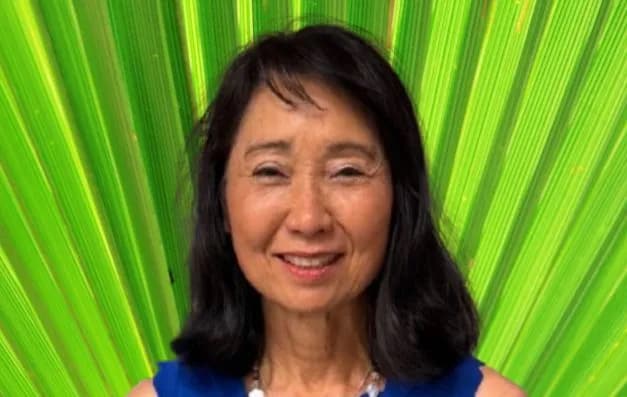
Mariko Tatsumotobringing Minamata Disease to Life in New Novel
Award-winning author Mariko Tatsumoto resurrects the Minamata Disease crisis in her new novel, blending legal precision with visceral storytelling to expose corporate greed and government cover-ups.
Colorado —The bus groans, gears grinding against the sweltering heat of a Japanese summer. Sweat glazes Nobuyuki’s face as he sways, laboring to stay upright, his body betraying him with every step. Yuki presses her hands against his back, steadying him as he staggers up the steps, Tomoko strapped to her own back. Across the aisle, passengers make disgusted faces. Some rise. They move farther away.
This is the visceral reality Mariko Tatsumoto invites readers into with Blossoms on a Poisoned Sea. It’s not just a historical novel; it’s a resurrection of memory for a tragedy that sits quietly in the back of our collective consciousness, overshadowed by the atomic bombings of Hiroshima and Nagasaki. Tatsumoto, an eight-time award-winning author and the first Asian woman admitted to the Colorado Bar, has turned the Minamata Disease crisis into a narrative engine. She doesn’t just tell you about the mercury poisoning; she makes you feel the weight of it.
The story follows Yuki and Kiyo as they fall in love in 1956, only to have their world shattered by corporate greed and government cover-ups. The Chisso Corporation, a major player in Japan’s industrial boom, dumped methylmercury into Minamata Bay. The fish ate it. The people ate the fish. And then the bodies began to twist.
Picture this: full-page, glossy photographs in Life Magazine. Atrophied limbs, grotesquely pretzeled. Rib cages jutting out. Bodies so malnourished they seemed impossible to keep alive. These weren’t abstract statistics. They were neighbors. They were family.
Tatsumoto recalls the moment the images hit her. In June 1972, her mother pointed to the open pages on the coffee table. "What I saw shook me," Tatsumoto writes. "Their cries were silent on the page, yet I heard them in my head."
The novel uses these real events to explore themes that feel uncomfortably familiar to locals watching their own water systems or industrial zones. It’s about social justice. It’s about ethics. It’s about what happens when a powerful company decides that profit outweighs the health of the people living in its shadow.
In Chapter 30, the excerpt we’re looking at, Yuki’s family heads to Minamata City to get her baby sister, Tomoko, certified for the disease. Certification means a tiny compensation from the government. Without it, they’re on the verge of starvation. The chapter highlights the disdain the afflicted face from those who are well. Yuki’s family is poor, struggling, and visibly sick. The rest of the town is busy. Salarymen check paper quality. Mechanics fix bicycle chains. Mothers buy tomatoes and cucumbers.
Yuki drinks in the scents of ripe strawberries and shiso. She notes tourists dining in restaurants, fans spinning above their modern hairstyles. Then, down an alley, she spots the main Chisso office. Barricaded. Behind a wrought-iron fence. The clackety-clack of the train sounds close. The company is there, watching, waiting, protected.
Tatsumoto doesn’t just write fiction. She coaches aspiring authors through her own writing handbook, bringing that same precision to her historical research. She became a novelist after a career in law, and you can feel the legal mind at work in the way she structures the conflict. The victims battle a powerful company and complicit authorities. They fight for justice. They persevere against all odds.
But here’s the thing though: this isn’t just about Japan in the 1950s. It’s about the cost of progress. It’s about who gets left behind when the lights go on in the rest of the city. For folks around here, watching the dust settle from our own industrial past, the story of Minamata isn’t a foreign horror movie. It’s a warning.
The excerpt ends with Yuki buying a peach. A single, bruised peach. She offers money to a sour-looking shop owner. It’s a small moment. A human moment. But it’s also a moment of survival. In a world where your body can fail you without warning, buying fruit is an act of defiance. It’s a claim to life.
Tatsumoto’s novel, an Honorable Mention for the Freeman Book Awards and a Colorado Authors League Award finalist, unravels this devastation. It’s a story of hope, yes, but it’s hope earned through pain. The sea was once clear blue. Now it’s opaque, gray, and lifeless. But the blossoms still try to grow.
Keep up with Colorado
The day's Western Slope news, one email each morning. Free.
Aspen's ACES Returns Annual Harvest Party to Rock Bottom Ranch
Glenwood Ghostwalk Brings Frontier History to Life in Linwood Cemetery
Georgie White’s Wild Legacy Challenges Outdoor Superwoman Myth
Federal Report Sets 200,000 Acre-Foot Water Conservation Target for Upper Basin
Colorado Parks and Wildlife Deploys Precision Drones for Weed Control