Aspen’s 1884 Easter Services Cost $25 to Sit in a Chair
Explore how Aspen's 1884 Easter services required a $25 donation just to secure a seat, contrasting the town's early religious struggles with Leadville's established infrastructure.
Aspen —“John Lemont rode down the mountain 600 feet on a snow slide, and received painful injuries, is able to walk about again.”
That’s the lead from the first recorded mention of Easter services in Aspen, buried in the April 1882 edition of The Aspen Times. It wasn’t a sermon. It was a weather report with a broken bone attached.
There was no church building yet. Just two gatherings. An 11 a.m. service focused on “The Resurrection” and an evening slot for the Sunday School children. The paper promised “appropriate Easter music” at both. We can assume that music didn’t include the heavy bass lines of modern worship bands. It likely involved a piano and a few people who knew how to hold a tune without cracking.
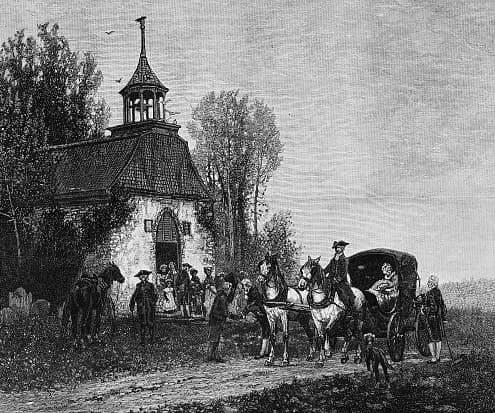
Fast forward to 1884. The Congregational Church had finally been built. It had been upgraded over the winter with actual furniture. Rows of chairs were shoved into the aisles to squeeze in the Easter crowd. The paper billed it as the “most interesting church service ever held in Aspen.”
The lineup was serious business. Mrs. Parry opened with an organ piece. The congregation sang “All hail the power of Jesus’s Name.” There was a choir anthem, solo singing, scripted lessons, and prayer. They closed with “Rock of Ages.” Floral decorations were added. It was the full package.
But here’s the kicker: it cost money.
To cover the remodeling costs, congregants were asked to chip in to a special fund on Easter. They needed to raise the balance of what hadn’t been paid yet. The suggested amount was $25. For context, that’s roughly $600 in today’s dollars. In 1884, that was a large sum. It wasn’t just a donation; it was a bill. If you didn’t pay, you might not get the best seat.
Compare that to Leadville. Aspen was way behind. In 1882, Leadville offered ten different religious options: Colored Baptist Church, First Spiritualistic Society, St. Luke’s AME Church, YMCA services, St. George’s, Church of Sacred Heart, First Baptist, Congregational, First M.E., and First Presbyterian. They had options. Aspen had two services and a snow slide injury.
Leadville was already commercializing the holiday. E. Besly and Company, a stationary store, advertised Easter cards two months in advance. The Viena Café offered “sweet little Easter bouquets” to diners on Easter Monday. The Pioneer saloon sold egg nog, sherry, and egg drinks on Easter Sunday. Because nothing says spiritual renewal like a stiff drink on a holy day.
Aspen was still figuring out if it was a mining town or a religious community. The paper noted that Good Friday and Easter Sunday were considered lucky days for changing children’s caps. Superstition over theology. Practical over pious.
The contrast is stark. Leadville had a booming population, established infrastructure, and a mix of faith and leisure. Aspen was still building its first church, relying on snow slides for transportation, and asking locals to pay $25 just to sit in a chair that might not be bolted down.
It’s a reminder that even in the early days, locals cared about their property values, their social standing, and whether they could get a decent drink after the service. The religious aspect was there, but so was the hustle. The $25 fund wasn’t just for God. It was for the building. And in a town where the weather dictates everything, a solid building is worth every penny.
The lesson from 1884 isn’t about faith. It’s about overhead. You build the church, you buy the chairs, you pay the organist. Then you ask the neighbors to cover the tab. It’s the same model we use today for every new development project that hits the Western Slope. You promise a cultural upgrade. You ask for the cash. And you hope the snow doesn’t slide down on your head before the ribbon cutting.
Keep up with Aspen
The day's Western Slope news, one email each morning. Free.
Aspen's ACES Returns Annual Harvest Party to Rock Bottom Ranch
Glenwood Ghostwalk Brings Frontier History to Life in Linwood Cemetery