Pitkin County Commission Rejects Phillips Mobile Home Park Expansion
The Pitkin County Planning and Zoning Commission ruled that the proposed expansion of Phillips Mobile Home Park is nonconforming with the Woody Creek Master Plan, blocking 40 new units due to location and transit issues.
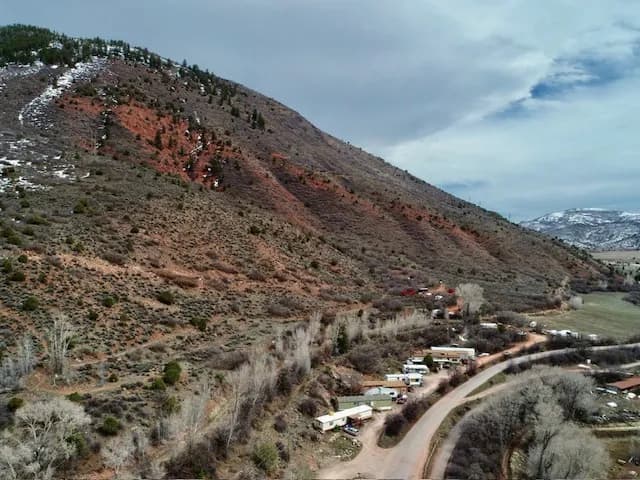
Gunnison —The gravel crunches under tires on a stretch of road where the Aspen skyline feels like a distant rumor and the only traffic is a slow-moving truck hauling gravel or a cyclist fighting the uphill grade toward Woody Creek. It’s quiet here. It’s remote. And for the folks living in the Phillips Mobile Home Park, it’s home.
But for the county planners, this patch of land just outside the urban growth boundary is a bureaucratic headache.
Pitkin County Planning and Zoning Commission doubled down on its assessment this week, ruling that the proposed Phillips Mobile Home Park expansion is “nonconforming” with the local Woody Creek Master Plan. It’s the same conclusion they reached in April, just delayed until they could argue about which 1980s or 1990s document actually holds the most sway over this specific slice of the valley.
Let’s look at the numbers. The county bought the land in 2018 to stop the existing housing from vanishing. Now, they want to build more. The plan calls for roughly 70 total units in the Phillips area, adding about 40 new ones to the existing supply. Kevin Warner, Pitkin County’s Construction & Assets manager, says this isn’t just about shelter. It’s about offsetting the cost of updates to surrounding water and waste infrastructure. You build units, you get revenue, you fix the pipes. Simple economics, if the zoning allows it.
It doesn’t. Not entirely.
The commission’s decision hinges on a specific legal definition: “nonconforming.” This isn’t just a preference; it’s a status. The Woody Creek Master Plan, updated in 2016, governs this area from Lower River Road up to Brush Creek. The county argued that this plan supersedes the older Down Valley Comprehensive Plan from 1987. Nicole Rebeck-Stout, deputy director of Community Development, made the case clear. If the project doesn’t fit the Woody Creek plan, it’s nonconforming. Period.
And where does it fail? Two main issues. First, it sits outside the designated “urban growth boundaries.” That’s a fancy way of saying the county didn’t plan for dense development here. Second, it lacks support from the Roaring Fork Transportation Authority’s existing public bus routes. If you’re building 40 new units, you need a way for people to get to work without every single neighbor driving a car. The current infrastructure doesn’t quite cover it.
The debate wasn’t just about maps, though. It was about which map matters. Commissioners spent time debating whether the Down Valley plan should still count. The answer was a firm no. The Woody Creek plan is the boss here. The specific passages cited by the commission pointed to “growth centers” as the only viable spots for this kind of density. Phillips isn’t a growth center. It’s a mobile home park on the edge of town.
So, what does this mean for the neighbors? It means the status quo holds. The county keeps its role as landlord. The existing units stay. But the push for 40 new affordable units stalls until the county can either change the rules or find a way to justify the exception.
For context, Pitkin County is desperate for housing. They bought this land to preserve it. They want to expand it to fix the water system. But the zoning says “no.” It’s a classic Western Slope standoff: we need housing, we need infrastructure, but we don’t want the density or the traffic that comes with it unless we can fit it into a box drawn in 1991.
The bottom line? The Phillips site stays as it is. The 40 new units are off the table for now. Locals keep driving on the same roads, and the county keeps paying for infrastructure upgrades without the new tax base those units would have provided. It’s not a disaster, but it’s not a solution either. It’s just another delay in a county that’s been running out of space for decades.
Keep up with Gunnison
The day's Western Slope news, one email each morning. Free.