Colorado Doubles Wolf Range Riders to Keep Livestock Producers on Land
Colorado doubles its wolf range rider force to 15 with five-year contracts, funded by the 'Born to be Wild' license plate, aiming to retain livestock producers by proactively managing wolf conflicts.
Steamboat Springs —Colorado’s wolf management strategy just got a budget boost and a personnel overhaul. The state is doubling its range rider force to 15, expanding coverage, and locking in five-year contracts. The goal is simple: keep livestock producers on the land.
It’s not just about counting wolves. It’s about keeping the people who feed the state from packing it up.
Rae Nickerson, Colorado Parks and Wildlife’s wolf damage and conflict minimization manager, put it plainly. “Keeping livestock producers on the landscape is the goal,” she said. She’s looking five years down the road. She wants to ensure that wolves don’t become the final straw for ranchers already juggling drought, market shifts, and labor shortages.
The program launched in spring 2025. It was a rough start. Of the 11 riders hired, only eight made it through the full five-month season. That’s a 27 percent attrition rate. Not exactly a model of stability.
This year, the state is betting on permanence. Five-year contracts. Double the riders. New hires in the southwest. Returning faces in the north. The funding comes from the “Born to be Wild” wolf license plate. Locals have seen that plate. They know it’s a dedicated revenue stream, not general fund filler.
Nickerson isn’t new to the fight. She’s finishing her Ph.D. at Utah State University, and her dissertation is on the effectiveness of range riding. She’s spent years in Washington, Arizona, and New Mexico. She knows what works. She knows what doesn’t.
The training in Grand Junction wasn’t a lecture. It was a field manual.
“Be curious,” the instructors told the riders. “Go out every day and earn trust.”
The advice was tactical. Watch the birds. Persistence beats intensity when hazing wolves. Don’t panic. Take a deep breath. Stay safe. Keep predators uncomfortable. Livestock comes first. Tell the truth. Don’t think like a human. Learn patterns.
It’s a shift from reactive killing to proactive presence.
Emma Baker, a range rider stationed in Eagle County, says the work is personal. “Everybody is doing it because they’re passionate about it,” she said. “We’re doing it because we want to help and make an impact.”
But passion doesn’t pay for gear.
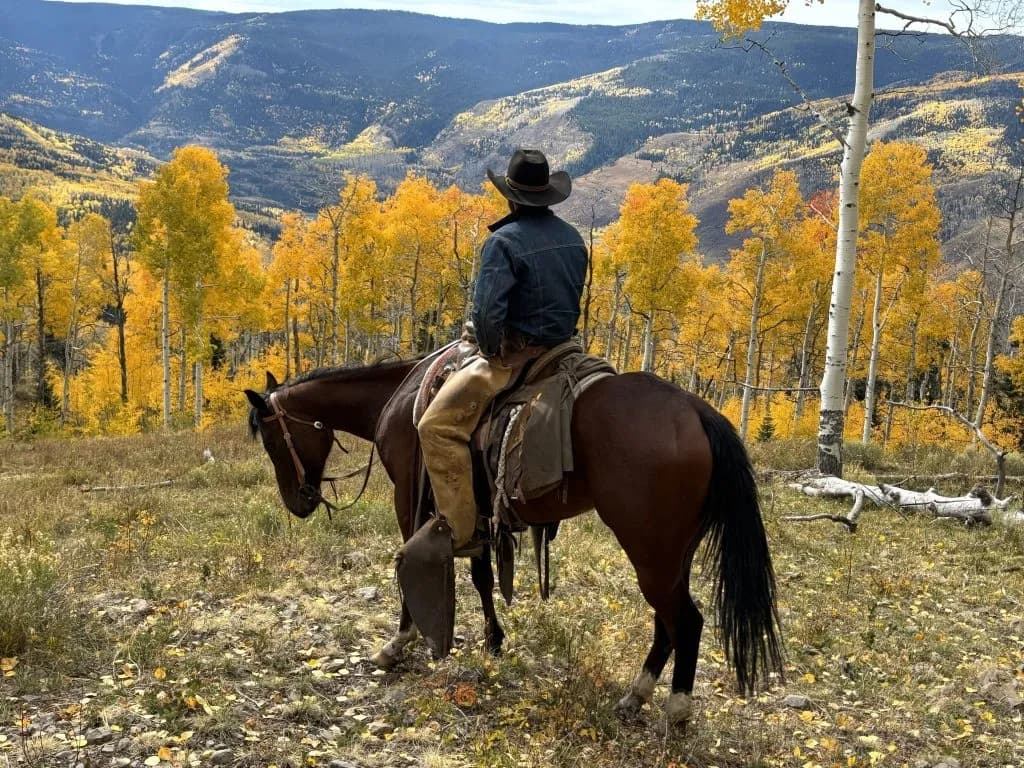
The state provides Garmin InReaches, five game cameras, and a work phone. That’s it. The riders cover the rest. They provide their own horses or ATVs. They cover the upfront costs of equipment and maintenance. It’s a high barrier to entry. Only the dedicated stay.
The Colorado Department of Agriculture is also in the mix. Two staff range riders — one in the northwest, one in the southwest — support the program. It’s a hybrid model. State agency oversight. Local execution.
The program is primarily funded by the wolf license plate. That means the people buying the plates are footing the bill for the protection. It’s a direct feedback loop. You want wolves? You pay for the riders who manage them.
The short version: The state is trying to professionalize wolf conflict. It’s moving away from ad-hoc responses toward structured, contracted management. It’s betting that if you pay people to be out there, day in and day out, the wolves learn to avoid the cattle. And the cattle stay safe.
Nickerson’s track record suggests she knows how to measure success. It’s not just wolf kills. It’s producer retention. If the ranchers leave, the program fails. If the wolves take over, the program fails.
The riders are out there. They’re on the horses. They’re watching the birds. And they’re waiting for the wolves to make a mistake.
The question isn’t whether it will work. The question is whether the budget holds. And whether the riders can afford to keep showing up.
Keep up with Steamboat Springs
The day's Western Slope news, one email each morning. Free.