Lake Powell Hits Lowest Inflow Since 1963 as Heat Melts Snowpack
Lake Powell faces its lowest inflow since 1963, totaling 800,000 acre-feet, as extreme heat accelerates snowmelt in the Colorado River headwaters, critically impacting flows near Glenwood Springs and Eagle.
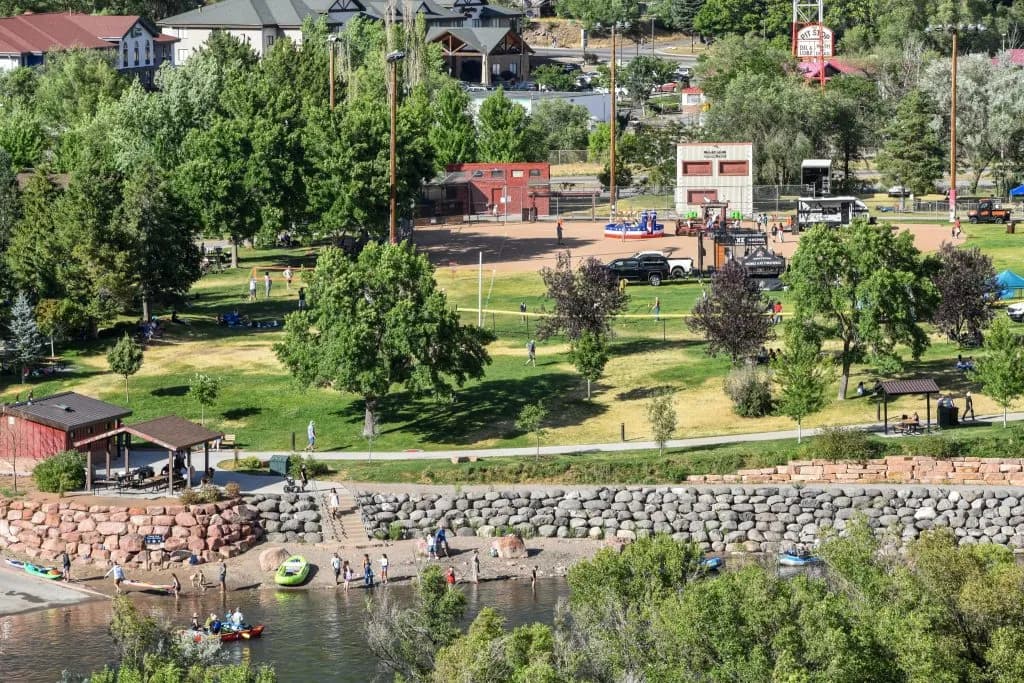
Glenwood Springs —Lake Powell is projected to receive just 800,000 acre-feet of water this year, the lowest inflow since the reservoir began filling in 1963.
That figure isn’t a forecast for next year. It’s the final tally for the current water year, and it confirms what locals in the headwaters have been watching on their thermometers and rain gauges all spring: the river is shrinking, and it’s shrinking fast.
Cody Moser, a hydrologist with the Colorado River Basin Forecast Center, didn’t mince words when he released the update on Thursday, May 7.
“So really, just no good news,” Moser said.
The math is stark. The National Oceanic and Atmospheric Administration’s models, which track how much water will flow through the system, have trended almost exclusively downward. The result is a reservoir that serves as the “bank account” for 40 million people across seven states sitting at its lowest ebb in over six decades.
For folks living along the river from Glenwood Springs up to the White River, this isn’t just a statistic in a Washington report. It’s a reflection of a winter that peaked a month early and a spring that burned through the remaining snowpack with aggressive heat.
The data from the Colorado River Headwaters region — which covers much of northwest Colorado — tells the story. Precipitation has been among the lowest in the basin, sitting at less than 70% of normal since the start of the water year in October. Snow-water equivalent peaked about 7 inches below normal. Then came March, when an extreme heatwave pushed temperatures 20 to 30 degrees above normal across much of the basin. That heat didn’t just warm the air; it melted the snow.
The impact on streamflow is already visible and historic. Near Eagle and Cameo, streamflow volumes are projected to be the worst on record. Just downstream, near Kremmling and Glenwood Springs, flows are expected to be the second-worst on record.
It’s a complex system. Lake Powell acts as the storage mechanism where Upper Basin states add water after using their share, allowing Lower Basin states to draw from it during dry years. But when the inflow drops this low, the buffer shrinks. The “bank account” is being drawn down faster than it’s being replenished.
There was a brief window of hope in April. Some parts of the basin saw precipitation closer to normal, and the first week of May brought some significant rain and snow to the drought-plagued headwaters. But Moser noted that the slightly wetter, cooler period appears to be ending. Long-term forecasts from the National Weather Service predict temperatures will trend above normal throughout the coming months, which means more evaporation and less retention.
The question for the community isn’t whether the water crisis is real, the records from Eagle to Glenwood Springs prove it is. The question is how the infrastructure and the people who rely on it adapt to a river that is consistently delivering less than it did when the dams were built.
As Moser put it, the models are clear. The snow is gone. The heat is here. And the data confirms it.
Keep up with Glenwood Springs
The day's Western Slope news, one email each morning. Free.

Twin Lakes Releases 2,500 Acre-Feet to Save Upper Arkansas River

Glenwood Springs Resident Calls for Active Citizenship Amid AI Data Center Water Threats