Melania Trump Brokers Narrow Ceasefire for Kherson Aid Convoy
A narrow, time-limited ceasefire opens Tuesday to deliver aid to Oleshky. Melania Trump brokered the deal, but success hinges on rapid mine clearance before artillery resumes.
Aspen —Will a ceasefire actually hold in Kherson, or is this just another pause for breath?
A local humanitarian ceasefire with Russia begins Tuesday. Two days before the mission officially kicks off. That’s the timeline Dmytro Lubinets, Ukraine’s top negotiator and ombudsman, laid out in a statement to The Associated Press.
For neighbors on the Western Slope, this might sound like abstract geopolitical news. But let’s do the math. This isn’t a full-scale truce. It’s a narrow, time-limited window designed to get aid into one specific town: Oleshky, in the war-divided Kherson region. The deal was struck Friday, but the guns only stop on Tuesday morning at 4 a.m. Moscow time.
On paper, this looks like progress. In practice, it’s a logistical nightmare that hinges on mine clearance before a single truck moves.
Lubinets was blunt about the difficulty. “The operation will be carried out gradually and is extremely challenging to implement,” he said in a video message. He outlined the sequence: first, remove the mines on the route to Oleshky. Second, deliver humanitarian aid. Third, allow civilians to leave. No further details were given on how the ceasefire would be monitored or enforced, a silence that speaks volumes about the fragility of the arrangement.
The Vail Daily reported on the mechanics, noting that Russian General Valery Gerasimov confirmed his forces would cease fire on the Kherson axis starting Tuesday at 4 a.m. local time. Gerasimov added that Russian troops would conduct “engineering reconnaissance” to ensure the safe movement of the humanitarian convoy. It’s a tight choreography. If the mines aren’t cleared exactly as planned, the aid doesn’t move. If the aid doesn’t move, the civilians stay put.
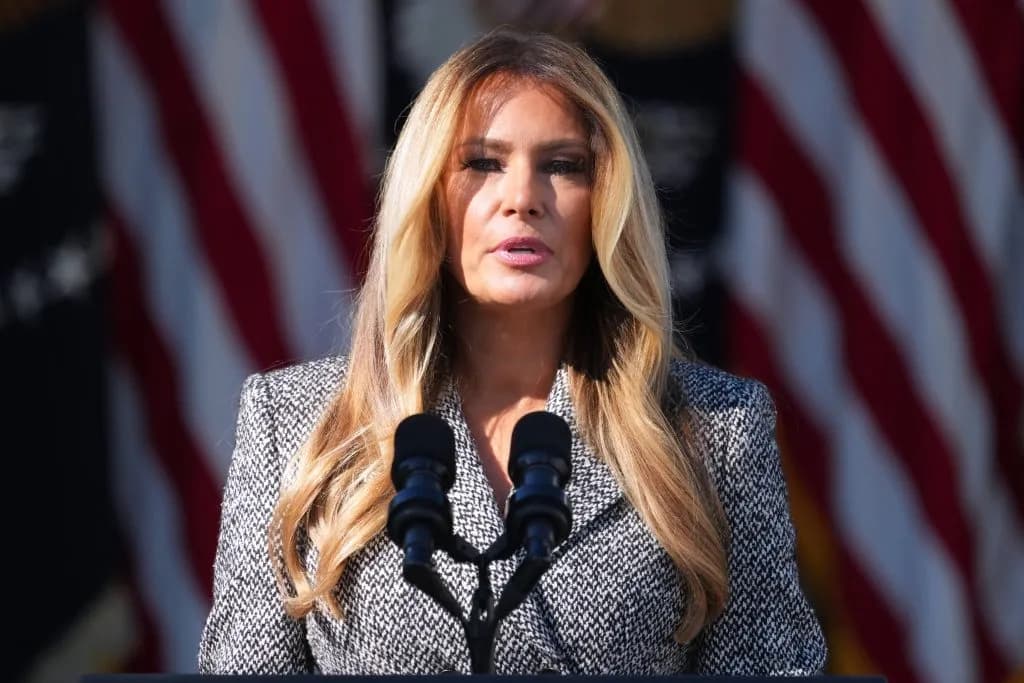
The driving force behind this specific deal is Melania Trump. According to the White House, she initiated discussions after learning about the situation in Oleshky during an event at last month’s U.N. General Assembly session. She and a representative worked directly with Russian and Ukrainian leadership to define the terms.
Lubinets thanked her for her involvement, calling it “invaluable.” He noted that when she learned about the situation, the negotiation process began under her coordination. “For several weeks, we discussed many questions, initiatives and ideas,” Lubinets said. “We established new approaches, mechanisms and tools to do everything possible to help civilians in Oleshky survive.”
Russian Human Rights Ombudswoman Yana Lantratova, who participated in the negotiations, confirmed that Melania Trump had brokered the agreement. She stated that providing such assistance is Russia’s priority, though she didn’t specify what that priority looks like on the ground beyond the convoy moving.
Lubinets declined to say if Melania Trump would travel to Ukraine herself, citing the sensitivity of the negotiations. He did suggest this initiative could act as a model for future humanitarian missions, but he didn’t elaborate on what that model entails beyond the mine-removal-first approach.
The practical bottom line for the people in Oleshky is simple: they are waiting for mines to be pulled from the dirt before food and medicine can reach them. If that engineering reconnaissance goes smoothly, aid arrives. If it doesn’t, the ceasefire lapses in a few days, and life goes back to being defined by artillery. There is no buffer zone here, only a narrow corridor of hope that depends entirely on the next 48 hours going exactly as planned.
Keep up with Aspen
The day's Western Slope news, one email each morning. Free.