Mexico's Drug War Victory Claim Falls Short of Dismantling Sinaloa Cartel
Recent arrests of Sinaloa and Jalisco cartel leaders are hailed as victories in Mexico's drug war. However, experts argue the cartels are merely reshuffling their hierarchy rather than being dismantled.
Aspen —The prevailing narrative in Washington suggests that the Mexican government is winning its war on drugs. The recent capture of a key Sinaloa Cartel ally, paired with the earlier killing of the Jalisco New Generation Cartel (CJNG) boss, is being touted as a decisive victory. But to hear experts tell it, that assessment misses the point entirely. The board hasn’t been cleared; it’s just been reshuffled.
According to a report from the Vail Daily, the recent operations conducted under President Claudia Sheinbaum’s administration are significant, but they do not equate to the dismantling of these organizations. The violence continues. Two giants still dominate the landscape: Sinaloa and Jalisco.
The shift began two months before Sheinbaum took office in October 2024, when Ismael “El Mayo” Zambada, a founder of the Sinaloa Cartel, was detained in the United States. His capture followed a cinematic kidnapping orchestrated by “Los Chapitos,” the sons of his former partner, Joaquín “El Chapo” Guzmán. Zambada is now serving a life sentence, and two of his sons are cooperating with U.S. justice. Mexico accused Washington of interference in the case, but the internal fallout was more immediate and deadly than the diplomatic spat.
The arrest triggered a rupture within what is essentially a confederation of criminal groups. A bloody battle erupted between Zambada’s followers and “Los Chapitos,” multiplying violence in the state of Sinaloa. The government responded by reinforcing its military presence; currently, 23% of its troops are stationed in that state alone. Hundreds have been arrested from both sides.
Yet, the violence persists. Miguel Calderón, of the State Council for Public Security in Sinaloa, a civilian body, noted that criminals are countering detentions by recruiting increasingly younger members. The pipeline is being replenished faster than it is being emptied.
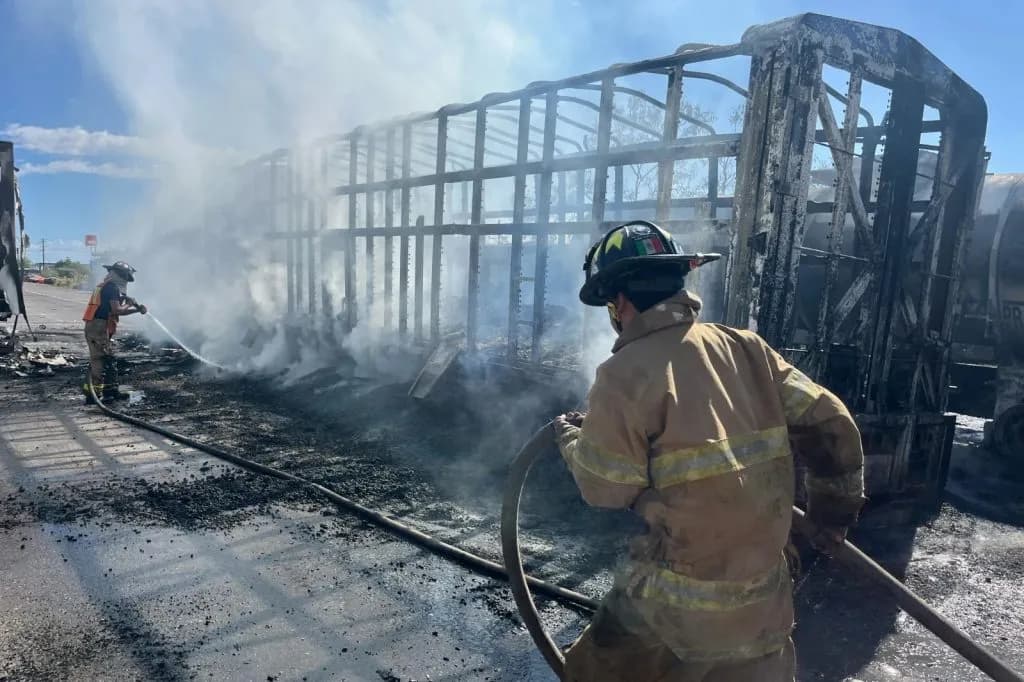
Meanwhile, in Jalisco, the dynamic is different but equally volatile. A year and a half after Zambada’s detention, the Mexican army killed Nemesio Oseguera Cervantes, known as “El Mencho,” the leader of the CJNG. The operation was impressive on paper, but it triggered a violent reaction across 20 Mexican states, resulting in more than 70 deaths.
Washington designated eight Mexican cartels as terrorist organizations, adding pressure on Sheinbaum’s government. The U.S. also accused officials in Sinaloa from the ruling party of ties to drug trafficking, demanding their detention. Sheinbaum refused.
One such figure is Fausto Isidro Meza Flores, known as “Chapo Isidro,” who was detained over the weekend. He led a distinct group highly active in drug trafficking. His capture is part of this ongoing reconfiguration, not the end of it.
The question is whether these leadership decapitations weaken the organizations or simply force them to adapt. The evidence suggests adaptation. Both cartels retain their international power, experts agree. They are reorganizing between captures, disputes, and new leadership structures.
For neighbors watching the news from Colorado, the implication is that while the headlines in Mexico City may read like a victory lap, the reality on the ground is one of persistent, evolving conflict. The giants are still standing; they’re just changing faces.
As the Vail Daily noted, despite being full of actors, the board remains dominated by these two groups. The strategy is working to keep them in check, but it isn’t breaking them.
Keep up with Aspen
The day's Western Slope news, one email each morning. Free.