Why Colorado Moose Stay Put While Deer Migrate 40 Miles
While Colorado mule deer migrate up to 40 miles for shelter, moose remain stationary due to superior cold tolerance. This biological difference creates distinct survival strategies on the Western Slope.
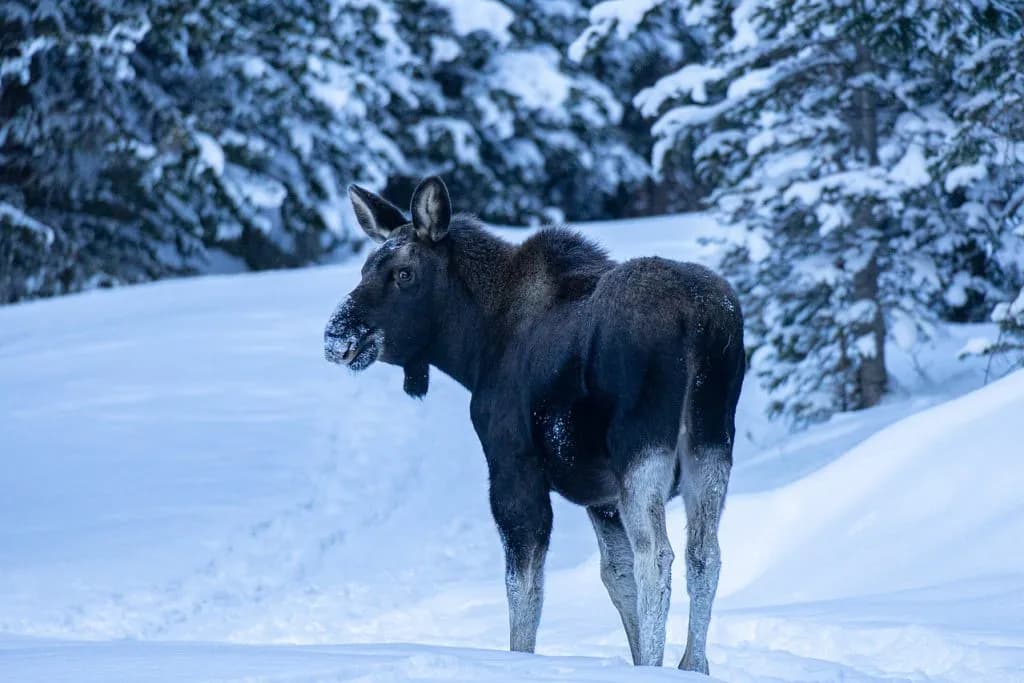
Aspen —The wind off the Continental Divide doesn’t whisper; it bites. In the shadow of the Rockies, where the pines stand like sentinels against a sky turning the color of bruised plums, the real work of survival begins. It isn’t the man in the truck checking his tire pressure or the woman stacking firewood. It’s the moose, standing still in the mist, waiting for the cold to settle in its bones.
Colorado is home to more than 960 wildlife species, and like us, they have traditions. But theirs aren’t about holiday lights or gift exchanges. They’re about migration, calorie storage, and the quiet, necessary act of resting.
For the mule deer, elk, and pronghorn, fall means moving. As temperatures drop, these animals leave the high country. They descend into lower elevations, seeking shelter from deep snow and easier access to food. The journey is significant. According to a U.S. Geological Survey map of western state herd migrations, some Colorado mule deer herds travel routes averaging 16 to 40 miles. That’s a month of movement. A long, deliberate shift in habitat.
But not every animal moves. Some stay put. And that’s where the story gets interesting.
Take the moose.
Eric VanNatta, a terrestrial wildlife biologist with Colorado Parks and Wildlife based in Steamboat Springs, explains why. “Compared to other ungulates, like elk and deer, (moose) can tolerate deeper snow conditions and colder conditions,” he said. “So, we don’t typically see a lot of the migratory behavior compared to deer and elk.”
Moose are built for the cold. Their dense coats, large body mass, and “hollow guard hairs” provide insulation and protection. Research suggests they are among the most cold-tolerant ungulates — second only to bison. They don’t feel the cold until temperatures hit minus 20 degrees Fahrenheit.
That tolerance changes their autumn routine. While deer and elk are on the move, moose are settling in. November marks a “quiet period,” VanNatta says. It follows the rut — the intense mating season from mid-September to mid-October, when bulls roam widely in search of cows. By late fall, the excitement fades. The animals enter recovery mode.
“They’re trying to get a lot of calories back in them to restore their fat or continue building their fat reserves for the winter,” VanNatta explained.
It’s a subtle shift. No dramatic migration. No visible trek across valleys. Just a slow accumulation of energy. A biological preparation for months of scarcity.
And that matters because it highlights how different species interact with the same landscape. The deer herd crossing the ridge in October might pass through territory occupied by a stationary bull moose. Two different strategies for surviving the same season. One relies on distance. The other relies on endurance.
This dynamic plays out across the Western Slope. From the high alpine meadows above Vail Pass to the lower valleys near Glenwood Springs, these patterns hold. The geography dictates the routes. The climate dictates the timing. The biology dictates the response.
As the leaves fall and the first hard frosts arrive, the valley quiets down. The noise of summer recedes. In its place, a different kind of activity emerges, one that is less visible but no less vital.
Stand on a ridge at dawn in late November, and you’ll see it. The fog clinging to the tree line. The silence broken only by the crack of a branch under weight. Somewhere below, a moose lifts its head, ears rotating toward the sound. It takes a step forward. Then another.
Not running. Not fleeing. Just moving.
Preparing.
Keep up with Aspen
The day's Western Slope news, one email each morning. Free.