Aspen Airport Predicts 2,500 Daily Passengers During December Holiday Peak
Aspen Airport expects 2,500 daily passengers during the Dec. 18 holiday peak, up from 40 flights last season. Staff warn that snow and poor visibility remain the biggest risks for travelers.
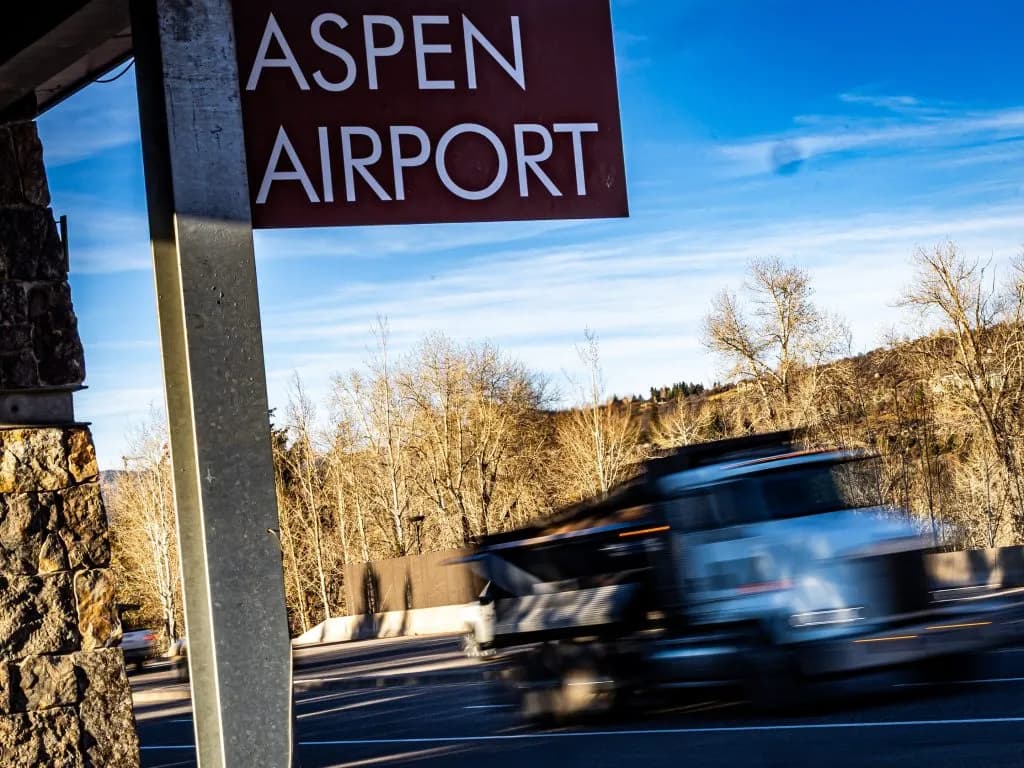
Aspen —“Give yourself plenty of time.”
That is the core advice from Diane Jackson, director of Aspen/Pitkin County Airport. She says it because the alternative is standing in a terminal while winter weather shuts down the only way out.
The Aspen Times reports that the airport expects its peak traffic on the weekend of Dec. 18. The numbers are stark. Daily flights will jump from roughly 10 during Thanksgiving to around 42 at the peak. That is up from 40 last season.
Kelsey Petersen, the airport’s communications specialist, called the start to this season “relatively slow.” The turnaround is coming fast. Up to 2,500 passengers will pass through the terminal on its busiest weekends. That volume continues into early January.
The biggest variable is not the crowd. It is the snow.
Petersen says crews spent the fall prepping equipment and completing annual training on snow removal. Their goal is simple: keep the runway open during operating hours every day. The airport has hit that mark for several years running.
But an open runway does not guarantee a landing. Poor visibility can make it unsafe for planes to come in, regardless of how clear the pavement is. When that happens, it becomes a “group effort” between airlines, airport staff, and the guest services team at ACRA. They help passengers get rebooked or find accommodations.
Eliza Voss, senior vice president of destination marketing at ACRA, confirmed the team is ready to answer questions about flight disruptions. She pointed travelers to ACRA’s Inclement Weather page for real-time updates.
The history of this season is a warning shot. Bill Tomcich, an airport advisor, cited U.S. Bureau of Transportation statistics for last December and January. Out of 1,844 flights scheduled to arrive in Aspen, 86 were canceled. Another 75 were diverted.
Most of those diversions went to Grand Junction. Tomcich noted that ground transportation from there to Aspen is usually provided, but it adds hours to a trip. He also pointed out that about one-third of the flights that did land in Aspen last holiday season arrived at least 15 minutes late.
Tomcich’s advice is to avoid the peak. He recommends flying on off-peak days and looking for flights out of less crowded hubs.
“ASE now has lots of flights from other hubs at off-peak times that may be worth considering,” Tomcich said. He argues these flights are often less expensive and more reliable because they are less vulnerable to the cascading delays that build through a busy day.
Morning arrivals tend to be the most reliable. Air traffic and delays accumulate as the day goes on. United Airlines is offering early morning direct flights from Chicago and San Francisco. American Airlines has early direct flights from Chicago and Austin.
American also expanded its Charlotte to Aspen service. The Aspen Times noted the expansion, though details on the full scope were not fully detailed in the immediate context. The trend is clear: more options in the morning, fewer headaches.
The airport knows its limitations. It cannot control the sky. It can only keep the runway clear and hope the visibility holds. For travelers, that means checking the airline app constantly. It means building a buffer into every connection. And it means accepting that in Aspen, the holiday schedule is a race against the weather.
The peak hits Dec. 18. The snow is already on the ground.
Keep up with Aspen
The day's Western Slope news, one email each morning. Free.