Michael Salomone Advocates for Three-Weight Rods in Vail Valley
Michael Salomone explains why lightweight three-weight rods offer superior feel and maneuverability for high-country cutthroat trout fishing, highlighting options like the Sage Dart and Echo Riverglass available at Vail Valley Anglers.
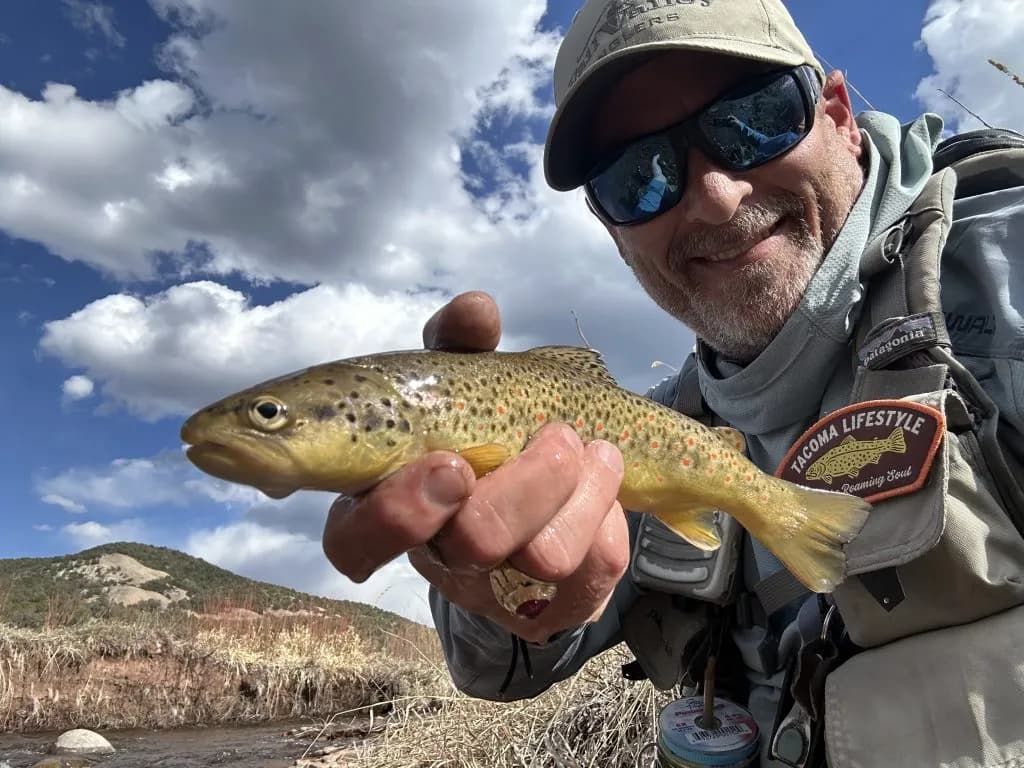
Aspen —“Sometimes you have to get a little lost with your fly rod in skinny water.”
That’s the pitch from Michael Salomone. He’s talking about three-weight rods. Not the five-weights that dominate the racks at Vail Valley Anglers. Not the four-weights that promise precision. He’s talking about the lightweights. The ones that feel like an extension of your arm rather than a tool.
The article suggests these rods are for “hidden streams” and “shadowed valleys.” It’s a specific kind of fishing. You aren’t casting miles. You’re weaving down game trails. You’re punching flies through canopy holes. It’s technical. It’s intimate.
Salomone calls the three-weight a “transition edge” class. It sits between the delicate four-weight and the brute-force five-weight. The five-weight is the hammer. The do-it-all. The four-weight keeps 6X tippet taught without tearing it. But the three-weight? That’s for feeling.
“I have fiberglass and graphite represented in my quiver of three weights,” Salomone writes. The difference matters. Graphite whips. It’s fast. It’s agile. The Sage Dart is the top-end option here. It’s a quick stick designed for speed.
Fiberglass is different. It’s slow. It’s forgiving. It’s the Echo Riverglass. Salomone says it delivers “more enjoyment for the dollar” than almost any other rod. It retails for less than $300. It lays down dry flies with a soft touch. You won’t see a ripple on glass-smooth water.
The length is another anomaly. Most rods are long. These three-weights are short. Six feet, six inches. That’s it. They lean against a ponderosa tree like an old friend. They are highly maneuverable in tight quarters. You can cast under branches. Around bushes. Through the gaps.
This isn’t just about gear. It’s about location. Three-weight water is high country. It’s where the natives live. Cutthroats. You work for these fish. You don’t just catch them; you earn them. The lightweight rod lets you feel the power in the tail of a cutthroat. It lets you hold them in your hands without the rod fighting you.
“The short version”: You go up high to get lost. You find beaver ponds. You find waterfalls. You find vistas you won’t see on the main stem. It’s a reward for the effort.
Salomone notes that conditions are changing fast. It’s early. But the water is waking up. The local shops are stocking up. Vail Valley Anglers keeps the specialty rods on hand. If you want the graphite speed, you pay up. If you want the fiberglass fun, you pay less.
But here’s the thing the gear talk obscures. This is about access. These streams are small. They are fragile. They require a different approach than the big rivers down in the valley. You can’t just blast line. You have to read the water. You have to match the hatch. You have to respect the size of the fish.
Salomone’s point about the “fun factor” is valid. The Echo Riverglass is a bargain. But is it accessible to everyone? Or is this a niche hobby for those who can afford the time to get “lost” for hours? The article doesn’t say. It just says the water is there. And the rods are ready.
The local angle isn’t just about buying a rod. It’s about where you cast it. It’s about the specific, hidden pockets of the Western Slope that only reveal themselves to those willing to carry a six-foot piece of graphite or glass into the brush. It’s about the quiet. The specific, earned quiet of a high-country cutthroat rising to a dry fly.
If you’re looking for a hammer, buy a five-weight. If you want to feel the fish, buy a three-weight. Just don’t expect to find it in every shop. And don’t expect it to be easy.
Keep up with Aspen
The day's Western Slope news, one email each morning. Free.