Michael Salomone Races Eagle River Heat for School’s Out Float
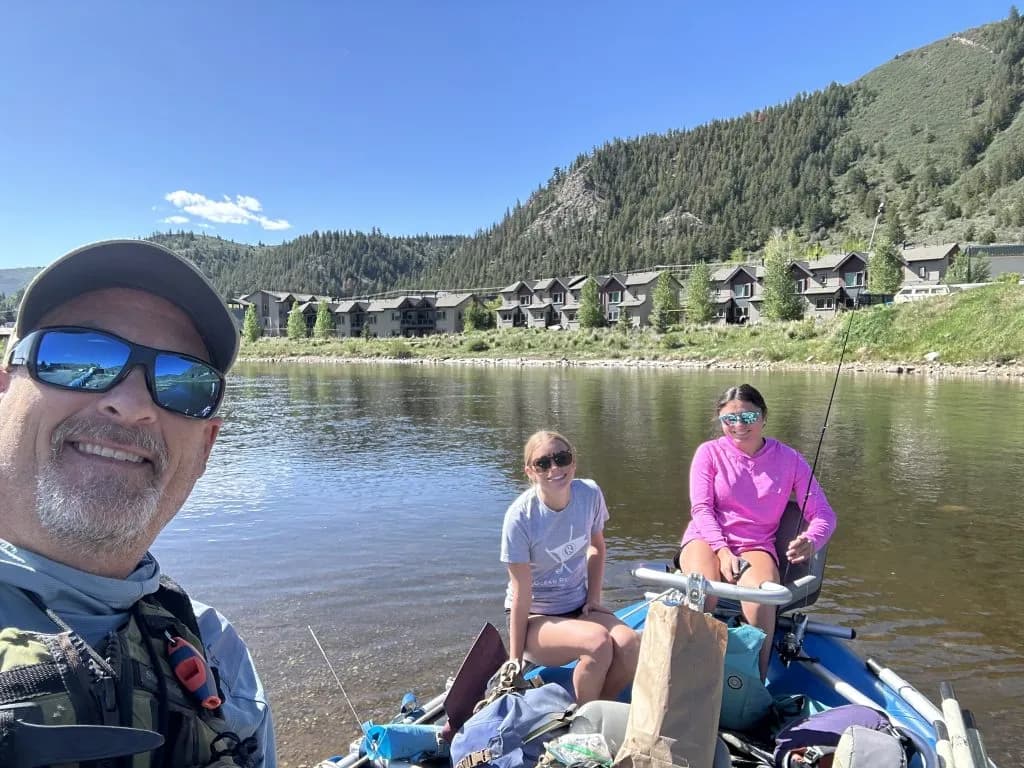
Local teacher Michael Salomone takes his daughter Addy for a school’s out float on the Eagle River before low snowpack and drying heat close the window for the season.
Aspen —The Eagle River is running low. It’s thin, it’s fast, and it’s about to disappear under the High Country’s drying heat. For locals who rely on that water for everything from irrigation to the annual rite of passage known as the "school’s out float," the margin for error is razor-thin.
Michael Salomone didn’t just take his daughter Addy out for a day of fishing. He took her out before the river vanished entirely.
The scene at the boat ramp is familiar to anyone who’s spent a July afternoon on the water: the smell of wet waders, the clatter of gravel under tires, and the specific brand of chaos that comes with trying to manage a dog, two teenage girls, and a raft in a confined space. Mags, the Moser family dog, found footing wherever she could. Addy Moser and her friend Kendall Whiting took to the back of the raft, casting lightweight spinning rods with inline spinners. The Panther Martin lure is a warning to anyone who doesn’t know the difference between a spinner and a streamer.
Salomone, a local teacher, called the shot. He knew the snowpack in the High Country was low. Low snowpack means a short float season. You don’t wait for perfect conditions; you wait for available conditions. So, they arranged vehicles, secured the gear, and pushed off.
Let’s look at the catch. Salomone drew first blood with a teeny brown trout. Addy evened the score. Kendall joined in. The scoreboard was updated constantly. But here’s the thing: this wasn’t a fishing expedition. It was a social event with fish attached. The magic isn’t in the number of trout pulled from the water; it’s in the trash talk. It’s in the ability to treat your friend’s daughter like a sibling and let her rib you until you’re questioning your life choices.
Food is the other critical component. Salomone notes that Smiling Moose sandwiches taste better when eaten outdoors, riverside. That’s not just poetic license; it’s a psychological fact. You eat better when you’re not staring at a spreadsheet. But the conditions are drying out quickly. Fire restrictions are tightening. The riverside chili dogs that define so many Western Slope summers? They’re on hold until fall. You’re eating nuts, jerky, and fresh fruit off the top of a cooler because you can’t risk a flare-up.
The data here is simple: the window is closing. The Eagle River is floatable now, but it won’t be for long. The spike in river levels coincided with their float, triggering aggressiveness in the brown trout population. Salomone threw streamers, trying to sync up with that aggression before heading out on saltwater trips. It’s a reminder that the river is a living system, not a static resource.
For context, this isn’t just about one family’s weekend. It’s about how we manage our public resources when the climate shifts. The snowpack is lower. The season is shorter. The choices we make today — whether to burn a fire, whether to float the river, whether to prioritize fishing or socializing — dictate the quality of life for the rest of us.
Salomone’s float was a success. The girls caught fish. The dog was happy. The sandwiches were eaten. But the underlying message is stark: the window is small. You have to act now. The river doesn’t wait for perfect weather. It doesn’t wait for you to finish your paperwork. It flows, and then it recedes.
This is what a school’s out float looks like in 2024. It’s less about the catch and more about the clock. You’re racing the heat. You’re battling the fire bans. You’re chasing the end of the season. And when it’s over, you’re left with memories, a tired dog, and the knowledge that you got in there before the water disappeared.
Keep up with Aspen
The day's Western Slope news, one email each morning. Free.
NWRM CASA Honors Judge O’Hara and Founders at 15th Anniversary
Craig Hosts Only Regional Special Olympics Bowling Competition