Eagle County launches Safety Cloud digital alert system
Eagle County Paramedic Services and the Eagle River Fire Protection District launched Safety Cloud on July 27, a digital alerting system that warns drivers of approaching emergency vehicles via Waze and Apple Maps before they see flashing lights.
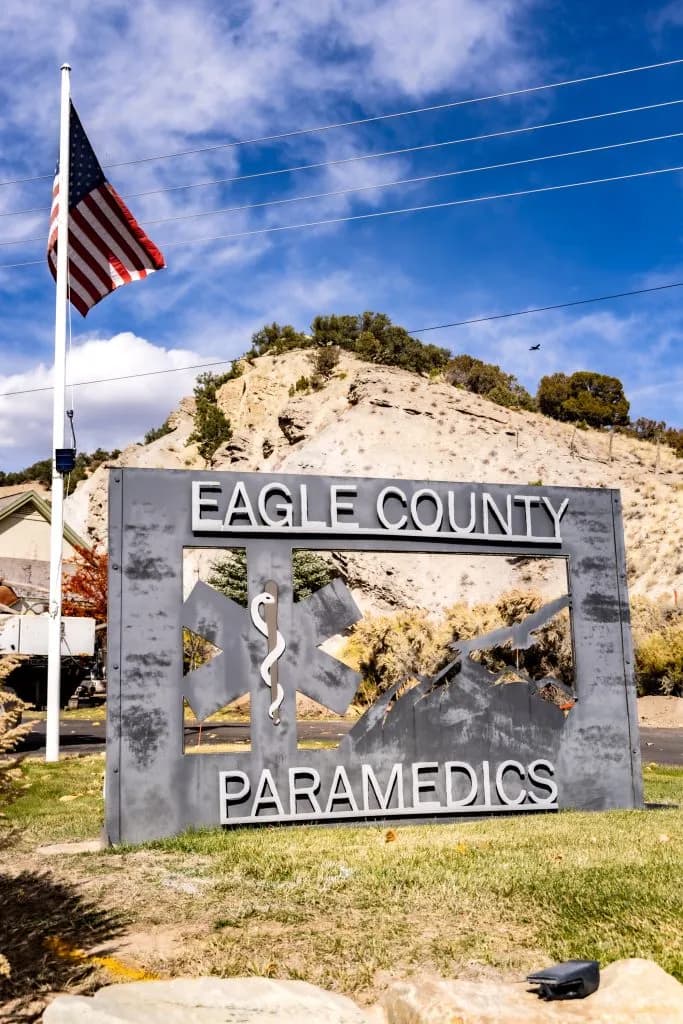
Aspen —Eagle County Paramedic Services and the Eagle River Fire Protection District announced July 27 that they are rolling out Safety Cloud, a digital alerting system from HAAS Alert designed to warn drivers of approaching emergency vehicles before they even see the flashing lights.
The technology integrates directly with the light bars on emergency vehicles. The moment responders turn on their lights and sirens, the system begins broadcasting alerts to drivers using navigation apps like Waze or Apple Maps. It can also push notifications to the dashboard displays of 2018 or newer Chrysler, Dodge, Jeep, and RAM vehicles, as well as 2024 and newer Volkswagen models.
The goal is simple: give drivers more time to react. The system typically delivers an alert 15 to 30 seconds before a car is on the path to or around the emergency scene. It requires no action from the driver beyond using their regular navigation apps. A company representative noted that discussions are underway to connect the system with Google Maps as well.
Colorado’s “Slow Down Move Over” law already requires drivers to slow down and change lanes when approaching a stopped emergency vehicle with flashing lights. But lights and sirens often aren't enough warning, creating unsafe conditions for both responders and motorists. Safety Cloud aims to bridge that gap. According to a recent statement from the agency, the technology has been proven to reduce collision risks by up to 90%.
For first responders working just feet away from moving traffic, the stakes are high. Distracted drivers, speeding motorists, and those who fail to move over create unpredictable hazards. Eagle River Fire Protection District Chief Mick Woodworth pointed to National Fire Protection Association fatality data showing that vehicle crashes and struck-by incidents account for a significant portion of firefighter line-of-duty deaths. Data from 2020 indicated that 8% of firefighter deaths resulted from being struck by a car.
“These dangers make roadway incidents unpredictable and emphasize the critical importance of scene control, visibility and public awareness to protect first responders operating on or near roadways,” Woodworth said.
Brandon Daruna, CEO of the paramedic service, echoed that sentiment, highlighting the specific challenges of the region.
“That’s a real significant point of risk, especially in Eagle County, because we do have such a long stretch of I-70 and we have such adverse conditions,” Daruna said.
The rollout covers both Eagle County Paramedic Services and the Eagle River Fire Protection District. It’s a direct response to the dangers inherent in roadside responses, where crews must manage emergencies while exposed to the flow of traffic on one of the state’s busiest highways. The system doesn’t just rely on human reaction time; it uses digital connectivity to preemptively warn drivers, turning a passive light bar into an active communication tool.
The part everyone skips past is the driver’s role. They don’t need to download a new app or sign up for a service. If they are already using Waze or Apple Maps, they are already part of the network. The alert pops up on their screen, a silent digital nudge to check their mirrors and move over.
Stand there long enough and you realize this isn’t just about technology. It’s about the stretch of I-70 that cuts through the valley, where snow squalls hit without warning and traffic backs up for miles. It’s about the paramedic standing in the lane, checking a patient’s vitals while a truck barrels past at 70 miles per hour. The lights flash. The siren wails. But the driver in the next lane might be looking at their phone, or simply not see the cruiser until it’s too late.
Safety Cloud changes the timeline. It gives that driver 15 seconds. Maybe 30. It’s not a guarantee, but it’s a chance.
The system connects directly to the vehicle’s light bar, broadcasting the alert the instant the lights go on. No manual activation. No lag. Just a digital handshake between the emergency vehicle and the dashboard of a passing car.
It’s a small change in the interface, but it matters. Not exactly a miracle cure for distracted driving, but a measurable step toward reducing the 90% collision risk reduction that the system promises. For the folks who live along I-70, who commute past the fire stations every morning, it means one less variable in the equation. One less moment where a flash of red and blue isn't enough to make you look up.
Keep up with Aspen
The day's Western Slope news, one email each morning. Free.