Pitkin County Adds $8 Traffic Fine to Save Aspen's Tipsy Taxi
Pitkin County commissioners approved an $8 surcharge on traffic citations to fund Aspen's Tipsy Taxi program, which faces a shortfall after losing its district attorney partnership.
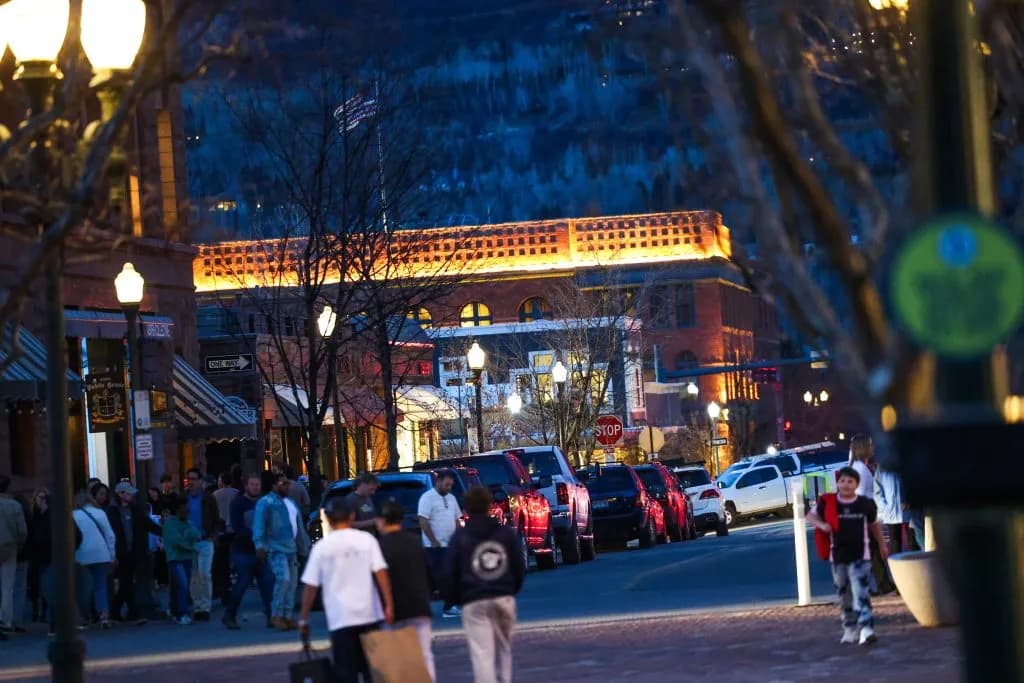
Aspen —The parking lot outside a crowded Aspen bar is loud. Music thumps through the brick walls, and the air smells of spilled beer and cold mountain night. A bartender spots a patron swaying on their feet, keys jangling in a fist that can’t quite grip them. She hands over a small piece of paper, dials a phone number, and waits.
Will this free ride still be there when the next tipper walks in?
For four decades, the answer has been yes. Pitkin County’s Tipsy Taxi program, launched in 1983, has provided more than 20,000 free rides to people who might otherwise drive impaired. But the program is now facing a "funding crisis," according to The Aspen Times, and its future hinges on a new $8 surcharge added to traffic citations.
Commissioners approved the ordinance on first reading Wednesday, a move that shifts the financial burden from private donors to drivers who break the law.
Ellen Anderson has led the program for forty years. She stood before the board on Wednesday and told them, “I’ve had to beg for money for decades.”
The mechanics are simple. A bartender or peace officer identifies a person too intoxicated to drive, gives them a voucher, and calls High Mountain Taxi. The rider gets a free ride home. The driver is paid the going rate plus a 20% tip, funded by the Tipsy Taxi account. Anderson noted that drivers shouldn’t take on the burden of unpaid work; they have to earn a living, just like everyone else.
The trouble started last year. From 2017 to 2024, the program relied on a partnership with the district attorney’s office. Voluntary donations to Tipsy Taxi were incorporated as conditions in plea agreements for those negotiating DUI-to-DWAI charges. When a new district attorney took office, that arrangement was discontinued.
Levi Borst, Pitkin County undersheriff, reiterated to the board that this leaves a funding problem. He reported there is about $14,000 left in the program’s fund. “That’s probably not enough to get us through 2027,” he said.
The proposed $8 surcharge is designed to generate an estimated $35,672 per year. That covers the program’s 2026 operating budget of $30,000 with room to spare. Commissioner Patti Clapper supported the $8 figure, while Commissioner Greg Poschman leaned toward a lower starting point of $6.75. The board ultimately moved the $8 surcharge forward to second reading.
County Manager Kara Silbernagel noted that the program will be revisited every year, and the surcharge can be adjusted if Tipsy Taxi is underutilized.
The loss of the district attorney’s partnership was a shock to the system, but it wasn’t the first time the program had to reinvent its revenue. Over the years, Tipsy Taxi has relied on private donations, fundraisers like the “Bartender’s Ball,” and even a concert from John Denver.
Clapper and Poschman both agreed that staff should investigate why the DA’s office withdrew from the program. They want to know what happened, not just how to patch it over with traffic fines.
The part everyone skips past is the human cost of a broken administrative link. A program that has kept drivers off the road for over forty years is now betting its survival on a small fee attached to a speeding ticket or a running red light.
Anderson has spent four decades asking for money. Now, the county is asking drivers to pay it.
The next time a bartender hands a voucher to a swaying patron, the piece of paper represents more than a ride. It represents $8 taken from someone else’s wallet for a traffic violation, funneling back into the taxi fund to keep the lights on.
The board will vote again in the coming weeks. Until then, the program runs on fumes and goodwill, with $14,000 in the bank and a deadline looming.
Keep up with Aspen
The day's Western Slope news, one email each morning. Free.