Piceance Basin Helicopter Gatherings Cost Taxpayers to Manage Wild Horses
Federal agencies use helicopters to remove wild horses from Piceance Basin public lands, sparking debate over whether the taxpayer-funded gather method is worth the expense and visual impact.
Steamboat Springs —What does it cost taxpayers to keep wild horses from overrunning public lands, and is the current method of gathering them worth the expense?
To hear the Bureau of Land Management tell it, the answer is yes. To hear some wild horse advocates, the answer is no — and they are watching from the ground as helicopters buzz overhead.
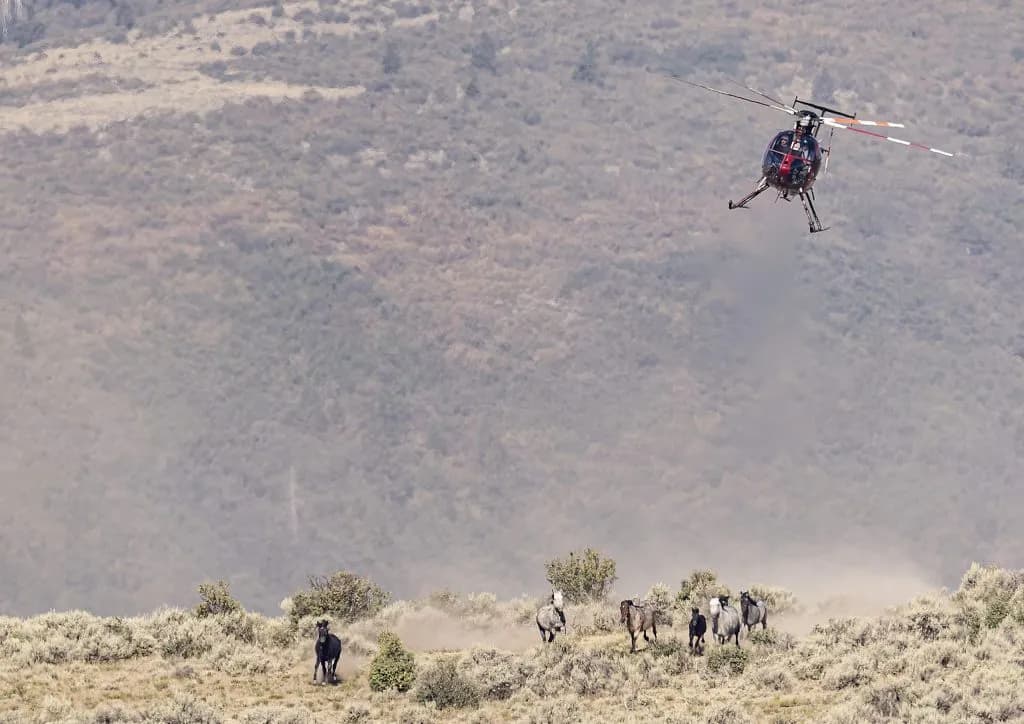
The scene in Northwest Colorado’s Piceance Basin offers a clear view of the conflict. On Wednesday, Aug. 5, 2026, a helicopter maneuvered strategically around power lines near an oil refinery. It drove a small band of wild horses across the rugged landscape toward a catch pen hidden behind juniper trees.
One white horse flipped around, running the opposite direction of the trap. The helicopter followed suit, cutting off its escape.
“It’s too close,” said one wild horse advocate standing nearby. “It’s too low.”
The horses, including the white horse, were driven into the pen. Shortly after, a newly filled horse trailer stumbled along a dirt road, kicking up clouds of dust as it took the animals to a temporary holding center. For the ordinary viewer, the operation can look aggressive. For the BLM and some ranchers, it is a necessary reality of preserving public lands.
The legal framework dates back to 1971, when Congress passed the Wild Free-Roaming Horses and Burros Act. The law declared these animals “living symbols of the historic and pioneer spirit of the West.” It also noted that wild horses were “fast disappearing from the American scene.”
The act requires the federal government to protect them. But protecting both the horses and the land requires removing many of them. The BLM states that without removal, populations exceed the capacity of the land.
BLM Colorado manages four herd management areas across roughly 400,000 acres. Three are in Northwest Colorado: Piceance-East Douglas Creek, Sand Wash Basin, and Little Book Cliffs. The fourth is Spring Creek Basin in Southwest Colorado.
Since 1971, the agency has removed nearly 4,400 animals from public rangelands in Colorado. The Craig Daily Press reported that these gather operations are funded through federal taxpayer dollars. A company contracted by the BLM uses livestock trailers to move horses from holding areas near the trap site to an undisclosed location.
The math holds up for the agency: keeping numbers in check prevents overgrazing. The cost is the price of that balance.
The question for locals is whether the visual impact of low-flying helicopters and dusty trailers justifies the long-term health of the grazing lands. The BLM argues it does. Advocates argue the method is too harsh on the animals and their habitat.
As the helicopters continue to circle and the trailers fill, the debate remains rooted in a simple choice: how much is it worth to keep the wild spirit of the West alive, and what price are we willing to pay for it?
Keep up with Steamboat Springs
The day's Western Slope news, one email each morning. Free.

Aspen Times Gear Review Highlights Summer Comfort Items
Stillwater Ditch Crew Thins Forest to Protect Yampa Ranch Water