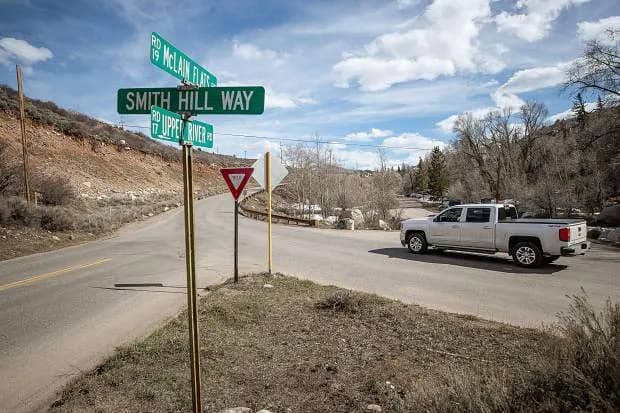
Pitkin County Approves $18M Wastewater Upgrade for Phillips Mobile Home Park
Pitkin County commissioners approve an $18 million project to replace the failing wastewater system at Phillips Mobile Home Park, aiming to protect the Roaring Fork River and improve fire safety while adding affordable housing units.
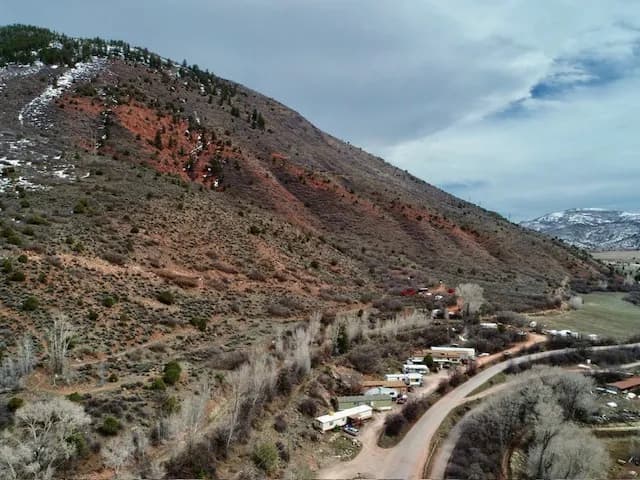
Gunnison —Joe Farstad, the regional vice president with Wember, doesn’t mince words when he looks at the wastewater system at Phillips Mobile Home Park. It’s not just aging; it’s broken.
“The wastewater system is not fixable in the state it’s in; it needs to be replaced in its entirety,” Farstad said.
That diagnosis is the driving force behind Pitkin County’s latest move. On Wednesday, the Board of County Commissioners voted to override the Planning and Zoning Commission’s finding of non-conformance, clearing the way for a major redevelopment of the park. They’re betting that replacing the crumbling infrastructure now will save the community — and the Roaring Fork River — from a much bigger disaster later.
The county already owns the park. They bought it specifically to preserve affordable housing that would have vanished if sold on the open market. But ownership came with a heavy price tag: known infrastructure challenges. Now, those challenges are becoming urgent.
Commissioner Patti Clapper pointed to the immediate threat to the river. There’s a significant risk that the damaged, failing system could pollute the Roaring Fork River, a critical resource for the valley. It’s not a theoretical concern; it’s a daily risk with the current setup.
The plan on the table is ambitious. It involves two new wells, a new wastewater treatment plant near the river, and a large water storage facility. Why so much water storage? Local fire authorities mandated it.
Right now, there is no fire suppression technology on site. No hydrants. No storage. If a fire breaks out, the fire department has to drive in with what they can carry. That’s a problem in a valley where wildland fires are a constant threat. The redevelopment will add more fire hydrants and the storage capacity to actually use them.
The cost? The budget has crept up from an initial $17.2 million to just under $18 million. Ashley Perl, Pitkin County’s community resiliency manager, said that’s due to more complete contractor quotes.
But here’s the local angle that matters to your wallet: the monthly operating costs for this modernized system are estimated at $43,763. That’s about $1,216 more per month than residents are currently paying in mortgage payments.
Is that a hike? Yes. But Perl argues it’s manageable if they add density. The plan includes adding roughly 40 affordable housing units, mixes of fourplexes, duplexes, and single-family homes. That adds about 100 beds to the valley’s workforce housing stock and, crucially, spreads the operating cost across more households. With those extra units, the monthly cost increase drops to between $550 and $750.
It’s a trade-off. You get safer water, better fire protection, and a cleaner river, but you also get denser housing and slightly higher monthly bills. The design prioritizes clustered housing to preserve the community’s sense of place, addressing concerns from current residents about parking and space.
The steep topography of the site adds another layer of complexity. Debris flow mitigation is required to reduce the risk of landslides and sloughs, another layer of cost and engineering that Farstad’s team has to manage.
The question is whether the county can stick the landing. They’ve got the budget, they’ve got the political will to override the planning commission, and they’ve got a plan to offset costs. But infrastructure projects rarely go exactly to plan.
As Perl put it, the goal is to preserve the community’s sense of place while fixing the pipes and pumps that keep it alive. It’s a necessary upgrade for a park that’s been holding on by its fingernails.
“We’re doing this because the alternative is worse,” Perl said. “The infrastructure is failing, and we can’t wait any longer.”
Keep up with Gunnison
The day's Western Slope news, one email each morning. Free.