Pitkin County Chooses $1 Million Reserve Strategy for $6.8M River Purchase
Pitkin County commissioners select a middle-ground financial strategy, preserving $1 million in fund balance rather than the aggressive $2 million option, to service the debt for the $6.8 million purchase of Roaring Fork River water shares.

Gunnison —The asphalt at the Pitkin County administrative building is still warm from a July sun that feels less like a season and more like a warning. Inside, the air conditioning hums a low, steady note, competing with the quiet tension of a county trying to figure out how to keep its rivers wet without bankrupting its future.
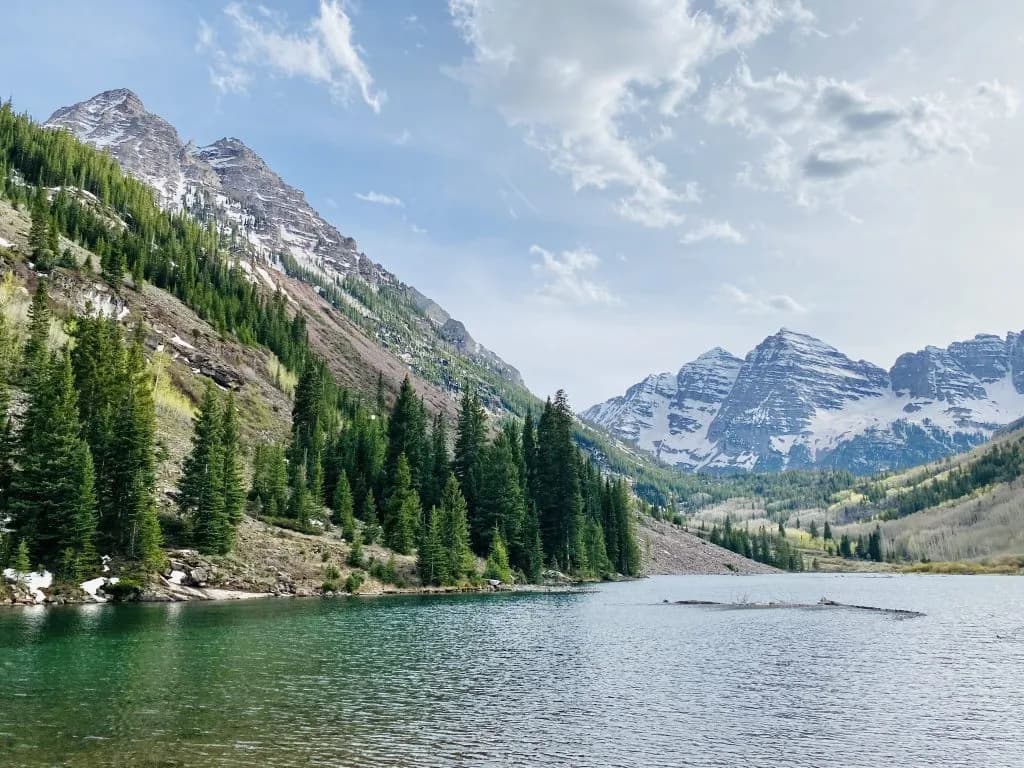
Here’s the thing though: we often think of water in Colorado as infinite, or at least abundant enough to manage with a simple ledger entry. But buying back the flow of the Roaring Fork River isn’t just about turning a valve. It’s about buying shares. Specifically, over 90 water shares, totaling roughly 71 acre-feet of water, were purchased for $6.8 million. That money didn’t appear out of thin air. It came from the Healthy Rivers and Streams fund, a pot fueled by a dedicated 0.1% sales tax that locals pay on everything from gas to groceries.
Now, the county commissioners are staring at a balance sheet that forces a choice between immediate savings and future security. They have $12 million in bonding capacity authorized to cover this purchase. The debt service is fixed. The variable is how much cash they pull from their own reserves to pay it down.
Picture this: you have a savings account. You can leave it alone, let the interest accumulate, and keep the balance high. Or, you can dip into it aggressively to lower your monthly payments. The latter saves you money on interest. The former keeps you safe if the roof leaks.
“The difference between the debt service, between a million dollar fund balance and a two million dollar fund balance, is pretty substantial,” Vice Chair and Commissioner Francie Jacober said. She wasn’t talking about pennies. She was talking about the difference between a comfortable night’s sleep and a tight budget.
The board was presented with three scenarios. A conservative approach, which keeps the fund balance high but costs more in interest. An aggressive strategy, which uses $2 million from the fund balance to reduce debt service. And a middle ground, which the administration recommended: using $1 million.
Commissioner Greg Poschman wasn’t buying the comfort of the middle ground. He looked at the numbers and saw a potential trap. If the county chooses the aggressive $2 million option, the projected fund balance drops to $794,000.
“What’s a comfortable fund balance?” Poschman asked. “Is $794,000 the lowest we’ve ever had?”
It’s a simple question with a complex answer. Is that amount terrifying? Or is it still healthy? Poschman argued that $794,000 is “well over a million bucks” in opportunity cost. That’s money that could be saved, or spent elsewhere, or held as a buffer.
Connie Baker, the budget director, sees the risk clearly. She’s looked at the five-year plans. She’s seen the unexpected hits. Water quality issues at Lincoln Creek. Streamside damage from flash floods. These aren’t theoretical; they’re line items that draw from the fund balance.
“Having looked at the Healthy Rivers fund over a number of years and putting together the five year plans, my personal preference would be to stay at least … $1 million in the fund balance,” Baker said. “To go below $1 million doesn’t allow the board very much flexibility when it comes to projects that may come up.”
Flexibility is the keyword here. The aggressive option saves interest. It lowers the annual cost of doing business. But it strips away the cushion. If a pipe bursts or a drought hits harder than expected, that $794,000 might not be enough to cover the emergency without borrowing again.
The trade-off is stark. Do we pay more now to keep the lights on later? Or do we pay less now and hope the roof doesn’t cave in? The commissioners are weighing the immediate financial relief against the long-term resilience of the very rivers they’re trying to protect. And for the folks paying that 0.1% sales tax, the question isn’t just about accounting. It’s about whether they’re buying a stable future or just a cheaper monthly bill.
Outside, the Roaring Fork continues its relentless rush toward the valley floor, indifferent to the balance sheets inside the county building. The water doesn’t care about fund balances. It just flows.
Keep up with Gunnison
The day's Western Slope news, one email each morning. Free.