Polis and Neguse Demand Freeze on Piceance Mustang Roundups
Gov. Polis and Rep. Neguse demanded an immediate freeze on Piceance Basin mustang roundups, citing inhumane helicopter tactics and a $900,000 operational cost.
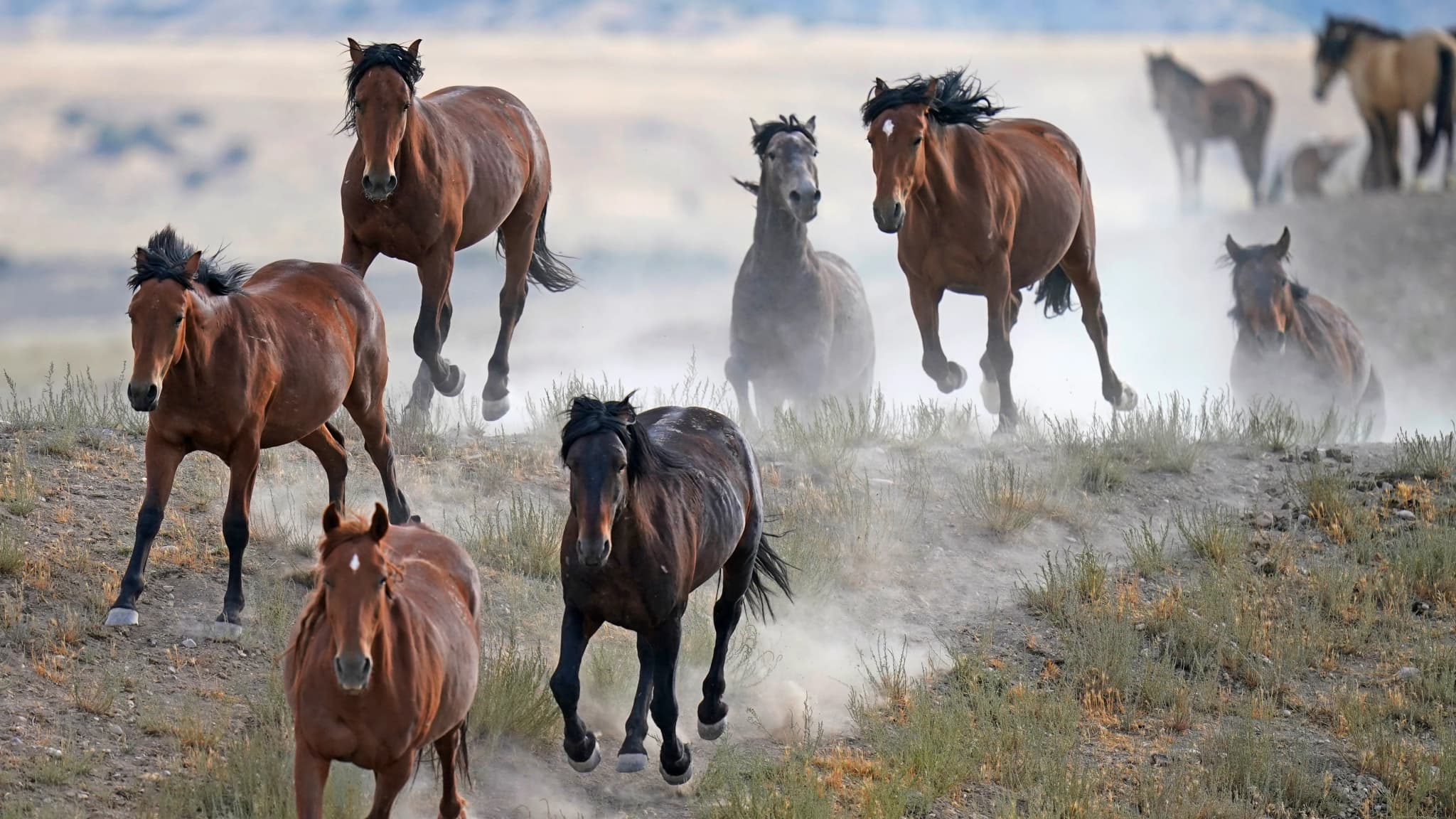
The dust hangs thick in the air of the Piceance Basin, stirred up by the low, buzzing roar of a helicopter skimming just above the scrub brush. Below, a herd of free-roaming mustangs bolts in a chaotic scramble, their eyes wide with the kind of panic that only a machine hovering inches overhead can instill. It is a scene that has played out across northwestern Colorado since early August, and it is precisely what Governor Jared Polis and U.S. Representative Joe Neguse want to see stopped.
The two sent a joint letter Thursday to Secretary of the Interior Doug Burgum and Bureau of Land Management state director Tom Heinlein, asking for an “immediate freeze on upcoming roundups.” The request follows a monthlong operation in the Piceance Basin where a contracted wrangling outfit has already captured nearly 900 horses. During that time, nine horses have died or been euthanized due to pre-existing conditions, a toll Polis and Neguse cite as evidence of their “grave concern.”
To hear them tell it, the method matters as much as the outcome. The letter describes the use of low-flying helicopters as “inhumane and unnecessary,” noting that such tactics cause “extreme panic, exhaustion, and frequent and severe injuries.” They argue that Coloradans have already voiced deep concern over the safety of these animals, risks that only multiply during gatherings of this scale.
The political push extends beyond the executive and congressional offices. More than 20 members of the state legislature recently wrote their own letter to the BLM, echoing the sentiment that the roundups are “inhumane and troubling.” The momentum is further fueled by a Colorado Sun report revealing that this summer’s operations are costing approximately $900,000, a figure that adds a financial dimension to the humanitarian argument. There is also a darker thread running through the controversy. Both the legislative and gubernatorial letters referenced a New York Times investigation finding that wild horses captured by the BLM in the West have ended up at slaughterhouses in Canada. The report noted that in 2025, sales of mustangs more than doubled, with buyers exploiting a legal loophole to sell them for slaughter. This prospect of a Canadian fate for local wildlife provides a stark motivation for the current push for a pause.
Polis and Neguse are not just asking for a halt; they are asking for a rethink. They want the Department of the Interior to postpone operations to allow for a more “robust stakeholder” process, specifically urging collaboration with Colorado’s Wild Horse Advisory Committee. Established by the legislature in 2023, that committee has consistently pushed for greater investment in birth control measures as a less invasive alternative. The governor and congressman also requested concrete evidence that helicopter roundups are actually a more effective means of population control than other methods.
This isn’t the first time Polis has intervened in mustang management. In 2024, he asked the federal government to delay a roundup in the Little Book Cliffs near Palisade, pending “further analysis.” At that time, he urged the BLM to adopt a slow-paced “bait and trap” approach rather than chasing animals with helicopters. The BLM rejected that suggestion then, but the pattern of advocacy remains consistent.
The immediate goal now is to prevent another large-scale operation from starting this month in the Sand Wash Basin herd management area, located in northern Colorado along the Wyoming border. If the freeze holds, it would buy time for the stakeholders to negotiate a path forward — one that prioritizes the well-being of the horses and the interests of the community over the speed and convenience of aerial capture. The question is whether the federal agencies will listen before the next helicopter takes off.
Keep up with the Western Slope
The day's Western Slope news, one email each morning. Free.
Glenwood Springs Approves $116 Million 2027 Operating Budget
Colorado Supreme Court Pauses Criminal Livestreams Over Social Media Monetization