Polis Requests $27 Million Federal Aid for San Juan Flood Damage
Gov. Jared Polis requested $27 million in federal aid to repair storm-damaged infrastructure in Archuleta and Rio Grande counties, targeting roads, bridges, and public utilities.
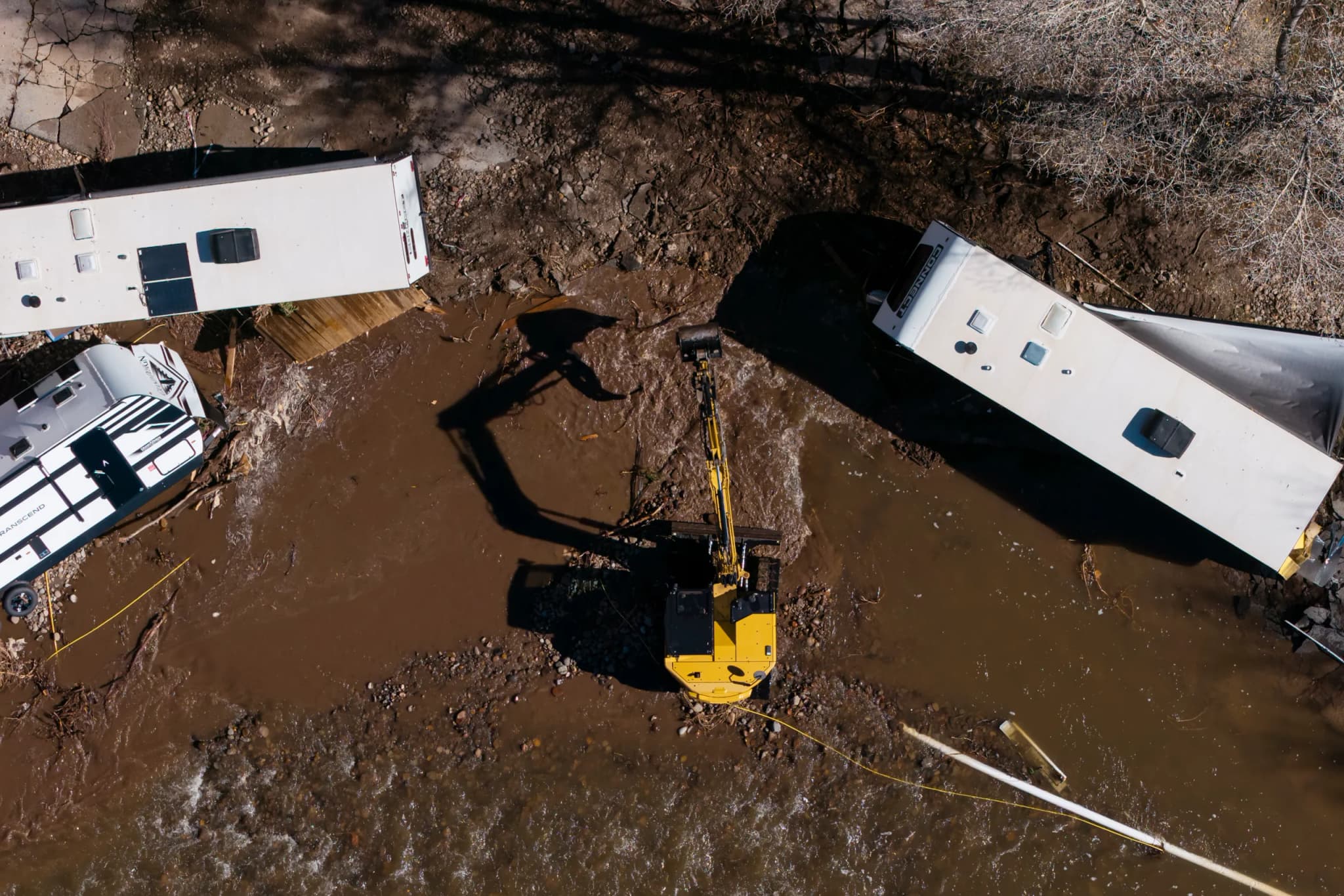
The rain didn’t just fall on the San Juan Valley last weekend; it arrived with a weight that turned creek beds into brown, churning rivers. For folks in Archuleta and Rio Grande counties, the deluge was a familiar, terrifying visitor, tearing through culverts, snapping bridges, and leaving behind a landscape scarred by mud and debris. Now, as the waters recede and the true scale of the wreckage becomes clear, the question on every neighbor’s mind is simple: who pays for the cleanup?
Gov. Jared Polis is asking President Donald Trump to help shoulder that burden. On Saturday, the governor formally requested approximately $27 million in federal aid to repair public infrastructure damaged by the storms that swept through the region between Oct. 22 and 25. This isn’t a small ask, but it’s a calculated one. The funds are earmarked specifically for the Federal Emergency Management Agency’s public assistance and hazard mitigation grant program, targeting the immediate needs of the two hardest-hit counties.
If you look closely at the breakdown of the request, you can see exactly where the money is going. Early damage assessments identified roughly $10.6 million in destruction to local roads, bridges, and culverts — the arteries of daily life for commuters and freight alike. Another $2.44 million covers damage to public utilities, ensuring that water and waste systems can function again safely. Parks and recreation facilities, which serve as vital gathering spaces for the community, account for $8.59 million in damages. Emergency protective measures, such as sandbagging and temporary shoring, add another $4.16 million to the total.
Polis was candid about the limitations of this initial request. In an interview with The Colorado Sun, he noted that this is just one facet of disaster assistance, focusing on general public infrastructure. “The final amount I’m confident will be much higher than $27 million, but we are filing with that to get this moving and approved,” he said. The strategy is to secure immediate approval for the known damages while assessments continue in the other ten counties listed in the state’s disaster emergency declarations. Once those evaluations are complete, the state intends to append the additional costs to the original request.
There is a distinct gap in this federal proposal, however. The $27 million covers public property — county roads, municipal buildings, and public parks, but it does not extend to individual homeowners or private businesses. For families whose houses were flooded or whose personal vehicles were destroyed, the primary recourse remains their own insurance policies. Polis emphasized that insurance is the first option for homeowners, a reality that leaves many residents feeling vulnerable if their coverage was limited or if they opted out of flood insurance due to perceived low risk.
The urgency of the situation is compounded by the weather itself. As the state files its paperwork, another round of precipitation is already moving into the same region. Rain, snow, and renewed flood risk are expected through Monday, meaning that the damage assessments may not even be finished before new water starts flowing. This creates a logistical nightmare for repair crews who need stable ground to work on, yet find themselves battling shifting mud and unpredictable streams.
Beyond the immediate state request, there are parallel efforts to address larger transportation infrastructure. Colorado transportation officials separately requested $65 million from the federal government on Wednesday to repair significant flood damage to highways across southwestern Colorado. The Federal Highway Administration has already approved this request, including $6.5 million in quick-release funding. This rapid injection of cash is designed to allow crews to begin critical repairs before winter sets in, when freezing temperatures can crack unfixed pavement and freeze exposed pipes.
The Southern Ute Indian Tribe, whose lands in the region were also severely impacted by the flooding, adds another layer of complexity to the recovery effort. State officials indicated that the tribe will pursue FEMA assistance independently from the state’s request. This separate track allows the tribe to manage its own resource allocation and prioritize projects specific to its community, though it also means coordinating with two distinct federal funding streams. The tribe has not yet responded to requests for comment regarding the specifics of its flood response, leaving some details of their recovery plan in the interim.
The timeline for federal approval remains uncertain. While state officials are hoping for a prompt response to expedite repairs, the process is subject to the discretion of the President. Trump is responsible for considering major disaster declaration requests, and there is no statutory deadline forcing him to act. History offers a mixed precedent; in 2025, Trump denied a federal funding request for flooding in southwestern Colorado but granted an aid request for a different event. This inconsistency makes it difficult to predict how the current $27 million request will be handled, adding a layer of political uncertainty to an already stressful recovery period.
As the dust settles on the initial storm, the focus shifts to the slow, grinding work of reconstruction. The $27 million request is a starting point, a necessary step to get federal machinery moving. But for the people living in the valley, watching the rain clouds gather again on the horizon, the real test is whether the help arrives fast enough to prevent the next wave from washing away the progress made by the last. The mud on the roads is drying, but the memory of the flood is still wet.
Keep up with the Western Slope
The day's Western Slope news, one email each morning. Free.