Qusai Abu Rida and Son Held Hostage by Settlers in Qusra for Five Nights
For five nights, Qusai Abu Rida and his son were held inside their home by a ring of Israeli settlers who cut off water and electricity, prompting a sharp rebuke from U.S. Ambassador Mike Huckabee.
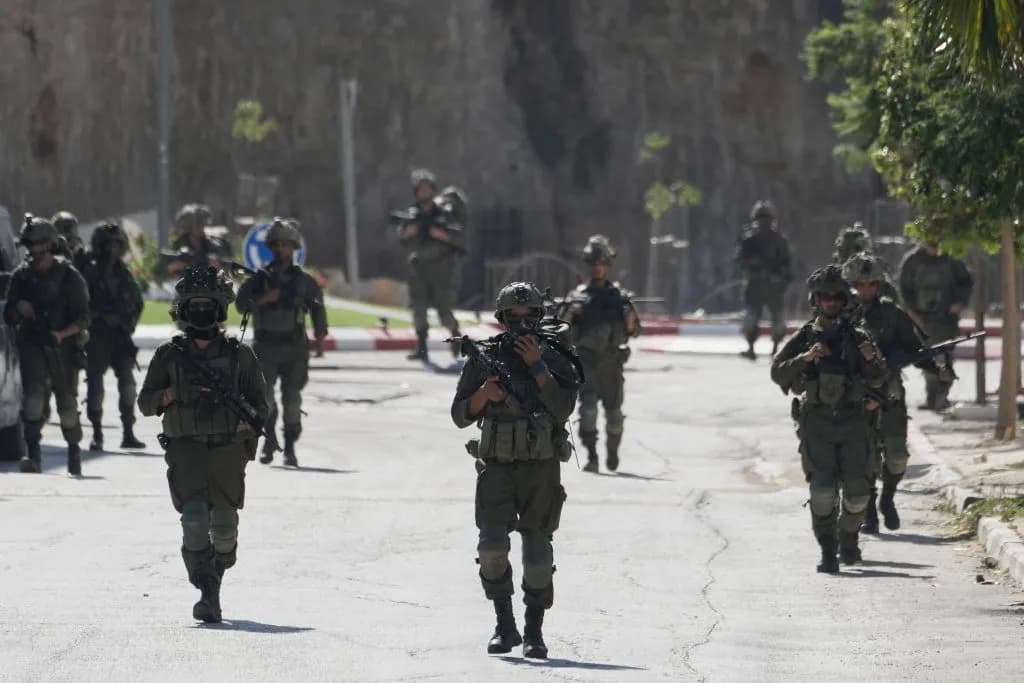
Aspen —QUSRA, West Bank — For five nights, Qusai Abu Rida sat inside his home with his teenage son while a ring of Israeli settlers cut off the water and electricity. They drank from well water as dozens of their neighbors erected tents on the outskirts, effectively holding the family hostage in their own living room.
Abu Rida’s brother, Loui Ridi, watched the siege unfold from Ohio through security cameras. He owns the house but couldn’t leave his job in the United States to defend it. The standoff in Qusra, a town in the northern West Bank, is the latest flashpoint in a wave of settler violence that has convulsed the territory since Israel seized it in 1967.
The situation drew a sharp rebuke from the United States on Thursday, when U.S. Ambassador Mike Huckabee referred to the settlers as “terrorists.” It was an unusually strong word choice for American officials, who typically reserve that label for Palestinian militants. The comment highlighted a growing tension within the Trump administration, which has historically offered unprecedented support to Israeli settlements.
To hear Loui Ridi tell it, the current military response is insufficient. He argues that Israeli troops keep removing the settlers only to move them 100 feet away, allowing them to return once the soldiers leave.
“It’s a cycle,” Ridi said. “They need to be prevented from the entire area, not just removed and moved 100 feet away so when the (Israeli military) leaves, they come back.”
The math holds up for why this matters locally and globally. Prime Minister Benjamin Netanyahu is trying to maintain good relations with his closest ally, the United States, while simultaneously mobilizing ultranationalist voters ahead of a tough reelection battle in October. Mounting criticism from Washington poses a direct challenge to his political calculus.
On Tuesday, Israel’s military condemned the siege as “illegal, reprehensible, and unacceptable,” declaring Qusra a closed military zone. The next day, settlers returned, blocking the road with rocks and clashing with soldiers. By Thursday, troops had dismantled two illegal outposts in Qusra and a nearby village, detained one Israeli, and sent more soldiers to carry out defensive missions.
Qusra Mayor Abdel Azim Wadi noted that Israeli forces evacuated more than a dozen homes to take up positions in the village. The settlers, though removed from their specific outposts, remain in other parts of the village. Abu Rida said soldiers gave the occupants 30 minutes to evacuate into one of the besieged houses, with orders to allow families to remain in their homes.
The question is whether this temporary military intervention will break the cycle Ridi describes, or if the settlers will simply wait out the soldiers and reclaim their territory. For now, the families are staying put, but the siege continues to draw eyes from Washington to the West Bank.
Ridi remains focused on the long-term solution rather than the daily headlines. “They need to be prevented from the entire area,” he said, emphasizing that temporary removal is not a permanent fix.
Keep up with Aspen
The day's Western Slope news, one email each morning. Free.