Record $12.9B Black Friday Spending Defies Inflation Fears
Consumers spent a record $12.9 billion online on Black Friday, defying inflation fears. Foot traffic surged at physical stores, signaling resilient retail demand.
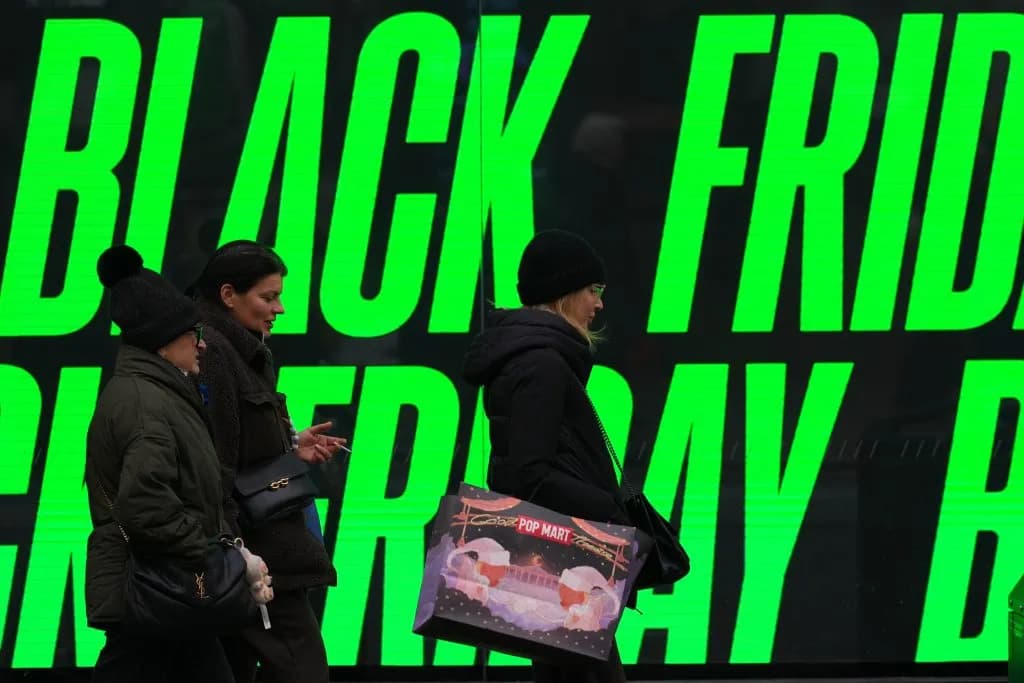
Aspen —The pre-dawn chill in Manhattan bit harder than the wind that had scuttled the Macy’s parade, yet the line outside Herald Square stretched out before the sun even cleared the skyline. It’s a scene that defies the prevailing narrative of a cash-strapped American consumer hunkering down against inflation. We’ve been told to expect caution, to assume that high gas prices and general economic anxiety would keep folks home. But the data suggests otherwise, and it forces us to rethink what actually drives a sale in this economy.
It’s not just about the discount; it’s about the event itself. According to Sensormatic Solutions, Black Friday still generates more foot traffic at physical stores than any other day, despite the rise of e-commerce. That’s a counterintuitive reality for a sector that has spent the last decade telling us the brick-and-mortar store is dead. The migration of shoppers is as predictable as geese heading south, and this year, they’re moving in record numbers.
The numbers are stark. Adobe Digital Insights reported that consumers spent a record $7.1 billion online on Thanksgiving alone, a 10.4% jump from the previous year. The forecast for Black Friday is even steeper, with projected online spending hitting $12.9 billion, up 9.2%. These aren’t marginal gains; they’re surges. The National Retail Federation projects total holiday spending to reach $1.01 trillion, with higher prices accounting for roughly half of the 4.1% growth expected in November and December. In other words, people are paying more and buying more.
If you look closely at the individuals in those lines, the motivation becomes clearer. Nita Lawrence, visiting from Miami, didn’t just walk in; she sought out the specific thrill of the "special" experience, pointing out the sheer size of the flagship store compared to what she’s used to. For Anna Butler, a retired teacher from Atlanta, the financial calculus is simple: security. She bought six pairs of jeans, stating plainly, "The economy is not good, but I am comfortable." There’s a warmth to that sentiment, a quiet confidence that doesn’t rely on the stock market’s daily fluctuations.
The common thread here isn’t desperation. It’s comfort. It’s the ability to treat a purchase as a pleasure rather than a necessity. The inflation that haunts headlines seems to hit different targets depending on where you stand in the lifecycle. For the retired, for the secure, for the visitors seeking a cultural moment, the deal is a gift. The friction of the commute, the noise of the crowd, the wait in the line — these are the costs of admission to a feeling of abundance.
The record spending isn’t a sign of recovery so much as it is a sign of resilience. Or perhaps, more accurately, it’s a sign of segmentation. The wealthy are spending, the middle class is stretching, the poor are skipping. When aggregated, the total looks robust. When disaggregated, the picture is more complex, more nuanced, more troubling. But the headline remains: record spending. And that headline, more than any other factor, will shape the political and economic discourse of the coming months.
The final image of the day isn’t the empty registers or the stacked boxes in the back room. It’s the single, discarded receipt left on the counter, crumpled and stained with coffee. A small, white square of paper, bearing the weight of a decision made in haste, a choice driven by impulse rather than need. It sits there, unnoticed, waiting to be swept into the trash bin, its message already forgotten by the person who bought the item. A tiny artifact of a larger trend, a microcosm of the macro-economy.
Keep up with Aspen
The day's Western Slope news, one email each morning. Free.