Ricky Skaggs Brings Bluegrass Legend to Beaver Creek
Bluegrass icon Ricky Skaggs performs at Beaver Creek, sharing stories of his early days with Bill Monroe and his career spanning decades of authentic mandolin music.
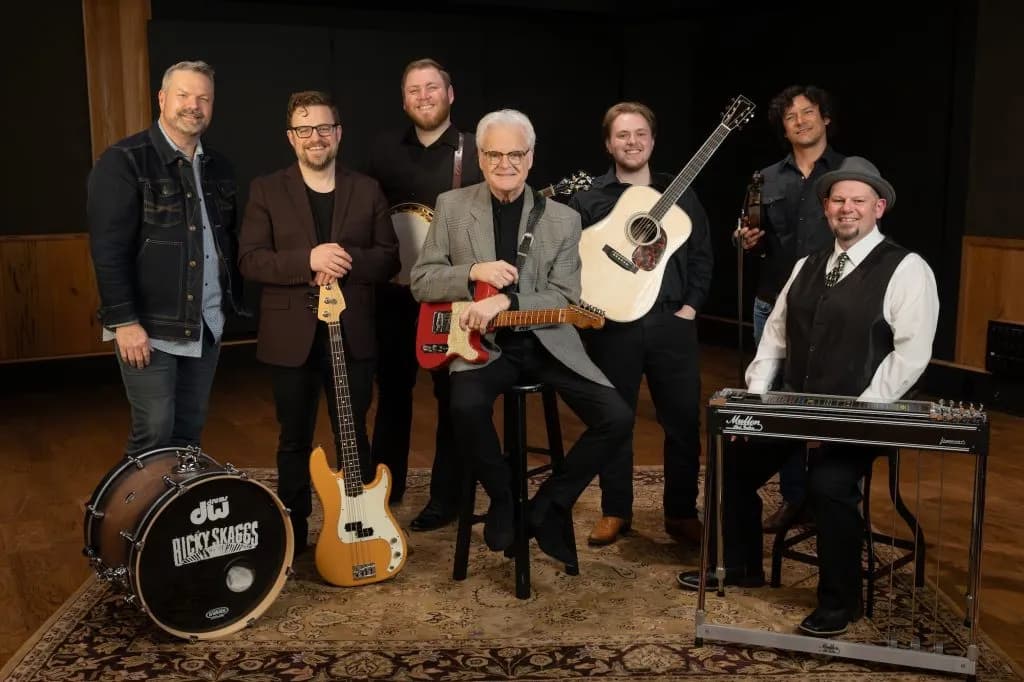
Aspen —Ricky Skaggs got his first mandolin at five years old. His dad, a welder, placed it in his bed. The boy picked it up, flipped the strings, and loved the sound immediately.
Now, that same boy — grown, gray-haired, and carrying 15 Grammy Awards — is coming to Beaver Creek.
It’s not just a concert. It’s a history lesson wrapped in a bluegrass package. Skaggs is set to perform at the iconic venue, bringing with him a career that predates the genre-splitting madness of modern radio. He remembers a time when country, bluegrass, and gospel shared the same airwaves. No separate channels. No algorithmic segregation. Just music.
“There wasn’t this separation,” Skaggs said, good-naturedly. “And I don’t know what alien brainchild came up with the stupid idea of doing the top 40 and separating them.”
He’s not wrong. The industry sliced the pie into neat, marketable slices. Skaggs hates it. He likes Chris Stapleton’s radio and Willie’s Roadhouse because they play the good stuff. If he had a channel, he said, it would be exactly that.
Locals in Beaver Creek should know what they’re getting into. This isn’t a polished pop-country act trying to sell soda. This is a man who stood on stage at age six and sang “Ruby”, wondering if the woman in the song was mad at her man; while Bill Monroe watched. Monroe didn’t pay attention to the crowd shouting for the kid. He just kept playing. Then he took his own mandolin, wrapped a leather bootstring around it for a strap, and handed it to Skaggs.
That was the start. By 15, Skaggs was in Ralph Stanley’s backing band, The Clinch Mountain Boys. By 1982, he was the youngest member of the Grand Ole Opry. He played in Emmylou Harris’s Hot Band in the late ’70s. He’s been a standout solo artist since 1981.
The short version? He’s been doing this since before most of us were born. And he’s still doing it.
Beaver Creek isn’t just a ski resort with a concert hall. It’s a place where folks drive up from the valley for a weekend. They expect luxury. They expect comfort. Skaggs delivers the music, but he also delivers the context. He remembers the grocery store gigs. He remembers sitting on a pop case filled with ice-cold Pepsi and Coke, his little butt getting cold, playing mandolin alongside his dad.
“They’d set me up on this pop case,” he said. “And they had ice underneath there, so my little butt would get cold sitting there, but I’d sit there and play music with my dad.”
That’s the story. Not just the Grammys. Not just the Opry. The ice-cold soda and the dad’s guitar.
Skaggs plays mandolin, fiddle, banjo, and guitar. He sings harmonies. He leads Kentucky Thunder. He’s a legend who doesn’t need the press release hype. He just needs a stage and an audience that remembers what bluegrass sounded like before it was packaged for radio.
Beaver Creek has the venue. Skaggs has the history. The question is whether the locals will show up for the music or just the ski season.
Make no mistake. This is a rare chance to see a living legend who was performing before the current generation of stars was born. It’s worth watching. It’s worth attending.
Read that again. He was six when Bill Monroe handed him a strap. He’s in his 70s now. He’s still touring. Still playing. Still loving the sound.
The concert is a anchor in a sea of generic festival acts. It’s a reminder that some things don’t need to change. They just need to be played.
Skaggs doesn’t care about the top 40. He cares about the mandolin. And the people who listen.
Keep up with Aspen
The day's Western Slope news, one email each morning. Free.