Roaring Fork Transportation Coalition Proposes HOT Lane to Ease Aspen Congestion
The Roaring Fork Transportation Coalition pitches a High-Occupancy Toll lane and congestion fee to the Snowmass Town Council, aiming to remove 2,500 cars from Highway 82 and cut emissions.
Aspen —“The Coalition isn’t a government body; it’s a citizen initiative aimed at making commuting easier by reducing the traffic congestion that has plagued our valley for 50 years.”
That line from a staff report submitted to the Snowmass Town Council sets the stage for a proposal that is equal parts pragmatic engineering and civic ambition. The Roaring Fork Transportation Coalition, a group formed in 2025, stood before the council on Monday to pitch a solution to the gridlock that has become as much a part of Highway 82 as the snow in winter. They aren’t asking for permission to start from scratch. They are asking to build on the work of the Roaring Fork Transportation Authority, or RFTA, which they argue is doing good work but isn’t the silver bullet.
“RFTA can’t be the silver bullet,” George Newman, former Pitkin County commissioner and former chair of the RFTA board, told the council. “They’re not going to be able to solve the congestion problem all by themselves.”
The coalition, composed of 28 citizens including elected officials and business leaders from Aspen to Glenwood Springs, has spent 10 months looking at case studies from around the world. They didn’t just pick a favorite. They landed on two specific mechanisms: a High-Occupancy Toll (HOT) lane and a congestion reduction fee. The goal is aggressive. They want to cut bridge traffic and emissions by 2,500 cars. They aim to prioritize transit. The plan also seeks to eliminate neighborhood traffic and improve safety and evacuation times.
Hannah Berman, director of Sustainability and Advocacy at Aspen One, framed the problem in terms that hit the wallet and the lungs. She noted that the vast majority of Aspen voters rank congestion as a top priority. The coalition aims to reduce 25,000 tons of carbon emissions from cars — a figure Berman pointed out is “more than Aspen Skiing Company’s entire operation.” The biggest cost, she argued, isn’t just fuel; it’s time. The proposal targets filling 7% of the 34,500 empty seats that enter Aspen during peak hours every day. That is a significant chunk of potential capacity sitting idle in minivans and sedans.
Michael Miracle, director of Community Engagement for Aspen One, explained how the HOT lane would actually function. It isn’t just a toll lane for the rich. Buses, vanpools, and high-occupancy vehicles with three or more people use it for free. Single-occupancy drivers can use it too, but they pay a toll that is “dynamically priced.” The price fluctuates to ensure the lane stays fast, and the revenue covers the cost of keeping it fare-free for the carpools and buses. It’s a market-based approach to a physical problem.
The coalition’s six goals are specific: reducing congestion and travel time, creating equitable valley-wide solutions, cutting bridge traffic, prioritizing transit, eliminating neighborhood traffic, and improving safety. They aren’t just talking about moving cars faster; they’re talking about changing how the valley moves.
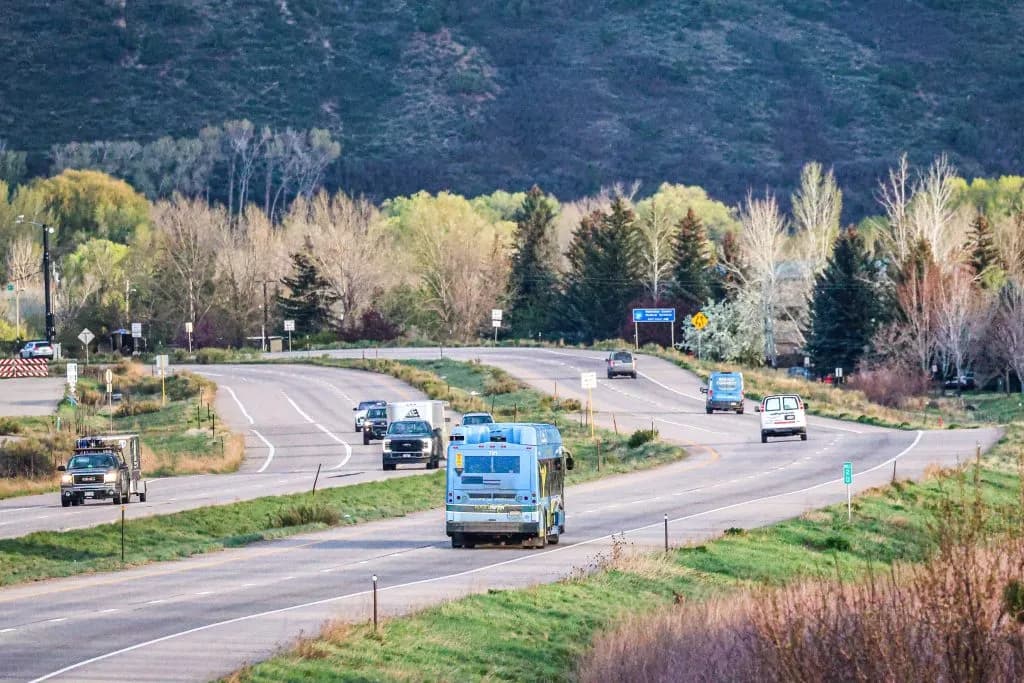
Stand there long enough on Highway 82 during the afternoon rush, and you see the result of fifty years of growth without a corresponding shift in infrastructure. You see the brake lights stretching toward Aspen. You see the emissions. You see the frustration. The coalition’s proposal is an attempt to turn that frustration into a system. It’s not perfect. It’s not exactly a magic wand. But it’s a plan that acknowledges the current system is unsustainable.
The report submitted to the council notes that the coalition is designed to support and enhance RFTA’s services, not replace them. It’s a recognition that buses alone can’t move everyone, and roads alone can’t hold everyone. The HOT lane offers a choice. Pay to save time, or wait for the bus. Drive alone and pay the toll. It’s a trade-off, and it’s one that locals will have to weigh against their daily commute.
The proposal is rooted in the idea that the status quo is no longer an option. The 2,500 cars they aim to remove from the road isn’t just a statistic. It’s a reduction in noise, in fumes, in the sheer volume of metal occupying space on a road built for a different era. It’s a shift from trying to build more lanes to trying to use the lanes we have more efficiently.
The Snowmass Town Council listened. The coalition presented. Now comes the hard part: convincing the rest of the valley that paying a toll to save time is better than sitting in traffic for free. It’s a familiar debate in urban planning, but on the Western Slope, where driving is often a necessity rather than a choice, it feels different. It feels personal.
The sun dips behind the mountains, casting long shadows over the highway. The brake lights flicker on, one by one, a river of red stretching back toward Glenwood. The HOT lane would offer a different path, a faster lane for those willing to pay. But for now, the valley waits. The congestion remains. And the coalition is just getting started.
Keep up with Aspen
The day's Western Slope news, one email each morning. Free.
Monsoonal Moisture Brings Rain and Relief to Western Slope Heat
Eagle County Judge Receives Legacy Award for Mental Health Court Reforms