Ron Hanks Ties Energy and Manufacturing to National Security in CD3 Run
Retired military officer Ron Hanks outlines his conservative vision for Colorado's 3rd Congressional District, focusing on expanding energy production, boosting manufacturing, and reforming the federal budget.
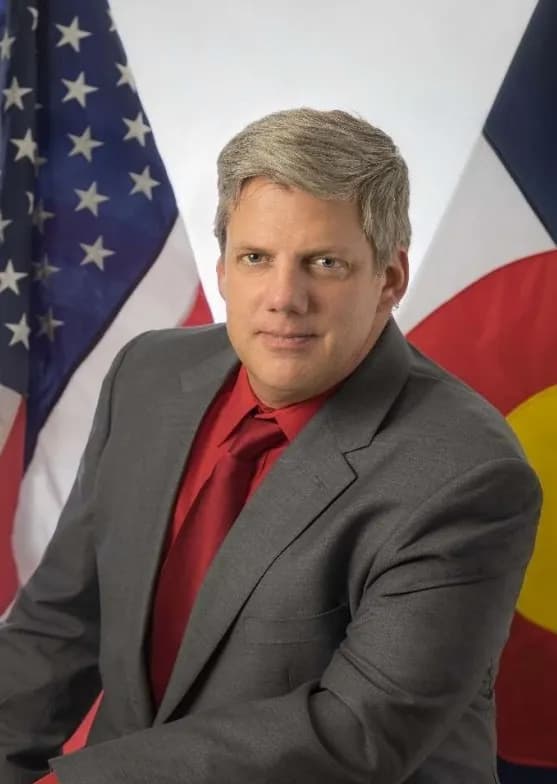
Aspen —The wind off the Uncompahgre Plateau carries the scent of pine and cold stone, a crispness that settles into the bones of anyone who has spent an afternoon hiking near Montrose or watching the sun dip behind the San Juans from a Delta porch. It is a landscape defined by vast, open spaces and a quiet, stubborn independence, where the horizon stretches so far it feels like a promise. In that same spirit of looking outward while holding fast to home, Ron Hanks is asking the 150,000 folks in Colorado’s 3rd Congressional District to look at him not just as a politician, but as a soldier who has returned to the front lines of governance.
Hanks, a retired Arabic linguist and intelligence officer who spent 32 years in the military before serving in the Colorado Assembly from 2020 to 2022, is running to be the consistent conservative vote that moves the "America First" agenda forward during President Trump’s final two years in office. He doesn’t mince words about what that means for the valley floor or the high country. He sees national security through a specific lens — one that prioritizes energy abundance, manufacturing might, and a federal budget that doesn’t bleed money into unknown corners.
You can feel the weight of his arguments when you listen to them against the backdrop of our local economy. Hanks believes that tariff negotiations are not just trade tools but instruments of foreign policy, a stance he says has put us in a stronger negotiating position during this "massive global economic reset." But it’s his energy policy that likely hits closest to home for Western Slope neighbors. He wants to expand power production capabilities across the nation, and he sees Colorado as a significant player. He’s not just talking about the wind farms; he’s talking about clean, high-energy coal and oil and gas as part of the mix. He also backs small modular nuclear reactors, though he’s grown alarmed by the sight of those huge "black lakes" of solar panels turning agricultural land into utility-scale batteries. For the farmer in Paonia or the rancher near Silt, that shift from productive soil to utility acreage is a tangible change in the landscape.
Manufacturing, he argues, is a national security issue, and we can’t bring heavy industry, high tech, or pharmaceuticals back to the United States without abundant, consistent energy. It’s a simple equation, but one that requires us to rethink how we use the land we’ve worked for generations. Agriculture is national security, too, and Hanks wants to secure our land and water rights from foreign purchase. He proposes using expanded energy capacity to desalinate seawater, reducing the demand of downriver states by a few million acre-feet, and starting to fill our own reservoirs. It’s a bold idea for a region that has fought tooth and nail for every drop of water in the Colorado River basin.
Then there’s the money. Hanks believes there is massive fraud in the federal budget, a staggering $7.5 trillion annual outlay where we don’t even know where much of it is going. He supports zero-based budgeting, where each department starts at zero and builds up, spending only on programs deemed constitutional. He wants each department audited, each bill single-subject, and each law to have an expiration date. If it’s worth keeping, Congress renews it. If not, it expires and goes away. It’s a clean, sharp approach to a bloated system.
Hanks promises to represent the 27 counties and nearly 50,000 square miles of CD3 with regular meetings and clear updates. He wants to enhance public trust in the election process and advocate for our shared interests in Washington. But as you drive down U.S. 50, past the solar fields and the coal plants, you might wonder if the "America First" agenda he champions will truly serve the specific, rugged needs of this corner of Colorado, or if it will just be another layer of federal policy applied from a distance. The wind still blows off the plateau, cold and indifferent, carrying the dust of history and the promise of whatever comes next.
Keep up with Aspen
The day's Western Slope news, one email each morning. Free.