Routt County Ranchers Face Devastating Drought After Unprecedented Winter
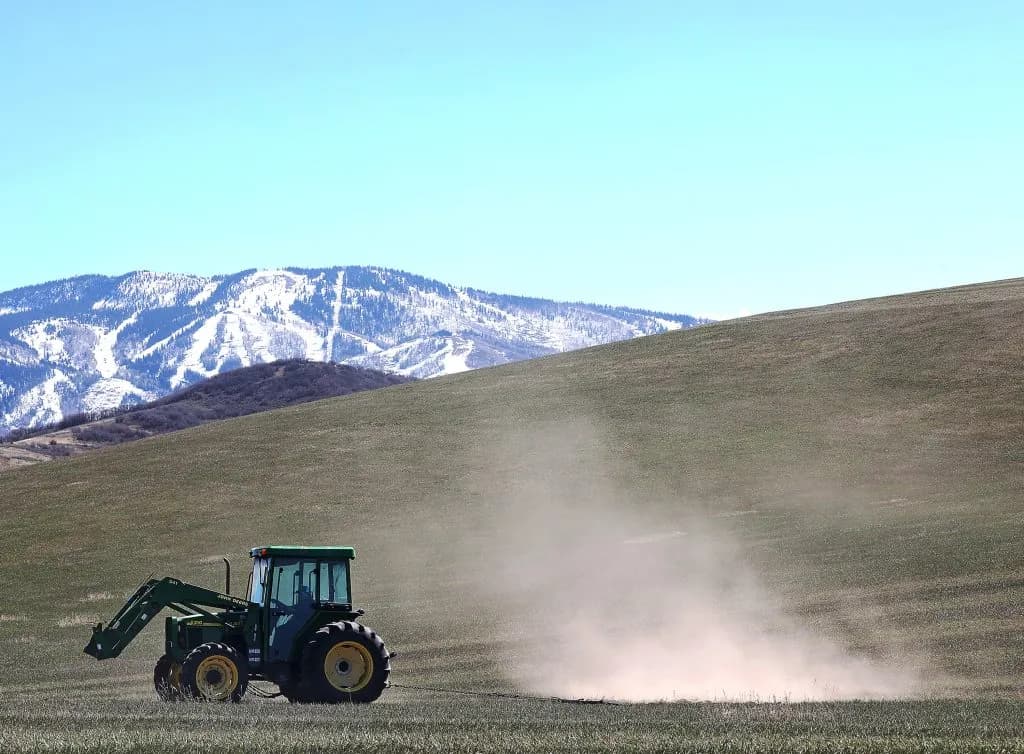
Steamboat Springs —Dust devils swirl across the parched hay meadows west of Steamboat Springs, a stark contrast to the usual snow-covered landscape this time of year. Jo Stanko's tractor kicks up a cloud of dust as she harrows the dry earth, a routine task that's taken on a sense of urgency. Her husband, Jim, fuels up his own tractor, his mind preoccupied with the devastating drought that's gripping Routt County. "It's going to change everything for a whole bunch of people," he says, his voice laced with concern.
The Stankos' 2,000-acre ranch is just one of many in Routt County feeling the effects of an unprecedented winter. Jim can't remember a season like this, not even the notorious winter of 1976-77, when the Steamboat Ski Area closed due to lack of snow. Back then, they still had snow on the ground in March and April, but this year, the landscape is bare and dry. The comparison is striking — in a normal year, over a foot of snow would still be covering the hay meadows, and the Stankos would be worried about protecting their newborn calves from the cold, wet weather. Instead, they're worried about finding enough water to irrigate their fields.
The concerns are shared across Routt County, where ranching families like the Stankos and Kyle Monger's are bracing for a long, dry summer. Monger's family has been ranching in the area since the 1800s, and he's never seen conditions like this. The warm weather may have its advantages, making feeding operations easier, but the lack of moisture is a major concern. The reservoirs aren't filling up, and the creeks are already drying up — a ominous sign for the upcoming irrigation season. Jim Stanko's creek, which shouldn't be running yet, is already bone dry.
The drought will have far-reaching consequences, from the cost of caring for their herds to the risk of wildfires. The Stankos are already thinking about the added expenses they'll face, from buying feed to hauling water. It's not just the immediate costs that are worrying them, though, it's the long-term impact on their livelihoods. "It's not only the fact that if we don't get some rain, the grass isn't going to grow," Jim says. "It's the fact that there's no water, so the reservoirs aren't filling up." The uncertainty is palpable, and the Stankos are left wondering what the coming months will bring.
As the days turn into weeks, and the weeks turn into months, the situation will only grow more dire. The community is holding its breath, waiting to see if the monsoons will come in July, like they did in 1977, and bring some relief to the parched landscape. Until then, the Stankos and other ranching families will have to adapt, finding ways to make do with limited resources. Make no mistake, this drought will change everything for the people of Routt County; the question is, how will they respond? The short version is, they'll have to get creative, and fast, to survive the long, dry summer ahead. Read that again - the reservoirs aren't filling up, and the creeks are drying up. That's what's at stake here. Worth watching is how the community comes together to support each other, and how the local government responds to the crisis. One thing is certain, though. this drought will leave its mark on Routt County, and it will take a long time to recover.
Keep up with Steamboat Springs
The day's Western Slope news, one email each morning. Free.