RTD Offers Free Buses to Handle 40,000 Festival Guests in Boulder
RTD is deploying free bus services and a new temporary route to manage 40,000 festival visitors in Boulder, aiming to ease congestion using federal grants and local funds.
Forty thousand. That is the conservative estimate of how many outsiders will descend on Boulder between Jan. 21 and Jan. 31. For context, January is usually a ghost town on the Front Range. Low visitor numbers, quiet streets, and a general sense of hibernation. Not this year.
The obvious take is that this is a disaster waiting to happen. You have a city built for a certain flow of traffic suddenly jammed with festival-goers, volunteers, and locals trying to get to work. But the real story isn’t the chaos; it’s the bet that money can buy order.
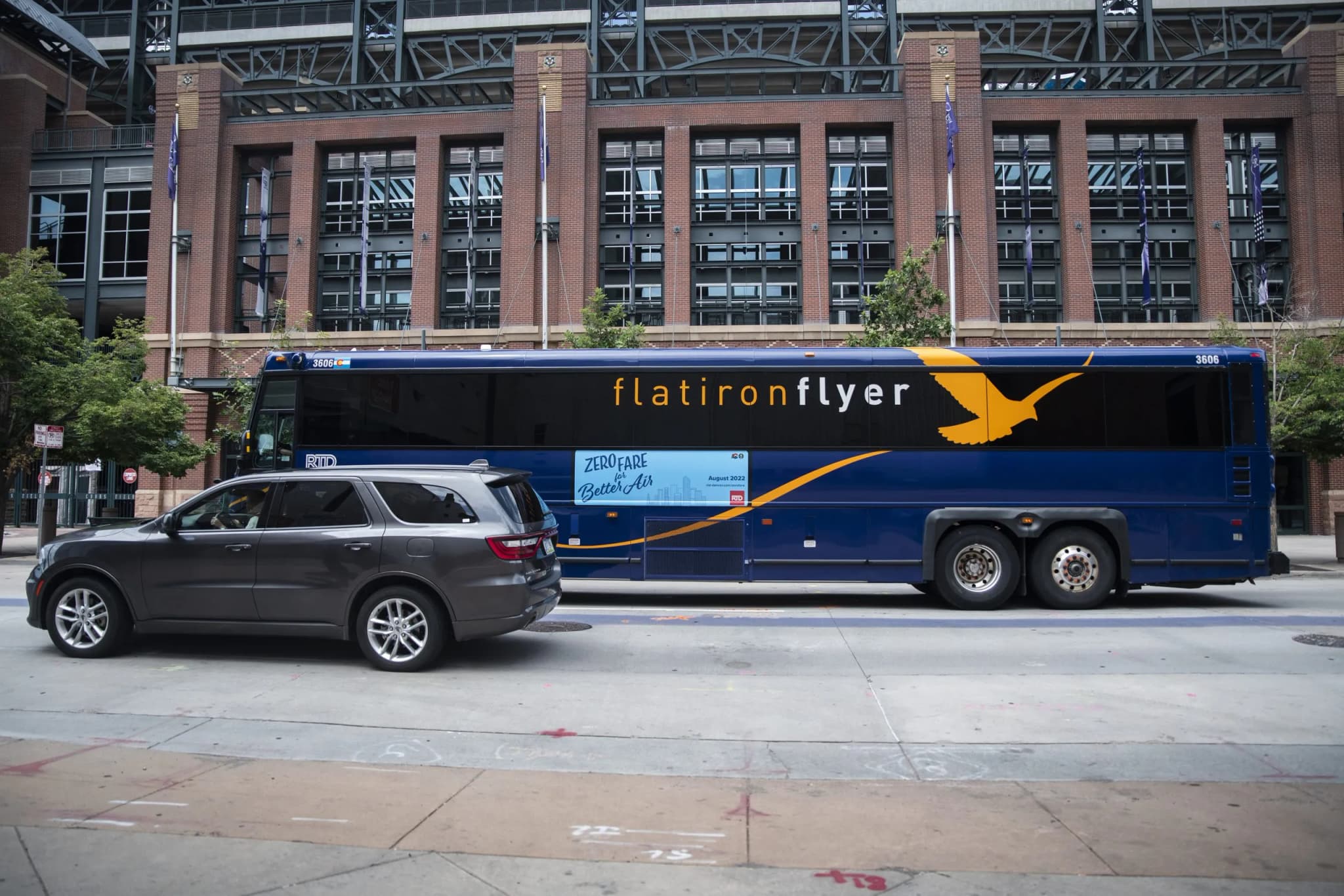
Regional Transportation District (RTD) officials are making a bold move: they are offering free rides on key bus routes. It is a simple concept. If the bus costs nothing, people will take it instead of driving. It sounds too easy, but let’s look at the details.
Debra Johnson, RTD’s general manager and CEO, framed it as a commitment to reducing congestion and improving venue access. In plain English, they want to get cars off the road. To do that, they are expanding schedules and adding a temporary line called Route CHAT, which runs every 10 minutes to Chautauqua Park.
Here is the breakdown of the free service:
- BOLT: Connects Boulder and Longmont. Service extends to 2:30 a.m.
- JUMP: Runs along the Arapahoe corridor. Hours stretch until 2 a.m.
- SKIP: Serves the Broadway corridor. Service extends to 2 a.m.
- CHAT: Temporary line to Chautauqua Park. Runs every 10 minutes from 8 a.m. to midnight.
On paper, this looks like a win-win. Visitors get cheap transport, locals get less traffic, and RTD gets ridership data. But in practice, there is a cost. Who pays for it?
The answer is a mix of federal grants and local tax dollars. RTD plans to tap Clean Transit Enterprise grant funds and $1 million approved by the RTD Board. That $1 million was originally designed for a pilot program to handle high-volume events, specifically Broncos games in Denver. Now, it is being repurposed for a film festival in Boulder.
Is that a bad thing? Not necessarily. It shows flexibility. But it also highlights a dependency. If the federal grants dry up, or if the RTD Board decides they need that $1 million for something else, the free rides might disappear.
There is also the issue of capacity. Adding more buses is good, but only if there are enough drivers and vehicles. RTD says they are adding late-night and early-morning rides, which is smart. But if the buses are full, people will still drive. And if the buses are empty, you are wasting money.
The real test will be in the streets. Will people actually take the bus? Or will they just use it as a backup plan? We won’t know until the festival starts.
For now, the message is clear: if you want to avoid the traffic, take the bus. It’s free. It’s faster. And it’s the only way to keep the city moving.
The bottom line? This is a gamble. If it works, Boulder becomes a model for how to handle big events without breaking the gridlock. If it fails, you’ve spent a million dollars to move people around in circles. Either way, the next time you’re stuck in traffic on Broadway, remember: the bus was right there. And it didn’t cost a dime.
Keep up with the Western Slope
The day's Western Slope news, one email each morning. Free.