Snowmass Declares Go Time as 30% Snowpack Sparks Firefighting Water Crisis
With snowpack at just 30% of normal, Snowmass water managers declare 'Go time,' urging residents to cut outdoor watering to ensure enough water remains for firefighting and survival.
Aspen —The snowpack is at 30% of normal. That is not a projection. That is the current reality. And it means the water managers are right to panic.
The Ruedi Water and Power Authority (RWAPA) has declared “Go time.” They aren’t asking politely. They are demanding immediate, drastic conservation to keep the lights on and the fires from burning the valley down.
The short version: if you keep watering your lawn like it’s 2015, you will run out of water for firefighting. And firefighting is the priority.
Greg Poschman, chair of RWAPA, put it bluntly. “We don’t have enough water to fight fires.”
That is the hard fact locals are ignoring. We worry about our showers. We worry about our car washes. But Poschman says if the drought worsens — and it will, because the forecast promises more dry weather — the water shuts off for municipal and residential use first. The fire trucks get the rest.
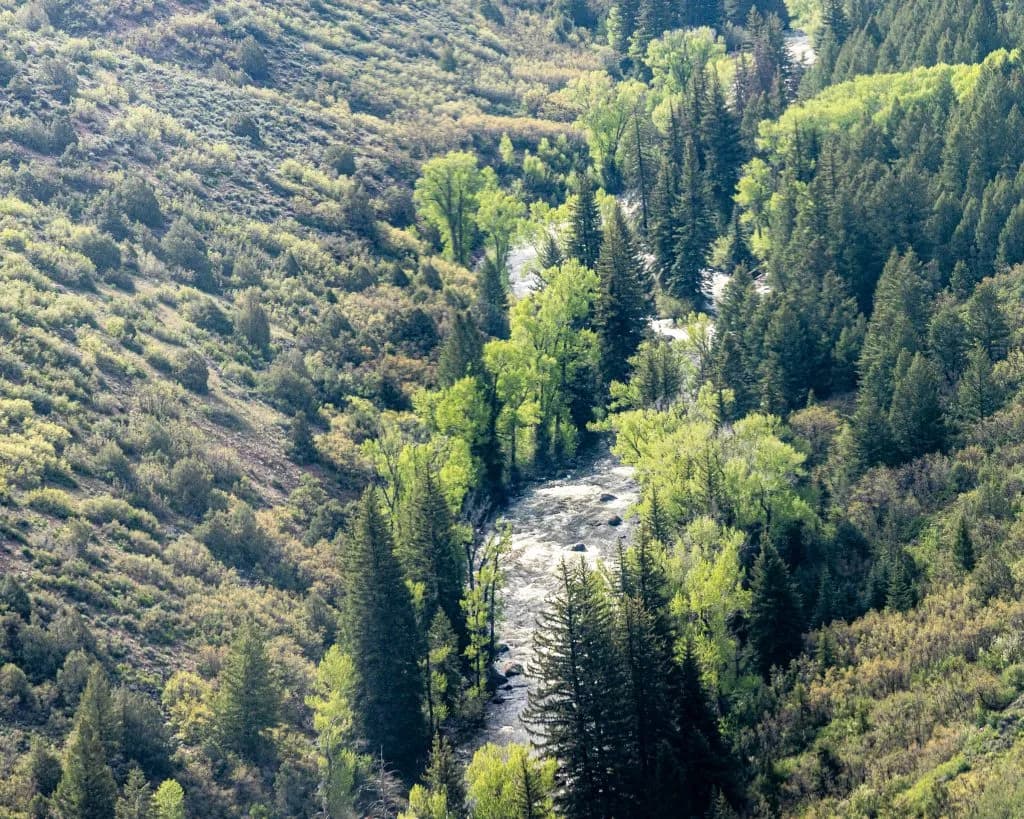
The snowpack is at or below 30% of normal. Reservoirs won’t fill. This is likely the driest year in recorded memory.
Darrel Smith, water resource manager for the Snowmass Water and Sanitation District, points to the math. Around 80% of the water used for outdoor watering does not return to the surface water in the valley. It evaporates. It sinks into the ground and stays there. Water used inside the house flows through treatment and returns to the streams. Outdoor watering is a leak in the bucket that won’t plug itself.
So RWAPA’s advice is simple, if annoying. Water less often. Water deeper.
Stop the daily sprinkler cycle. Saturate the soil. Make every drop count. Smith notes Snowmass is already incentivizing morning and evening watering to beat the heat, but they need more. They need neighbors to cut the hose.
“We can’t just do business as usual,” Poschman said.
He’s right. The state’s lowest snowpack on record, combined with warmer-than-normal winter temperatures, left 100% of Colorado in some drought condition by the start of June. The U.S. Drought Monitor doesn’t lie. The ground is dry. The air is hot.
Read that again.
If people reduce outdoor watering, the difference will be huge. We’ll have water to drink. We’ll have water for showers. But only if we stop wasting it on grass that doesn’t need it.
Poschman warns that overuse reduces what’s available for vital functions. Firefighting is the big one. But it’s also about survival. If the dry weather continues, and the forecast says it will; this isn’t a temporary inconvenience. It’s a structural shift in how we live.
Snowmass has restrictions. They give exemptions for specific scenarios. They try to save water. But restrictions aren’t enough. You have to change your habits.
“Outdoor watering is the biggest concern,” Poschman said.
It’s not the indoor taps. It’s not the toilet flushes. It’s the sprinklers.
Make no mistake. This is a squeeze. The reservoirs are empty. The snow is gone. The rain isn’t coming. If you don’t cut your outdoor use now, you’re betting your house on a miracle.
And miracles are rare in the mountains.
Keep up with Aspen
The day's Western Slope news, one email each morning. Free.