Snowmass Mayor Alyssa Shenk Targets Council Gridlock Over Draw Site
Snowmass Mayor Alyssa Shenk argues the town's crisis is a failure of process, not vision, as she pushes for consensus on the controversial Draw Site affordable housing project ahead of her unopposed re-election.
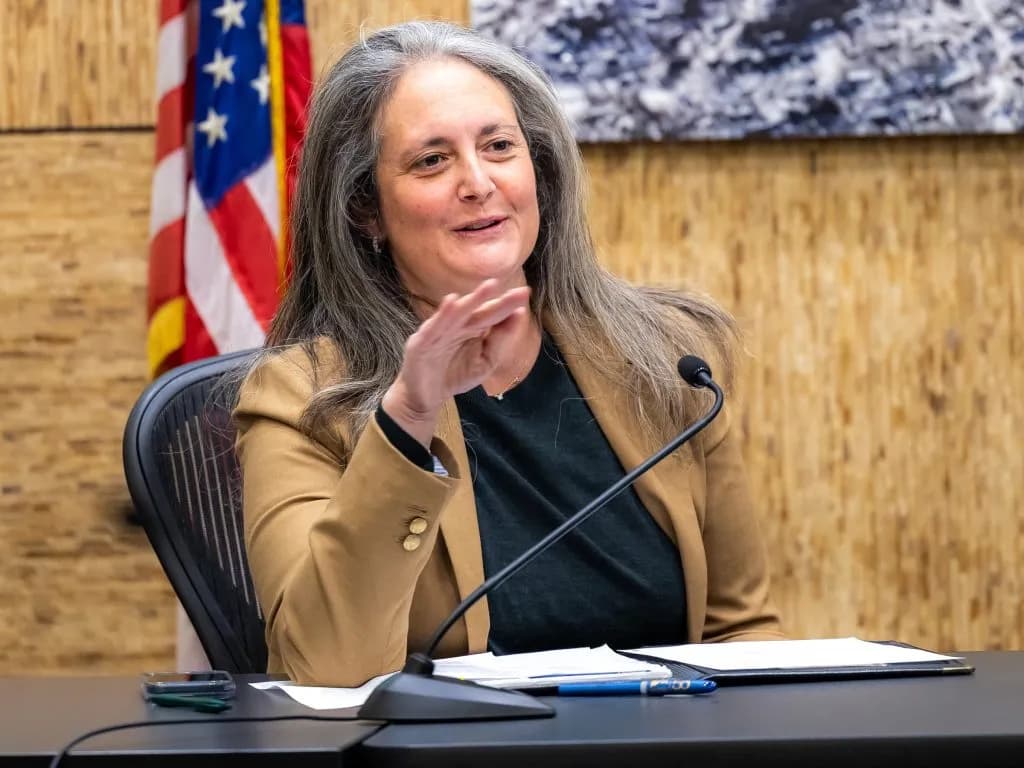
Aspen —The air in Snowmass Village is thin and sharp, the kind of cold that bites at your knuckles even when you’re standing still. But inside the room where Town Council candidates gathered for a Squirm Night, the temperature was different. It wasn’t just the physical chill; it was the friction of a divided council trying to find its footing. Mayor Alyssa Shenk, running unopposed for a second two-year term in the Nov. 3 election, sat at the center of that friction. She is entering her next term with a singular, perhaps counterintuitive focus: not on new ideas, but on the mechanics of consensus.
It’s a strange priority for an elected official in a town that prides itself on bold, often contentious development. But Shenk argues that the real crisis isn’t a lack of vision; it’s a failure of process.
The Draw Site, an affordable housing project that has become the town’s most polarizing issue, was moved to land use review with a three-to-two vote. It now requires a supermajority that hasn’t yet been achieved. The obvious take is that the council is deadlocked, stuck in a gridlock of opposing philosophies. But if you listen closely to Shenk’s Q&A with the Aspen Times, she challenges that narrative. She doesn’t blame the design itself.
“My frustration with the process is not how we got to the design,” Shenk said. “It’s the fact that we’ve agreed as a council by majority vote to move forward with this project.”
The sticking point, she argues, is protocol. Council Member Cecily DeAngelo and Council Member Britta Gustafson have proposed revisiting alternate designs in recent meetings. To Shenk, this feels like a step backward, a rejection of the collaborative effort already invested. She notes that the town has taken steps to address concerns, including smaller meetings with architects and a peer review advocated by Gustafson. Yet, she says, the council hasn’t fully committed to the compromise.
“I don’t feel like we’ve gotten enough of the collaborative compromising effort from everyone,” she said.
There’s a warmth to her frustration, though. It isn’t anger; it’s exhaustion. She has served for 10 years on the council before becoming mayor, and she knows that in this seat, you are trying to create consensus. You’re trying to make sure everyone feels included and heard. But inclusion, she suggests, requires a level of trust in the process that is currently missing.
This tension extends beyond housing. Shenk points to the proposed overhaul of the Mall Transit Center as a place where public input has actually shifted her perspective. After a roundtable with mall business owners, she found their concerns were practical: timing of construction and visitor access.
“I was quite surprised at how amenable they were to wanting to do this,” she said of the community.
The same dynamic plays out in the workforce housing debate, specifically regarding retirees remaining in employee housing. Rather than forcing a legislative hammer, Shenk points to the town’s Workforce Housing Board as the place where solutions can be developed.
“One of the tasks that we’re going to be looking at with this board is helping us delve into that more and see where we can make changes,” she said.
It’s a quiet, bureaucratic answer to a loud social problem. But for a town where every new building is a referendum on values, maybe that’s exactly what’s needed. Not a revolution, but a rhythm.
The room where Shenk spoke was quiet after she finished. The only sound left was the hum of the heating system, a low, steady vibration that filled the space. It’s the sound of a town waiting to see if its leaders can actually listen, or if they’ll just keep talking over each other until the next vote comes around.
Keep up with Aspen
The day's Western Slope news, one email each morning. Free.