Snowmass Music Festival Moves Off Mountain to Survive Recession
Snowmass Summer of Music relocated from Coney Glade to the valley floor in 2010, adapting its June lineup and infrastructure to survive financial losses during the Great Recession.
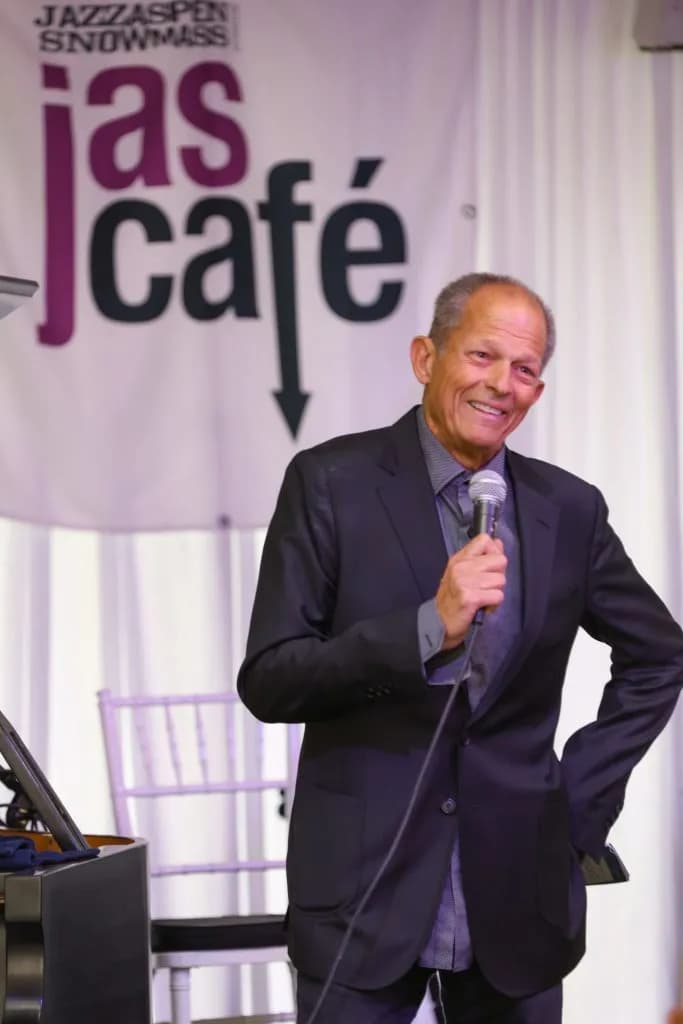
Aspen —The air in the Ritz-Carlton lobby still smells faintly of expensive cologne and old wood, a scent that seems to cling to the memory of 1993. It was there, under the high ceilings, that Jim Horowitz stood beside Tony Bennett and Tom Bailey of Janus Funds, posing for a photograph that would become the seed of something much larger. It wasn’t a formal meeting; no business cards were exchanged, just a moment that felt suspended in time. But moments like that have a way of rippling outward, touching lives you never expected to reach.
That single encounter helped sustain a young festival, giving it the breathing room it needed to find its footing. By the spring, a deal had been made — not a massive one, but a start. The following year, the festival returned, and with it came a sister-festival relationship with Jazz in Marciac, the French event that had originally inspired the whole endeavor. About fifty people traveled from France, bringing with them a night called Hot Jazz Fête Française. It was a boisterous celebration, a New Orleans-style meal paired with hot jazz, served on picnic tables that gave the evening a casual, communal energy. It was the kind of fun that doesn’t require a grand stage, just good food and music that makes you want to move.
As the festival grew, so did the ambition. After the second year in Snowmass, a new idea took shape: what if the festival extended beyond the start of summer? What if there was something different at the other end of the season? The answer was Labor Day. The natural location was Coney Glade, a place where people could ride the lift up and find themselves in a natural amphitheater. It wasn’t easy — getting equipment up the mountain was a hassle, but it was worth it. The lineup was impressive: Buddy Guy, the Neville Brothers, Willie Nelson. Probably five thousand people a day managed to get up there. The weather was great. And when the sun set after Willie Nelson played on Monday, there was a collective sense of awe. This was pretty cool.
But the mountain had its limits. The effort to move all that equipment uphill was brutal. So the decision was made to move it off the mountain, to the valley floor, where it was flat and there was already a park. The stage stayed pretty much where it had always been. Buses could go by. Transportation could be organized. It was much easier to get in and out. And so it became the Snowmass Summer of Music. All of a sudden, there was a lot of music: June, every Thursday night, and Labor Day.
Then came the 2008 recession. The world changed. The June festival wasn’t growing. It didn’t have room to grow the way Labor Day had, with the size of the bands and the number of people it could handle. By 2010, the 20th year, it was a super tough year, including financially. It was partly the hangover of the recession and partly one particular deal that went south. They celebrated their 20th year and just went upside down.
So they reinvented June. They moved it. And in doing so, they found a new way to stay alive, to keep the music playing, to keep the community gathered. It’s a reminder that festivals, like people, need to adapt. They need to find new spaces, new audiences, new ways to connect. And sometimes, that means leaving the mountain behind. Sometimes, it means finding the valley floor. Sometimes, it means letting go of what worked before, and trusting that what comes next will be even better.
The stage is still there, on the valley floor, waiting for the next performance. The buses are ready. The lights are set. The music is about to begin. And if you listen closely, you can almost hear the echo of Willie Nelson’s voice, fading into the sunset, carrying with it the promise of another year, another chance, another moment that might just change everything.
Keep up with Aspen
The day's Western Slope news, one email each morning. Free.
Glenwood Arts Council Pushes Expansion Before 45th Anniversary

Aspen Boy Makes Serious Financial Decisions With $5 Candy Budget