Snowmass Needs 508 More Affordable Units to Meet County Mandate
A new study reveals Snowmass requires 508 additional affordable housing units to meet Pitkin County mandates, highlighting a regional deficit of nearly 7,700 homes over the next decade.
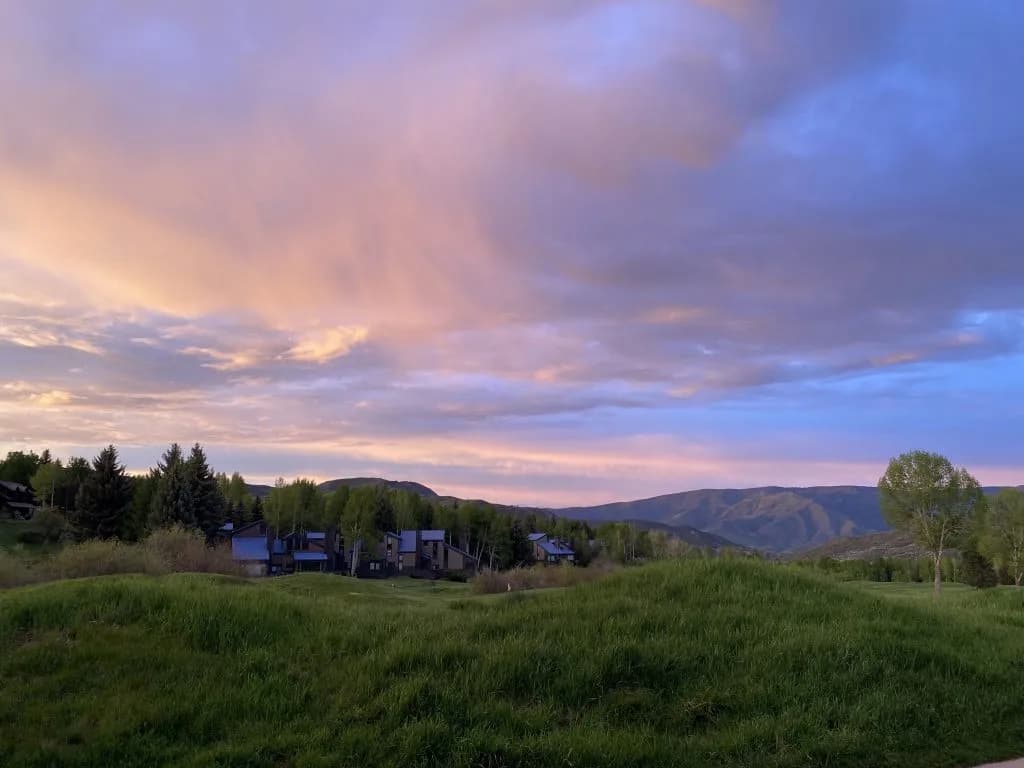
Aspen —The wind off the Elk Mountains doesn’t care about your mortgage rate, but it does care about where you sleep. On a clear Monday evening, the town of Snowmass sits quiet under the high alpine sky, a place where the air is thin and the cost of living is thicker. But inside the town hall, the conversation wasn’t about the view. It was about the math of keeping the people who make the town run from being priced out of it entirely.
Snowmass needs 508 more affordable housing units just to catch up with what Pitkin County requires. That’s the headline from a new study presented to the Town Council on Monday. But the story behind those numbers is more complicated. It’s about a region where even households making three times the median income are struggling to find a place to live, and where the definition of "affordable" is shifting under our feet.
Rachel Schindman with Economic and Planning Systems delivered the update. She laid out a stark reality: the upper valley is unaffordable for almost everyone. To fix that, the region needs roughly 7,700 new affordable units over the next decade. The split is specific — about one-third in Pitkin County, two-thirds in Garfield. Snowmass, despite its small footprint, is responsible for a disproportionate share of that burden.
“We distribute the need based on jobs,” Schindman told the council. “Snowmass has 18% of the jobs in the county, and so 18% of those 2,854 units [needed in Pitkin County] are allocated to Snowmass.”
That allocation translates to a deficit of 300 units right now, with another 208 needed over the next ten years. If those units are built, they’re expected to house about 860 more people. That’s 1.7 employees per unit, a mix of sizes meant to support the workforce without requiring them to commute an hour from Glenwood Springs or Carbondale.
But here’s the question locals are asking: if the numbers are this bad, why does it feel like things are stabilizing? Schindman pointed out that Snowmass has seen lower rates of households facing displacement or financial stress. But that might not be because we’re solving the problem. It might be because the people who couldn’t afford it already left.
“It might not be because we are addressing the needs; it might be because this population has already been displaced,” Schindman said. “It could create a focus for some programs or strategies to ensure that we’re meeting specific needs of, for example, single-earner households.”
This is the hidden cost of our high prices. We don’t just lose the service workers; we lose the single-earner families, the teachers, the young professionals who can’t split a mortgage with a partner. And because the valley is linked, a housing crunch in Snowmass affects the whole system. If one town has land and another has funding, the study argues we need to pool resources.
“If one community has land, and another community has funding, and another community has access to low-cost financing, we want to be able to come together and all work toward creating more housing opportunities in the region, recognizing that it’s something that benefits the region as a whole,” Schindman said.
Mayor Alyssa Shenk took it in, weighing the long-term implications. “It’s a lot to think about,” Shenk said. “It’s looking at the long-term needs, and what you need to tweak and improve.”
There was no immediate action plan announced on Monday. No vote on a new development, no bond measure. Just the data, sitting there on the table, reminding us that the status quo isn’t just expensive — it’s unsustainable. The town has a gap to fill, and until the math changes, the pressure to build will only get heavier.
Keep up with Aspen
The day's Western Slope news, one email each morning. Free.