Snyder Fire 98% Contained, Colorado River Reopens for Boaters
The Colorado River reopens for downstream boating after the Snyder Fire reached 98 percent containment, though burned land remains closed and Stage 2 fire restrictions limit open flames in Fruita and Loma.
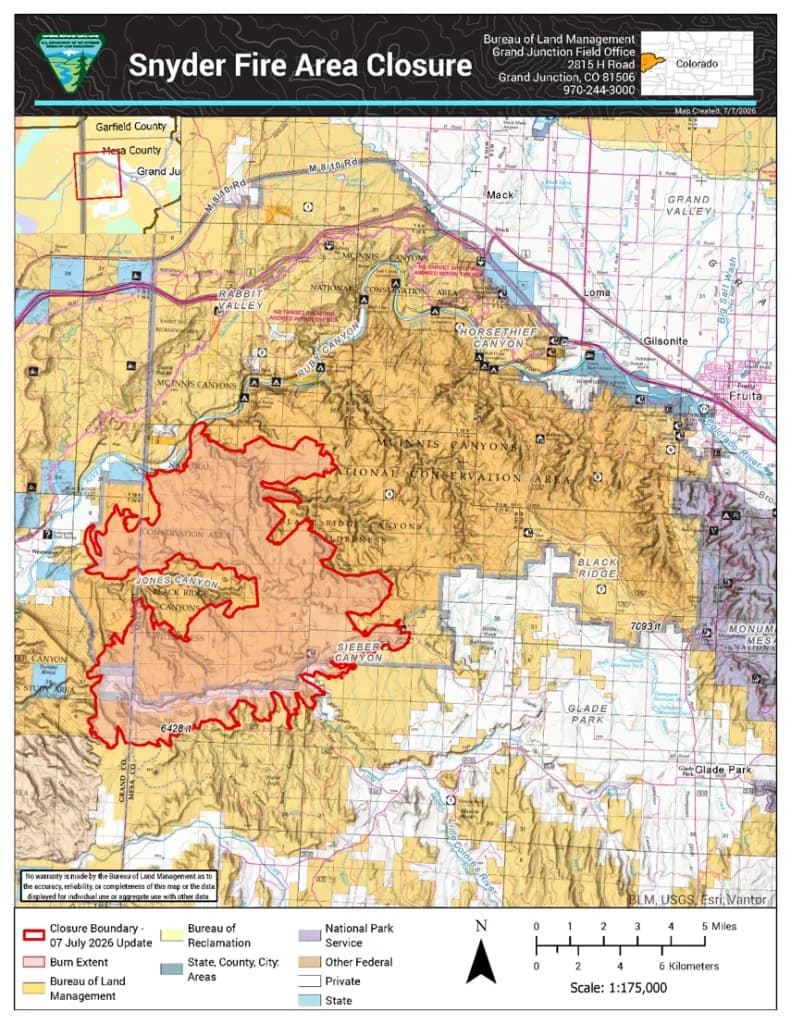
Grand Junction —The Colorado River opens to downstream recreation. Public lands affected by the blaze in Mesa County reopen Tuesday. State and federal agencies coordinated the move. The floodgates don’t open entirely, though. A segment of the river reopens. Specific boat ramps swing back to traffic.
Containment hits 98 percent. The fire burned over 30,200 acres. It started Friday, June 26. Several smaller fires on the Colorado-Utah border merged into one massive blaze. The dry heat and extreme danger fueled it fast. Three wildland firefighters died in the process. Their names aren't listed in these release notes, but their absence from life is permanent.
The Snyder Fire dominates the local landscape. It sits right next to Fruita and Loma. Locals use these towns as gateways to the river. Now, they can drive back in. Colorado Parks and Wildlife (CPW) announced the lift of closures Tuesday. The Bureau of Land Management (BLM) joined them. They share a common goal: keep people safe while letting the economy breathe slightly.
The reopened stretch runs from James M. Robb-Colorado River State Park in Fruita to the Utah state line. That’s a long ribbon of water. Boaters can access it again. The boat ramp at the Fruita section of the state park is open to downstream traffic. Horsethief State Wildlife Area in Fruita reopens. The Loma Boat Launch State Wildlife Area is back on the map.
There are strings attached. Stage 2 fire restrictions remain in force. That means no open flames. Charcoal grills are banned. Wood-burning stoves are out. You can’t light a match if the wind is wrong and the grass is dead. The agencies warn that extreme fire danger persists. Hot, dry conditions haven't changed just because the fire is contained.
The BLM drew a hard line on land access. All lands within the perimeter of the burn area stay closed. This includes the ground you walk on, not just the water you float on. The burned landscape is dynamic. Vegetation hasn't stabilized yet. It’s unpredictable. A single spark could restart the whole mess. The BLM order is effective immediately. It stays until they rescind it. They haven’t said when that will be.
CPW listed specific actions to prevent new blazes. Use established metal fire rings in designated campgrounds. Clear dry grass and pine needles within a 10-foot radius of any flame. Drown fires completely with water. Stir the ashes. Ensure debris is cold to the touch. Never leave a fire or portable stove unattended. Call 911 if you see one. Keep vehicles off tall, dry grass. Hot exhaust systems ignite fires easily. Secure trailer safety chains so they don’t drag and spark against asphalt.
These aren't suggestions. They are rules for survival in a drought-stricken valley. The BLM added that undeveloped areas remain off-limits, though the source text cuts off there. The implication is clear: if you aren't on a designated path or waterway, you probably shouldn't be there.
Check the Rocky Mountain Area Interagency Fire Restriction Dashboard for federal and state restrictions. The site is dfpc.colorado.gov/sections/wildfire-information-center. The Colorado Trails Explorer (COTREX) app has closure alerts. Download it before you head out. Don't rely on memory. Rely on data.
Feinsinger reported the details in the Vail Daily. The paper noted the timing of the reopenings matches the containment milestones. Efficiency matters here. Agencies don't waste time keeping roads shut when the threat drops. But they won't rush back in either. They wait for the 98 percent mark. That’s a safe buffer. It allows for error.
Locals should watch the dashboard. Conditions change daily. A cool night doesn't mean a safe day. The ground is still hot in places. The fuel load is high. One careless tourist with a charcoal grill can undo weeks of work.
The blaze is 98 percent contained. The river flows again. The land stays closed where it burns. That’s the trade-off. You get access to the water, but you lose the land. Make no mistake: this is a conditional reopening. It lasts as long as the danger remains extreme.
Keep up with Grand Junction
The day's Western Slope news, one email each morning. Free.

Canadian Tariffs Force Grand Junction Startup To Triple Bike Rack Price

Vail Musician James Carstensen Dies After Choosing Hospice Care