Snowmass Wildflower Guide: Where to Hike and What to See
Discover where to find lupine, arrowleaf balsamroot, and columbines in Snowmass despite the drought, and learn how to protect vital pollinators by staying on marked trails.
Aspen —The air up here still holds the chill of the mountain, a crisp, thin quality that bites at your cheeks even when the sun is high and bright. You walk past the timberline, where the trees thin out into a mosaic of green and violet, and the ground seems to hum with life. It’s quiet, but not silent; there’s the rustle of elk moving through the sage, the distant click of a hummingbird’s wings, and the visual noise of blooms that have pushed through the dry earth to claim their moment.
Despite the drought that has gripped the Western Slope, Snowmass is putting on a show. The wildflowers are here, vibrant and stubborn, thriving at high elevation where the soil is thin and the weather is fickle. This isn’t just scenery for the Instagram feed; it’s the engine of the local ecosystem, holding the mountains together one root at a time.
Snowmass Village Animal Services Officer Lauren Martenson notes that these blooms do more than just look pretty. Their roots prevent erosion, retain nutrients, and filter pollutants from the water. They have a symbiotic relationship with butterflies, bees, and hummingbirds, trading nectar for the transport of pollen. But that relationship is under threat. “Pollinators are essential for our ecosystems and food supply, and currently face several threats leading to their decline,” Martenson said. “Anything we can do to protect and preserve their habitat is essential.”
The stakes are higher than just preserving a view. Jim Kravitz, Vice President of Programs at the Aspen Center for Environmental Studies, points out that wildflowers are the foundation of mammalian evolution. “Everything we eat comes from flowering plants,” Kravitz said. “Everything you had for breakfast — even if it was an egg — it came from a chicken that ate something that grew from a flowering plant.” He added that flowers provide the energy for high-metabolism creatures, including us. “That’s why when we see flowers, we smile, because this is the thing that allows us to exist.”
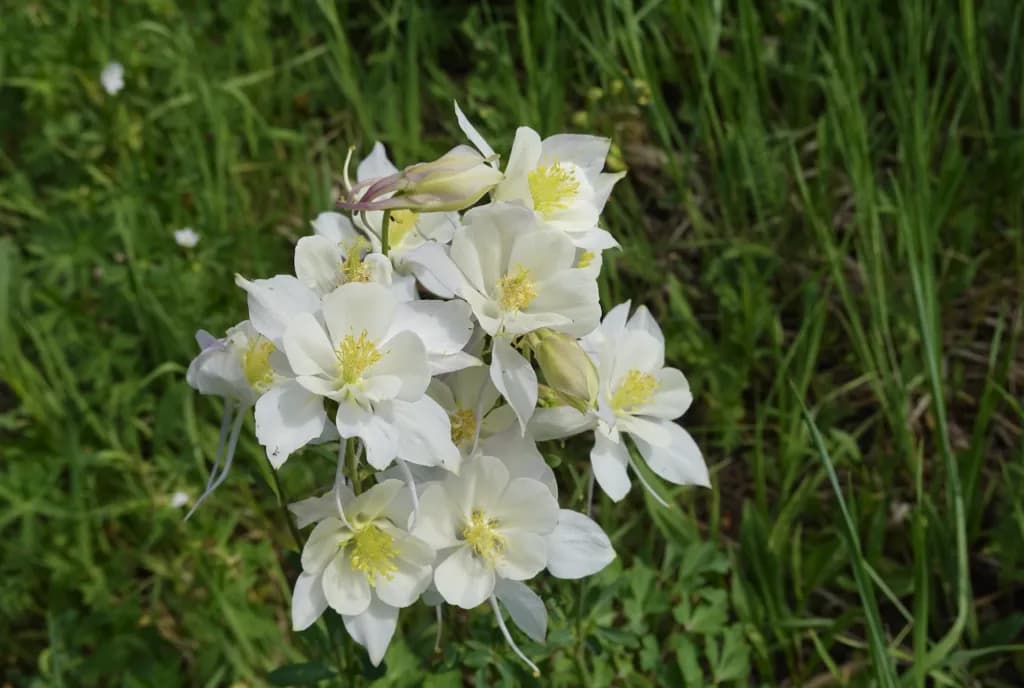
So, what should you look for as you hike the trails around Snowmass? Tourism Public Relations Manager Sara Stookey Sanchez suggests keeping an eye out for fields of lupine along the Tom Blake trail, yellow arrowleaf balsamroot covering the Rim Trail, and columbines on the west side of the Snowmass Ski Area. Kravitz specifically highlights the Colorado blue columbine, the state flower, which stands out against the rocky terrain. There’s also the green gentian, a giant green flower that blooms four years after a period of high precipitation, currently having a moment despite the dry conditions.
But with the beauty comes a warning. Martenson stresses the importance of staying on marked trails and not picking the flowers. Picking them robs pollinators of food sources that are already strained by the drought, causes erosion, and prevents others from seeing them. “It can also cause erosion and prevent others from having the pleasure of viewing them,” Martenson said. “We encourage the ‘leave no trace’ principle to protect our outdoor resources.”
It’s a simple act, but one that requires discipline. You can feel the tension between the desire to take a piece of the mountain home and the need to leave it whole. The trails are worn, the paths are clear, but the flowers are fragile. If you look closely, you’ll see the delicate balance between the dry earth and the vibrant petals, a reminder that life here is persistent but precarious.
As the sun dips lower, casting long shadows across the meadows, the light turns golden, illuminating the arrowleaf balsamroot in a way that makes the yellow seem to glow from within. The air cools, carrying the scent of damp earth and pine, and for a moment, the only sound is the wind moving through the grass, whispering through the roots that hold the mountain together.
Keep up with Aspen
The day's Western Slope news, one email each morning. Free.
Tribal members bless Mount Blue Sky summit for Colorado sesquicentennial
Craig Press Merges Two Magazines to Define Northwest Colorado’s Outdoor Identity