Steamboat Cancer Survivors Summit Mount Sherman to Fight Diagnoses
Two Steamboat Springs women hiked Mount Sherman to highlight rising local breast cancer rates, urging residents to prioritize annual mammograms and join support groups for recovery.
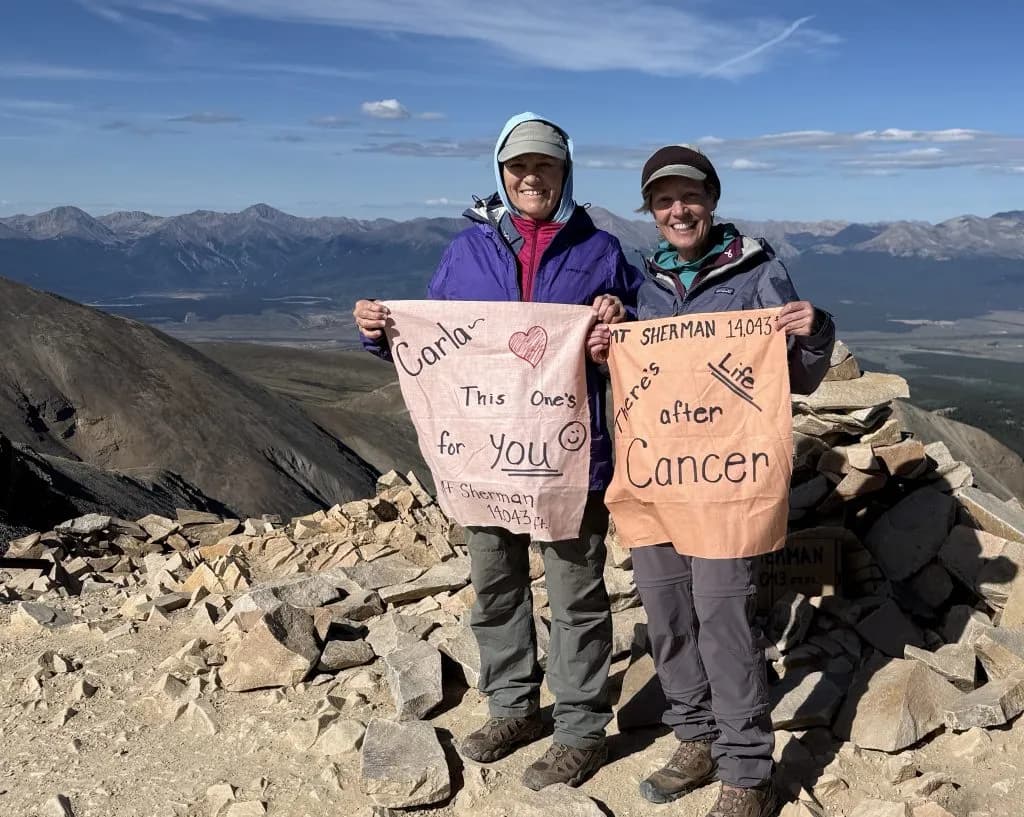
Steamboat Springs —The air thins out past ten thousand feet, turning every breath into a conscious decision. For most hikers, the summit of a 14er is a test of endurance, a physical gauntlet where lungs burn and legs shake. But for Carol Gilman and Teri Selleck, standing side-by-side on the peak of Mount Sherman on August 18, the mountain was something else entirely. It wasn’t just a geographical point in central Colorado; it was proof. Proof that the diagnosis didn’t define the destination.
The obvious narrative here is one of pure triumph, a feel-good story where two friends conquer nature. And yes, that’s true. But if you look closely at the details, there’s a sharper, more urgent undercurrent to their journey that challenges the way we think about survival. It’s not just that they climbed a mountain; it’s that they did it to make a statistical argument.
Gilman, a retired accountant, and Selleck met through the monthly Women’s Cancer Support Group at UCHealth Yampa Valley Medical Center. Their bond formed in the shared language of treatment plans and recovery timelines. When they decided to train for a 14er, Gilman stepped into the role of high-altitude mentor, having previously hiked all the 14ers in Colorado. Selleck, a trail hiker who hadn’t yet tackled such a peak, found a partner who understood both the terrain and the emotional landscape of post-cancer life. They trained together for two months, tackling steep hikes in Routt County throughout the summer. The goal was explicitly set to bring awareness to the idea that “there’s life after cancer.”
“There’s a warmth to” their camaraderie that goes beyond the physical exertion. Gilman described the fight against breast cancer as something to face head-on, to get through, and to move on in the best way possible. It has motivated her to accomplish things she’d always wanted to do in her lifetime. Both women were stunned by their diagnoses following routine mammograms. Gilman recalled thinking she was a healthy person, taking care of herself, eating right, and being active. She was so shocked when she got diagnosed.
This personal shock ties directly into the broader public health data that gives their hike its weight. According to Colorado Central Cancer Registry statistics, breast cancer diagnoses in Routt County are increasing, even as the statewide breast cancer rate decreases slightly. Jan Lowery, Ph.D., at the Cancer Center at CU Anschutz, explained that rates are higher in Routt and have increased by 18% since 2021. That 18% increase equates to five more cases per year. It’s a small number in a global sense, but for a tight-knit community, five new faces in a waiting room changes the texture of daily life.
Lowery noted that among Routt County women ages 40-74, 71% are up to date with mammography screenings. In Moffat County, that rate is lower, at 64%. This gap highlights why Gilman and Selleck passionately urge all women 40 and older at normal risk to schedule an annual routine mammogram. Both credit early detection as vitally important to their positive outcomes. They advocate for breast cancer patients to join a support group to talk with others who have gone through something similar. Both women continue to attend the cancer group in Steamboat to help themselves and others, and they have also participated in a support group through the radiation oncology services at Vail Health Shaw Cancer Center.
Gilman emphasized that while no two journeys are identical, the shared understanding in the room is powerful. “Someone will say something about how they’re feeling or what they went through, and then everyone else is nodding their heads,” she said. There’s a recognition in that nod that doesn’t require words. It’s a connection forged in the specific, unglamorous reality of medical appointments and recovery.
The image of these two women, boots caked with dirt, standing on a rocky summit, is more than a picture of fitness. It’s a visual rebuttal to the idea that illness is a period of pause. They didn’t wait for permission to be active. They didn’t wait for a cure to start living. They put one hiking boot in front of the other, and they kept going. The wind still whips across the ridge, cold and sharp, but the view stretches out in every direction, vast and open. You can feel it in the quiet of that moment — the sense that the ground beneath your feet is solid, that the next step is possible, and that the life you’re building is yours to claim.
Keep up with Steamboat Springs
The day's Western Slope news, one email each morning. Free.
Yampa Fly Fishers Demand Water Limits for Stagecoach Ski Ranch
Routt County Voters Face Heavy Tax and Infrastructure Ballot