Steamboat Springs Limits West Side Development to 400 Units
City staff confirm a hard cap of 400 to 500 new housing units on Steamboat Springs' west side due to water redundancy limits at the Fish Creek treatment plant.
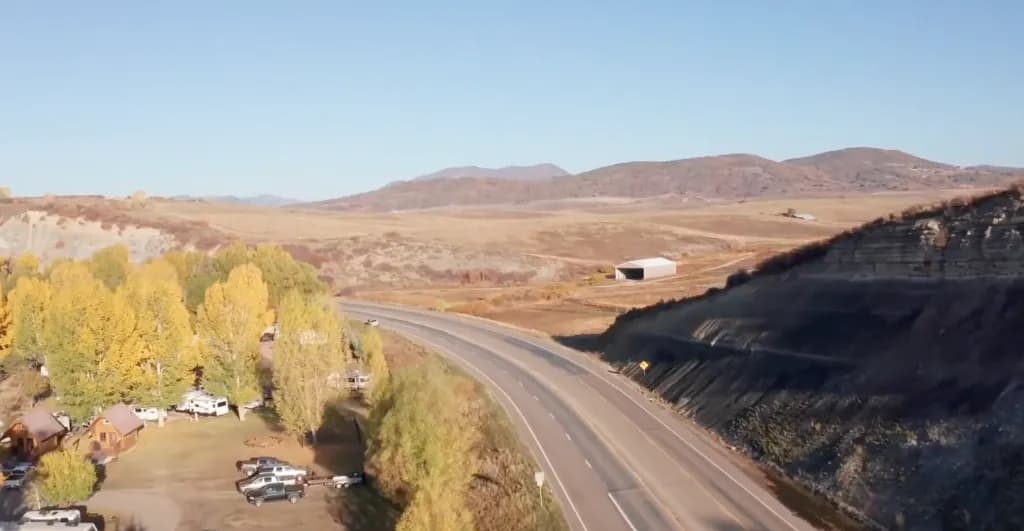
Steamboat Springs —The water main on West Lincoln Avenue hums with a low, steady pressure, but that rhythm is fragile. It’s the sound of a city holding its breath, waiting to see if the pipes can handle one more block of homes before the system buckles.
Steamboat Springs can build roughly 400 to 500 new housing units on its west side right now. That’s the hard number city staff presented Tuesday. It’s not a guess. It’s a ceiling.
The constraint isn’t land. It’s water. And specifically, it’s the redundancy built into the Fish Creek treatment plant. If that primary facility goes offline — say, during a wildfire in the drainage basin — the system loses its ability to push enough pressure to the western flank. The math doesn’t lie. The plumbing doesn’t care about your property value. It just stops working.
"This report represents a moment of time," City Manager Tom Leeson told the council. He wasn’t mincing words. The analysis is a technical snapshot of current operational conditions. It identifies the exact point where the city needs to spend real money on infrastructure, staffing, and upgrades. Until then, the city is running on existing capacity.
The numbers have shifted. Back in 2023, during the Brown Ranch discussions, planners were looking at a threshold of 800 Equivalent Residential Units (EQRs). An EQR is a standardized measure of water demand, roughly equivalent to a 2,500-square-foot home with three bathrooms and a modest yard. Today, that number is cut in half. 400 EQRs.
Why the drop? Public Works Director Jon Snyder pointed to two specific failures in the current setup. First, the Yampa Wells treatment capacity can’t perform at the level staff would like. Second, the distribution system on the west side of town has physical limits. You can’t just pump more water through a pipe that’s already full.
"This really represents our operational conditions," Leeson said. "It is intended to identify the point at which significant additional investment... would be needed."
The city isn’t saying development stops. It’s saying development is capped. The estimate of 400 to 500 units assumes current infrastructure. If developers want to build more, they’re going to pay for the upgrades. The type of housing matters, too. Single-family homes with large yards that need irrigation will drain the system faster than townhomes. The city is watching the irrigation demand closely.
And if you’re waiting to move in? Don’t hold your breath. The earliest possible move-in date for Slate Creek, formerly Brown Ranch; is 2029. That’s five years from now. The clock started ticking in December, when a water study identified the 400-unit threshold tied to emergency scenarios. The council reaffirmed that timeline Tuesday.
The constraints aren’t just water. Streets, wastewater, fire, EMS, police, parks, and transportation all got evaluated. Water is just the most immediate bottleneck. The rest of the systems show room for growth, but they’re all tied to the same grid. If the water stops, the rest of the city slows down.
Leeson emphasized that this is a policy tool, not just a technical report. It tells developers where the line is drawn. It tells taxpayers what’s coming in their budgets. And it tells neighbors that the western flank isn’t getting a free pass. The water is there. The pipes are there. But the redundancy is thin.
Picture a single-family home on a new street, sprinklers kicking on at dusk. The water pressure holds. For now. But if the Fish Creek plant goes dark, that sprinkler system becomes a luxury the city can’t afford. The 400-unit cap isn’t arbitrary. It’s a survival mechanism.
Keep up with Steamboat Springs
The day's Western Slope news, one email each morning. Free.
Steamboat Recommends E-Motorcycle Education to Clarify Rules
BLM Clears 113 Roan Plateau Parcels for December 2026 Oil and Gas Lease Sale
Southern Colorado Releases 2,500 Acre-Feet to Save Drying Arkansas River

45 Exhibitors Compete in Routt County Fair Swine Show

Moffat County Fair Awards Crown Winners in Horse Show and Crafts