The air near Turquoise Lake doesn’t just feel hot; it feels brittle, like parchment held too close to a flame
The air near Turquoise Lake doesn’t just feel hot; it feels brittle, like parchment held too close to a flame. Jim King, the fire behavior analyst for the Willow Fire, stands in the dense forest below the treeline at 10,000…
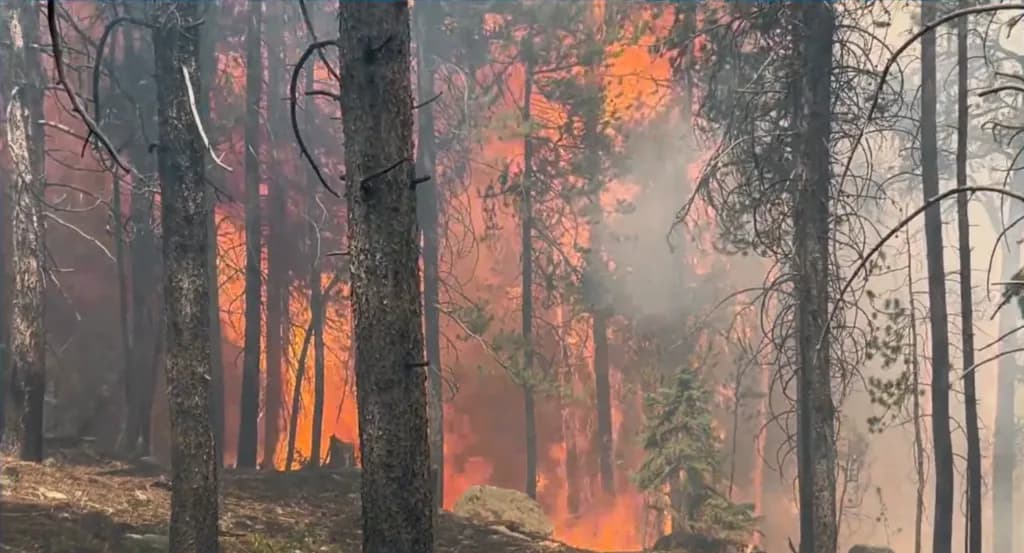
Aspen —The air near Turquoise Lake doesn’t just feel hot; it feels brittle, like parchment held too close to a flame. Jim King, the fire behavior analyst for the Willow Fire, stands in the dense forest below the treeline at 10,000 feet and looks down at the forest floor. He isn’t looking at the green canopy above, but at the dead timber beneath it. Those large logs, the kind that have been lying on the ground for decades, are what he calls “1,000-hour fuels.” They are so dense that they take roughly 40 days and nights of continuous drying to lose their moisture. And right now, King says, they are “basically as dry as they can get.”
It is a specific, technical kind of dryness that locals might not notice until the smoke starts rolling down the valley. But for the crews monitoring the weather and climate data, the lack of last winter’s record-low snowpack has had a very real impact on the vegetation. The snow that usually acts as a slow-release moisturizer for the thick lodgepole pines and downed logs has vanished, leaving behind a tinderbox that is behaving in ways that feel almost unpredictable.
King described the scene during community meetings this month, painting a picture of bone-dry logs sitting in the shade of the trees, waiting for a spark. When the high winds kicked up, they didn’t just push the fire forward; they threw “spots” — new fires started by sparks and embers — more than a half-mile ahead of the main blaze. These weren’t small, manageable flares. They were 100-foot columns of flame, rising out of the timber with a violence that surprised even the veterans.
This is not the gradual burn of late August or early September. Matt Benedict, the wildland division fire chief at the Red, White & Blue Fire Protection District in Breckenridge, noted that seeing significant fire growth in high-Alpine timber this early in the summer is unusual. Typically, that kind of intensity waits for the whole summer to dry out the fuels. Instead, we are seeing it in late June and early July. Benedict called it “pretty alarming,” noting that the reaction with the heavy timber is what keeps him anxious at this point in the year.
The Willow Fire, which had burned about 4,500 acres with 22% containment as of Friday morning, is just one of five major fires that have swept across Colorado since the last weekend in June. But the behavior of the Willow is distinct. It’s burning out of control just below the treeline, fueled by that deep, dry fuel load that most years would still be holding onto moisture from the spring melt.
If you look closely at the landscape in Summit County, you can see the result of that missing snowpack. A photo taken in April showed only trace amounts of snow remaining amid the historic drought, a stark contrast to the thick white blanket that usually covers the dead timber. That visual absence is now a physical reality for the firefighters. The “1,000-hour fuels” are no longer a theoretical risk for late summer; they are the primary driver of the erratic, or what King calls “schizophrenic,” fire behavior we are witnessing now.
The dryness isn’t just in the grasses or the shrubs. It’s in the thick trees. It’s in the logs that have been waiting forty days to dry out, only to find that the drying has been continuous and relentless. As the wind shifts and the embers jump the gap, the forest floor becomes a single, continuous sheet of fuel, ready to catch fire at any moment.
Keep up with Aspen
The day's Western Slope news, one email each morning. Free.