The ink on the ballot measures was barely dry when the legal machinery began to grind
The ink on the ballot measures was barely dry when the legal machinery began to grind. State Senators Barbara Kirkmeyer of Brighton and Byron Pelton of Sterling didn’t wait for the new fiscal year to settle; they filed suit in…
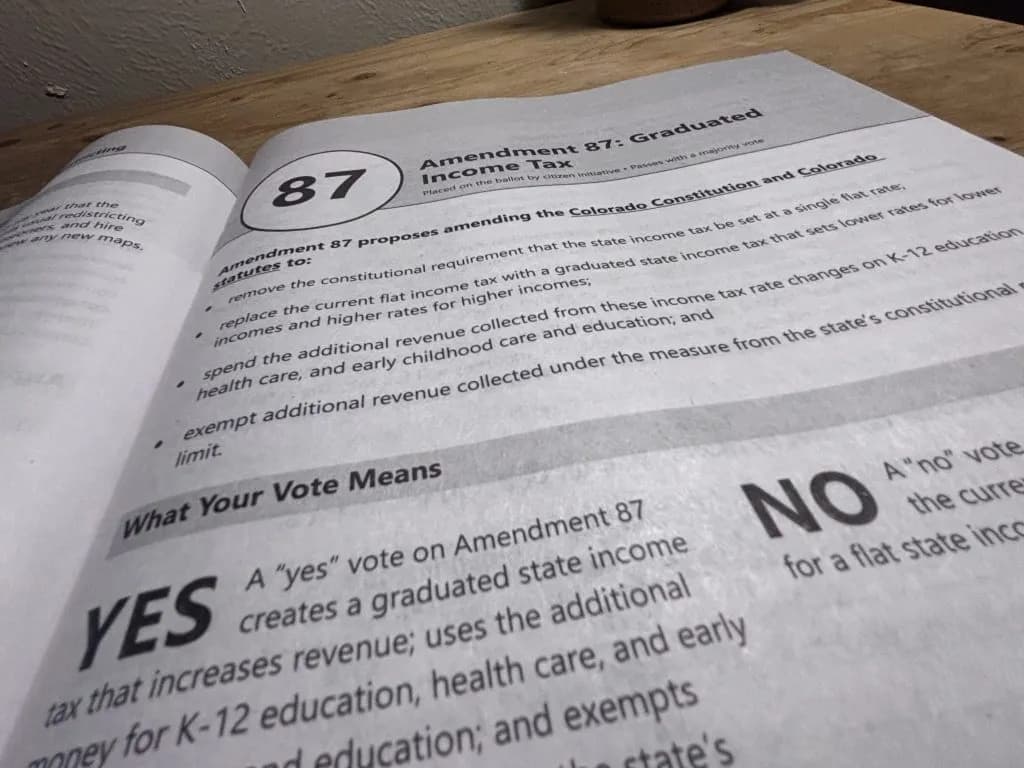
Steamboat Springs —The ink on the ballot measures was barely dry when the legal machinery began to grind. State Senators Barbara Kirkmeyer of Brighton and Byron Pelton of Sterling didn’t wait for the new fiscal year to settle; they filed suit in Denver County District Court on November 19, aiming to dismantle Amendment 87 before it could reshape the state’s revenue stream. Their argument is precise: the amendment, which passed with a razor-thin 51.72% of the vote, bundled multiple constitutional changes into a single measure, violating the state’s single-subject rule.
The complaint asserts that voters were misled about the financial impact, specifically regarding the tiered tax structure that replaces the flat rate. This system lowers taxes for those earning under $500,000 — a demographic that encompasses the vast majority of Coloradans — while increasing rates for the top earners. The official ballot information projected that this shift would generate over $2 billion for the state, earmarked for healthcare, education, and childcare. Yet, the plaintiffs argue that the amendment also struck existing language from the constitution and inserted new provisions, effectively combining distinct issues in a way that conflicts with the Taxpayer Bill of Rights, or TABOR.
This legal battle is deeply entangled with the political funding that fueled the election itself. Kirkmeyer and Pelton are represented by attorneys from the West Group and Advance Colorado, the conservative organizations that bankrolled the opposition. Advance Colorado channeled millions in "dark money", funds from donors who prefer anonymity - into the campaign, supporting a rival ballot measure that ultimately failed. The amendment was championed by the Protect Colorado’s Future Coalition, a broad alliance of progressive think tanks and advocacy groups, including the Bell Policy Center, the Colorado Fiscal Institute, and the Colorado Organization for Latina Opportunity and Reproductive Rights.
Chris deGruy Kennedy, president and CEO of the Bell Policy Center, dismissed the new lawsuit as "totally frivolous." He pointed out that the Colorado Supreme Court had already adjudicated the single-subject question in a pre-election suit filed by the same conservative groups, ruling in favor of keeping the measure on the ballot. Kennedy argued that the plaintiffs’ claim of inaccuracies in the income bracket table was simply wrong. "There was nothing inaccurate put before voters either on the ballot or in the blue book," he stated, referring to the official information booklet.
The tension between the narrow victory and the aggressive legal challenge highlights the fragility of the amendment’s mandate. While the coalition behind Amendment 87 sees a historic win for middle-class relief, the opponents see a procedural defect that invalidates the entire process. As the case moves through the Denver courts, the focus shifts from the polling place to the courtroom, where judges will determine whether the technicalities of the ballot measure outweigh the clear intent of the voters. The outcome will hinge on whether the court finds that the bundling of issues was material to the result, a standard that could set a precedent for future statewide initiatives. For now, the tiered tax system remains in limbo, suspended between the will of the electorate and the scrutiny of the judiciary.
Keep up with Steamboat Springs
The day's Western Slope news, one email each morning. Free.
YVEA Adds $2 Per Kilowatt Peak Demand Charge To Bills

Colorado State Forest Service Manages $2 Million in Routt County Wildfire Grants