Trump's $15 Billion Ag Package Targets Midterm Voters
The Trump administration released a $15 billion package to offset soaring diesel costs and support crop growers, aiming to secure rural votes ahead of the midterm elections.
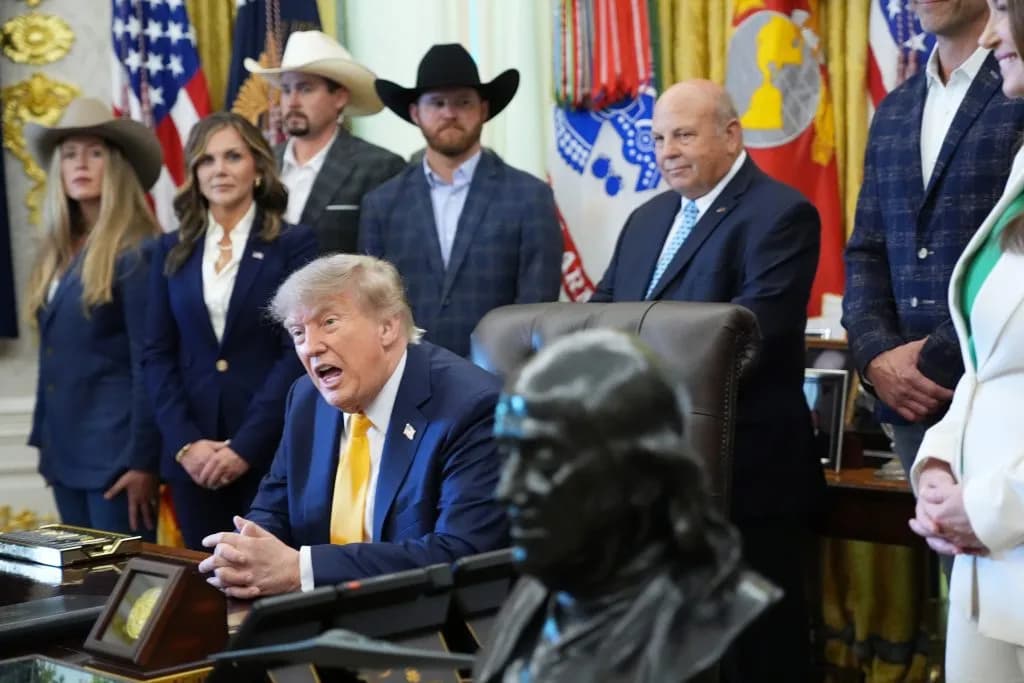
Aspen —$15 billion. That is the figure the Trump administration has thrown at American agriculture in the final stretch before the midterm elections.
If you drive a tractor, run a feedlot, or manage a grain elevator, you have likely felt the squeeze this year. The question on every farmer’s mind in the valley right now is simple: Does this money actually fix the problem, or is it just political theater?
Let’s do the math.
The core of this package is an $8 billion one-time payment plan designed to offset soaring diesel prices. For context, diesel was averaging $6.32 per gallon recently. That is 70% higher than the price a year ago. If you fill a standard 100-gallon tank, you are paying $260 more than you were twelve months prior.
Gregg Ibendahl, a farm management specialist at Kansas State University, estimates these payments will "more than cover the increase in fuel costs." He suggests the surplus could even help tackle high fertilizer prices. On paper, that sounds like relief. In practice, timing is everything. The USDA says it will release more details this month, but it is not clear exactly when the money hits bank accounts.
Beyond diesel, the package includes:
- $13.8 billion in safety net program payments for the 2025 crop year, targeting corn, soybean, wheat, and rice growers.
- $5 billion in guaranteed loans for ranchers and fishermen.
- $1.8 billion for conservation program participants.
- $573 million for fertilizer manufacturing projects.
- $472.5 million for the government to purchase agricultural commodities for charitable programs.
There is also a push to expand sales of off-road diesel, which could lower costs for farm equipment that isn’t street legal.
Why is this happening now? The administration is betting that these checks will motivate voters in agricultural states where traditionally Republican seats are suddenly seen as competitive. President Trump visited Iowa and Kansas just two days before the election, signaling that rural turnout is the battleground.
Farmers have had a frustrating year. Tariffs drove up equipment costs, and the trade war with China led to a near-boycott of U.S. ag goods. Now, the administration is promising to bail out the industry from its own tariff decisions and the war in Iran.
Will it work? It depends on whether the checks arrive before the next harvest season. If the money lands in time, it might keep small operations afloat. If it arrives late, it’s just another loan with a political ribbon attached.
For locals, the practical bottom line is this: The federal government is writing a check to cover the gas bill. Whether that check clears before the next fuel order is due is the only question that matters.
Keep up with Aspen
The day's Western Slope news, one email each morning. Free.