Iran Bets on U.S. Rationality to Reopen Strait of Hormuz
Iranian negotiators in Doha signal readiness for diplomacy if the U.S. answers key questions, potentially reopening the Strait of Hormuz within two days and easing global energy market risks.
Aspen —On a quiet Sunday morning, the diplomatic wires hummed with a familiar tension. In Doha, Iranian negotiators sat across the table from Qatari mediators, the weight of the Strait of Hormuz pressing down on every word exchanged. It wasn’t a scene of handshakes and champagne; it was the kind of negotiation where silence speaks louder than speech.
The central question is whether Washington will choose “diplomacy over other paths,” a phrase that has become the refrain of the current talks. Abbas Araghchi, Iran’s top diplomat, laid out the position clearly in an interview shared on his Telegram channel. To hear him tell it, the outcome hinges entirely on how the United States answers the “Iranian questions.”
“Iran is ready for both defense and diplomacy, depending on Washington’s rationality,” Araghchi said.
That word — rationality — carries a lot of weight. It’s not just about logic; it’s about predictability. For a country that has spent decades navigating sanctions and sporadic conflicts, unpredictability is the enemy. Araghchi noted that no direct talks are currently being held with the U.S., a detail that underscores the reliance on third-party mediation. The presence of Iranian negotiators in Qatar signals a willingness to engage, but the absence of a direct channel suggests that trust is still a scarce commodity.
The backdrop to these talks is anything but calm. While diplomats haggled over conditions for reopening the Strait of Hormuz, the ground reality in the region remained volatile. In Gaza, Israeli strikes claimed eight lives, including a four-year-old boy, a reminder that the human cost of regional instability is often borne by those farthest removed from the negotiating tables. Meanwhile, in the Persian Gulf, a Qatari gas vessel was struck, adding another layer of economic risk to an already precarious situation.
The math holds up, at least on paper. If the U.S. meets the specified conditions, the Strait of Hormuz could reopen within two days. That’s a significant window for global energy markets, which have been jittery for months. But that timeline depends on a series of ifs and buts. It depends on whether the U.S. provides the answers Iran is seeking. It depends on whether the mediators can keep the process alive long enough for those answers to arrive.
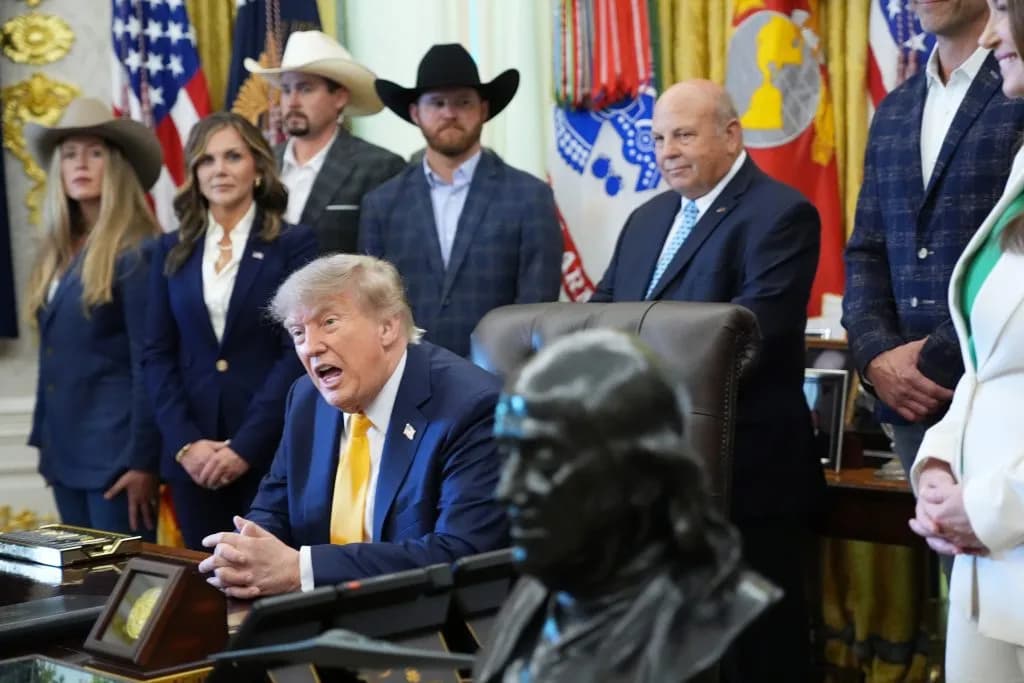
There’s also the factor of domestic politics. In Israel, Prime Minister Benjamin Netanyahu is navigating a fragile post-election landscape. Some analysts have suggested that he might be eager to re-engage militarily with Iran to bolster his political standing. Trump, for his part, said he had a “very good talk” with Netanyahu about the war in Iran, though he offered few specifics. The lack of public comment from Netanyahu’s office leaves room for speculation, but it also highlights the opacity of the current diplomatic environment.
For folks on the Western Slope, the immediate impact is felt through energy prices and supply chain reliability. The Western Slope is a major hub for natural gas production, and any disruption in global trade routes or regional stability can ripple through local markets. Neighbors in the valley are watching these developments not just as distant headlines, but as factors that influence their heating bills, their property values, and their sense of security.
The community here understands the stakes. We’re not just observing a geopolitical chess match; we’re living with the consequences of every move. That’s why the hope for “rationality” resonates so strongly. It’s a plea for sanity in a world that often seems to operate on impulse.
As the talks continue, the focus remains on what happens next. Will the U.S. provide the answers? Will the Strait reopen? Or will the situation deteriorate further? Only the coming days will reveal the outcome.
But for now, the message from Tehran is clear. Araghchi’s final words in the interview captured the mood perfectly: “We hope the U.S. chooses diplomacy over other paths. That is our hope, and it is our expectation.”
It’s a simple statement, but it carries the weight of the entire region. And it’s one that folks around here are listening to closely.
Keep up with Aspen
The day's Western Slope news, one email each morning. Free.