Aspen's 1928 Election Focused on Local Sheep and Mining
Aspen's 1928 election focused on local issues like sheep ranges and mining leases, with the Aspen Times covering the shift in party leadership and candidate platforms.
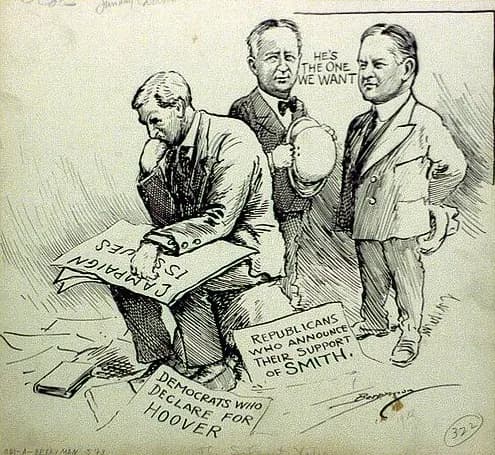
Aspen —The air in Aspen didn’t just change when the leaves turned; it thickened with a specific kind of static, a hum that came from the newfangled radio sets and the heated arguments spilling out of grocery store doors. We tend to think of 1928 as a distant, sepia-toned ghost, a time when the town was smaller and quieter. But if you look closely at the coverage in the Aspen Times from that year, you see a political machine grinding with the same ferocity we feel today. It wasn’t just about who would be president; it was about who controlled the local narrative, and in a town of that size, those two things were often indistinguishable.
The Aspen Times was a weekly then, owned and edited by Charles Dailey, who used his pen to keep the national conventions in Kansas City and Houston front and center. Herbert Hoover secured 659 delegates, a number that likely felt monumental to readers huddled around their radios. But the real drama was local. Dailey, previously the chairman of the Democrats, found himself replaced by Dr. Twining, a figure with roots in the town’s early mayoral history. On the Republican side, they tapped E.W. Jewett, a man who had started as a pharmacist at Al Lamb’s before opening his own grocery store and eventually winning a seat in the State Assembly. The power dynamics shifted, but the stage remained the same: the front page of a weekly paper that every household in the valley relied on.
The Sheep and the Storefronts
The stakes for local candidates were tangible, rooted in the dirt and the ledger books. In September, the primaries pitted Dr. Twining against William Wheatley, a rancher from Snowmass. Wheatley’s platform was simple and specific: he wanted to ban out-of-state sheep from using local ranges. It’s a proposal that feels almost absurdly specific now, but in 1928, it was the kind of concrete issue that resonated with folks whose livelihoods depended on open land. Twining won the primary, and the Democrats set up shop in the Jerome hotel, turning a luxury space into a campaign headquarters.
Meanwhile, the town was busy with things that had nothing to do with ballots. School reopened with 220 students, a drop from the previous year’s 326. The mining industry was making noise on the front page, too. The Hope Mine, after a period of ownership litigation, saw the Herron brothers secure a lease to build a 50-ton-per-day mill. They had already shipped three railroad cars of ore, a tangible sign that the mountain was still giving something up. The Mary B No. 2, two years into exploration on the lower edge of west Aspen Mountain, hadn’t found minable ore yet but kept receiving funding. It was a town betting on its geology, even as it bet on its politics.
Grocery shopping was a competitive affair, with four stores vying for the same customers: The Cash and Carry, E.W. Jewett’s, Beck’s, and Bishop’s. Dailey was careful to keep his coverage balanced, listing all candidates on the front page five weeks before the election. He was a careful man, editing a paper that served as the town’s nervous system. The radio was new, a format still finding its voice in living rooms across the valley.
The election passed, but the texture of that year lingers in the paper’s pages. It wasn’t just a list of names and dates; it was a record of a community arguing over sheep, ore, and the future of its own streets. The hum of that 1928 radio still seems to vibrate in the old newspaper clippings, a low-frequency reminder that the fight for local identity is as old as the town itself.
Keep up with Aspen
The day's Western Slope news, one email each morning. Free.