Upper Yampa District Tests $100K Cloud Seeding Pilot
A $100,000 grant funds a one-year cloud-seeding pilot in the Upper Yampa basin to test if solar-powered technology can increase precipitation during Colorado’s historic drought.
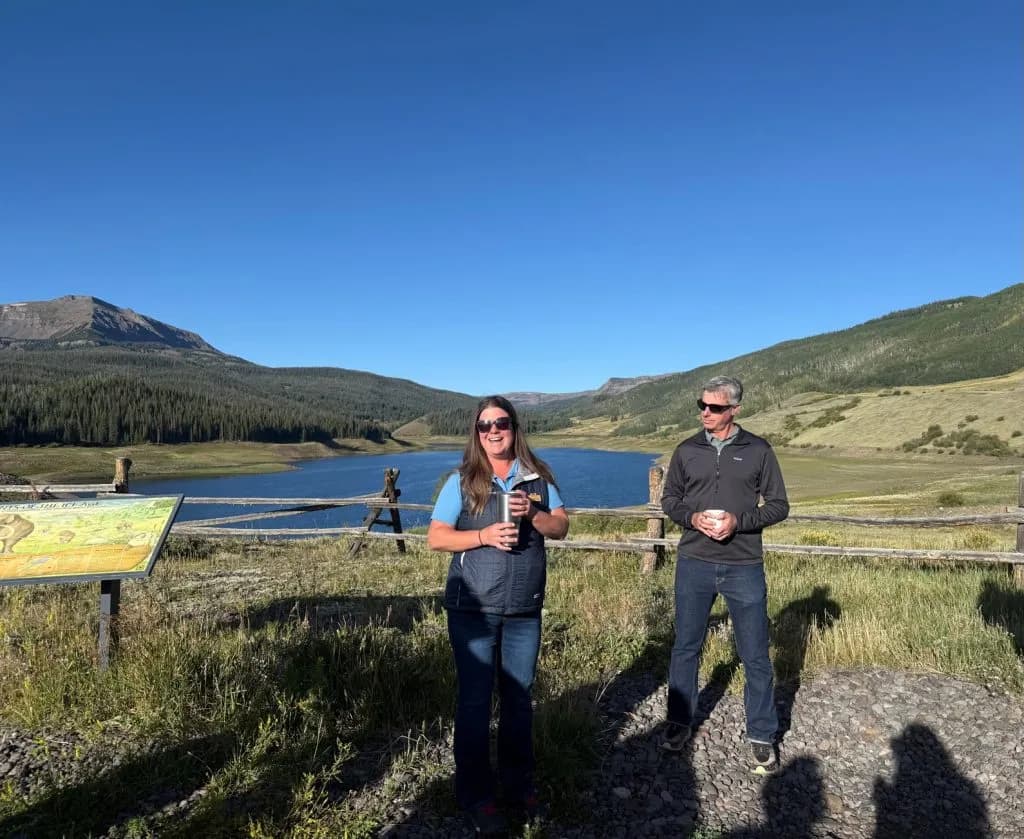
Glenwood Springs —The wind off the Flat Tops cuts through a flannel shirt, even in August. Below the ridge line, Yamcolo Reservoir sits still and dark, a mirror reflecting the granite peaks that feed it. This is where the Yampa River begins its long, winding journey east to Stagecoach Reservoir, then west into Dinosaur National Monument, and finally into the Green River. It is a quiet place, but the water moving through it carries weight.
Starting this winter, that quiet is about to be disrupted by a hum. A new weather enhancement pilot program will test whether ground-based, solar-powered technology can “fuel” clouds to increase snow and rainfall across nearly 200,000 acres of the basin. The project is a one-year experiment funded by a $100,000 grant from the Colorado Water Conservation Board to the Upper Yampa Water Conservancy District. They are testing equipment from Rain Enhancement Technologies, a company that has already run permitted cloud-seeding projects at major ski areas like Vail Mountain and Beaver Creek Resort. This will be the state’s ninth permitted weather modification project, according to a news release from Rain Enhancement Technologies.
Andy Rossi, the general manager for the Upper Yampa district, stood by the reservoir this past summer and described the tech as “brand new and experimental.” He didn’t mince words about the stakes. “As we move into drier and drier times, folks like us, we’ve got to keep trying new things,” Rossi said. “We don’t know if it works yet, but we’re willing to give it a shot and do the research behind it and see if it’s worth continuing later out for a couple of decades.”
The urgency isn’t theoretical. This year brought Colorado’s worst snowpack on record, paired with abnormally hot temperatures and historically low streamflows. The northwest corner of the state spiraled into deeper drought, a trajectory Rossi has tracked for over a decade. He noted that the highest end of the Yampa headwaters is experiencing a higher degree of warming and snowpack modification than other parts of the basin. “Without snow, this whole system doesn’t really work,” Rossi said. The goal is simple: create a little more bang for a buck out of each storm track that passes through, both rain and snow.
The River’s Long Reach
People in the valley often think of water in terms of their own taps, but the Yampa’s story is bigger. Rossi pointed out that these two rivers — the Yampa and the White, which also drains from the high country — comprise 10-15% of the flow at Lee Ferry, just downstream of Lake Powell. That is a massive share of the Colorado River system’s volume. If the snowpack shrinks, that percentage drops. The flow at Lee Ferry dictates how much water reaches the lower basin, from Grand Junction to the Gulf of California.
The partners have been moving through leasing and permitting requirements to begin installation in November. If the weather cooperates, they will be seeding clouds over the region when storm tracks arrive. It is a gamble on physics and climate, betting that adding particles to the atmosphere will coax more precipitation out of clouds that might otherwise dissipate.
Rossi’s team is not promising a fix for the drought, nor are they claiming the technology will reverse warming trends. They are looking for data. If it works, even slightly, it could mean more water in the reservoirs that supply local communities and agriculture. If it doesn’t, they will have spent a year and $100,000 learning what doesn’t work.
Back at the reservoir, the water moves slowly toward the outlet gate. The sun is setting over the peaks, casting long shadows across the valley floor. In a few months, when the first snow flurries hit the high country, the solar-powered units will switch on. They will hum in the cold air, sending their signal into the clouds above the basin, waiting to see if the sky answers back.
Keep up with Glenwood Springs
The day's Western Slope news, one email each morning. Free.