USS George Washington Departs Western Pacific Amid Trump Iran Focus
The USS George Washington has departed the western Pacific to replace the USS Abraham Lincoln in the Middle East, signaling a strategic shift under President Trump’s focus on Iran while leaving the region without a carrier.
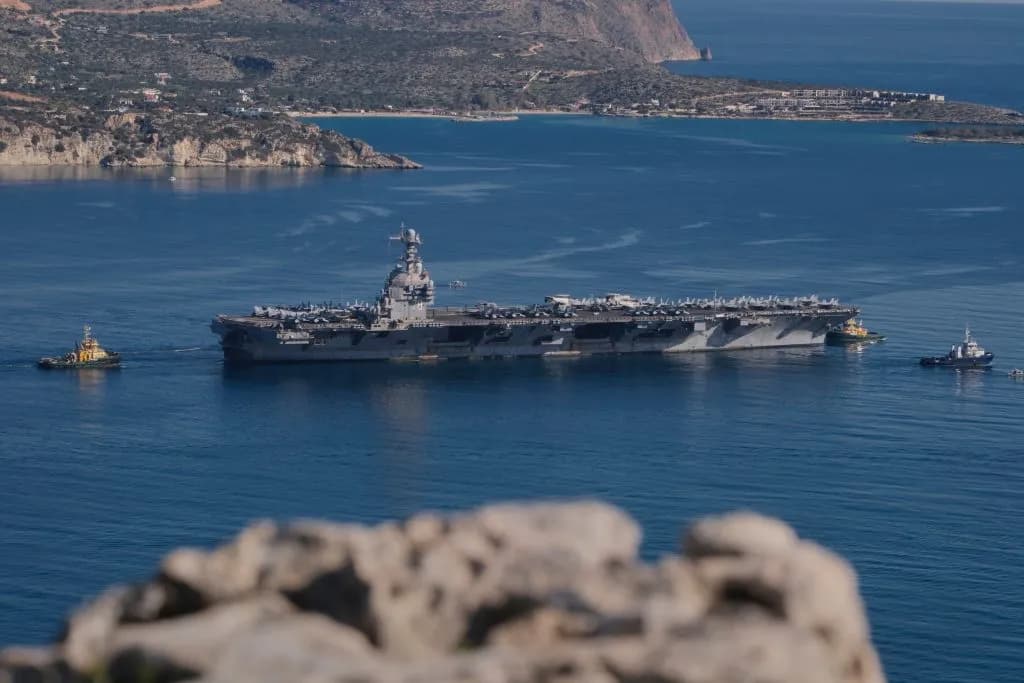
Aspen —Have you noticed the silence in the western Pacific, or is it just the hum of a region adjusting to its new neighbors? The USS George Washington has departed, leaving the western Pacific without a U.S. aircraft carrier for the first time in recent memory, and while the absence might be temporary, it signals a profound shift in how Washington views its global obligations. This isn't just about one ship moving across the ocean; it’s about where America decides to stand, and more importantly, who gets left standing in the cold.
The George Washington is pulling up stakes to replace the USS Abraham Lincoln in the Middle East, a move driven by President Donald Trump’s intensifying focus on Iran. The Lincoln has had its time at sea extended from an original May return date, stretched thin by operations that have left sailors ragged and supply lines taut. According to the Vail Daily, this swap highlights a growing concern about mental health and logistical strain aboard long-deployed carriers, but it also underscores a strategic retreat. The Trump administration is turning its gaze westward, toward the Western Hemisphere and the open-ended operations with Iran, while the Pacific — the region officially deemed most important — finds itself without its big dog.
Greg Poling, director of the Southeast Asia Program at the Center for Strategic and CSIS, noted that while the administration claims the Pacific is secondary only to the Western Hemisphere, its actions suggest the exact opposite. He pointed out that American allies in the region are unsettled by this unpredictability, while Beijing remains quite happy with the distraction. China sees the U.S. military presence as an obstacle to its ambition to seize Taiwan, and with no carrier currently on station, Beijing has another opportunity to demonstrate strength. Bryan Clark, a former Navy submariner and defense analyst at the Hudson Institute, explained that China is using this absence to show countries like Japan, Indonesia, and the Philippines that the U.S. may no longer guarantee their security with absolute certainty.
It’s easy to assume that one ship’s absence won’t change much, but the signals are accumulating. China conducted naval exercises with Indonesia last week and has shown aggression toward Japan and the Philippines, two key allies with territorial disputes against Beijing. This month, military drills took place near the Scarborough Shoal in the South China Sea, where both China and the Philippines hold claims. Last month, a Chinese guided-missile destroyer conducted live-fire exercises off Okinotori, Japan’s southernmost island. These aren't isolated incidents; they are a coordinated narrative of rising power, and the U.S. carrier’s absence provides the perfect backdrop for Beijing to assert itself.
Adm. Frank Bradley, head of U.S. Special Operations Command, has been working to reassure regional allies, but the question remains whether reassurance is enough when the hardware isn't there. The lack of a carrier may be short-lived if the Navy deploys another in the next couple of months, but for now, the western Pacific is quieter, and China is listening. The wind carries a different weight here, one of uncertainty mixed with opportunity, as allies weigh their options and Beijing watches the tide turn.
Keep up with Aspen
The day's Western Slope news, one email each morning. Free.