Ute Ancestral Lands Define Western Slope Property Ownership
Ute bands managed Western Slope land for centuries before forced removal, shaping modern property boundaries and tax structures across towns like Aspen and Steamboat Springs.
Glenwood Springs —Who owns the land beneath your driveway, and what does that ownership cost you in property taxes?
The answer isn’t just dirt. It’s a layered history of the Ute people, whose presence predates the gold rush and the ski industry by centuries. For context, more than 51 Tribal Nations referred to present-day Colorado as home long before the state was named for its muddy, red-tinted river. The Ute people called themselves “Nuche,” which translates to “the people” or “mountain people.”
Charles Nicholas Saenz, a member of the State Historian’s Council and history professor at Adams State University, noted that Spanish colonial explorers associated the land with myths of blue waters and a storied past. They called it “Teguayo,” a name the Pueblos gave to the land north of them. This wasn’t just folklore; it was a practical understanding of a studded landscape that foreigners struggled to map.
The Utes were not static. They lived a nomadic lifestyle, moving between high-elevation valleys and lower canyons based on the season. The Parianuche band resided along the Roaring Fork and Grand River valleys, covering modern-day Glenwood Springs. The Uncompahgre band lived in the Aspen area. Further north, the Yamparika Utes occupied the Yampa River valley near Steamboat Springs.
This movement was strategic. They hunted and gathered in warmer, higher elevations like present-day Steamboat Springs during the summer months. In winter, they descended into milder lower-elevation canyons like Glenwood Springs. Their knowledge of high mountain passes became key for the survival of those who came after them.
Before their forced removal from most ancestral homelands in Colorado in the late 19th century, these seven distinct bands spanned across Colorado and Utah, as well as parts of New Mexico, Arizona, and Wyoming. Today, three federally recognized tribes remain: the Southern Ute Indian Tribe, the Ute Mountain Ute Tribe, and the Ute Indian Tribe of the Uintah and Ouray Reservation. They live on reservations in southern Colorado and eastern Utah.
On paper, this history is well-documented. In practice, it means the Western Slope’s development — from homesteading to modern ski resorts — is built on land that was never truly “empty.” The first to call this specific stretch of the Western Slope home were the Yamparika and Parianuche bands, later known as the White River Utes.
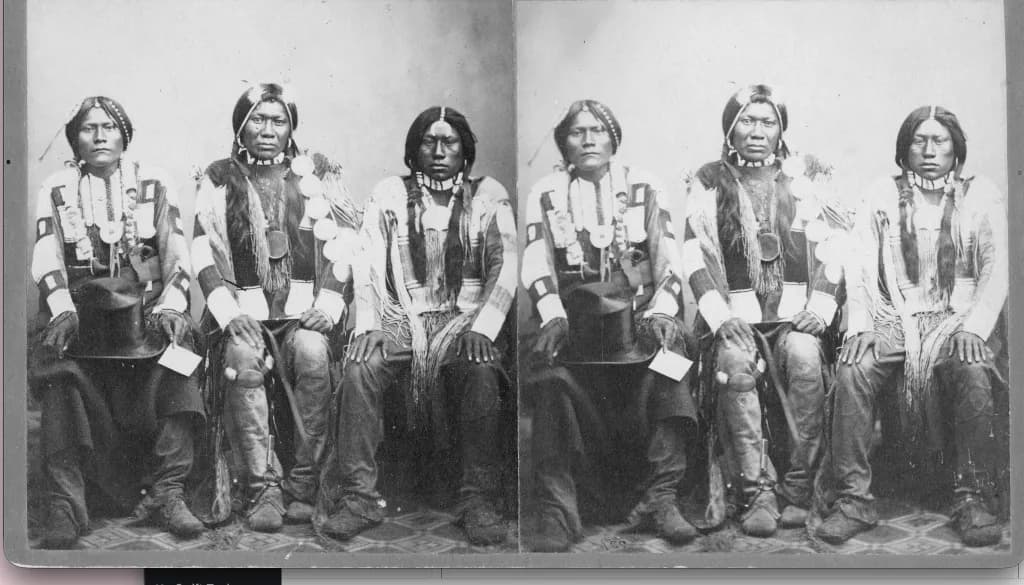
The Yampa Valley served as hunting grounds for these tribes, a fact illustrated in an 1883 editing of The Graphic, a British newspaper. The Eagle County Historical Society and Eagle Valley Library District archives hold these records, confirming that the Utes’ origin story is passed down through oral tradition and tribal history. They believe they have lived in the region since the beginning of time.
This isn’t just a lesson in local pride. It’s a reminder that the infrastructure we use, from the Roaring Fork to the Yampa River, follows paths carved by Nuche ancestors. The forced removal in the late 19th century changed demographics, but it didn’t erase the underlying geography.
For locals, this means understanding that the land has a continuous resident list. The Utes didn’t just visit; they managed the landscape. Their seasonal movements dictated where trails were built, where towns grew, and how resources were utilized. The modern ski industry didn’t invent the Western Slope; it just added another layer to a landscape already defined by the mountain people.
The bottom line is this: The Western Slope’s identity is rooted in the Ute presence. It’s not a new development. It’s an old home, now shared with more neighbors than before.
Keep up with Glenwood Springs
The day's Western Slope news, one email each morning. Free.
Aspen's ACES Returns Annual Harvest Party to Rock Bottom Ranch
Glenwood Ghostwalk Brings Frontier History to Life in Linwood Cemetery