Vail Daily Columnist Argues To-Do Lists Trap Mountain Livers
A new Vail Daily op-ed argues that rigid to-do lists trap residents in a cycle of constant maintenance, urging the community to accept boredom as a necessary tax on high-altitude living.

Aspen —The to-do list is not a tool. It is a trap.
Most people in the valley treat their calendars like sacred texts, believing that checking off an item equals progress. But if you stand at the edge of a cliff in Vail, watching the wind tear through your jacket, and realize you haven’t written a single sentence of your novel in three weeks because you were too busy answering emails, the list stops being helpful. It becomes a cage.
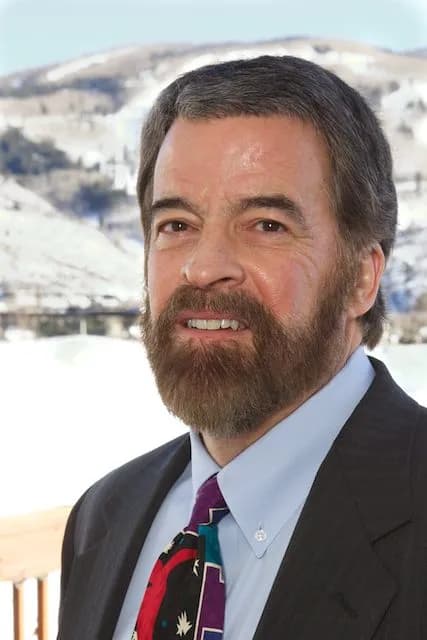
That is the central argument of an opinion piece published this week by Vail Daily, written by partner and single father Voboril. He describes his life as a series of "adventurous wanderings" and "full-throttle speed," but admits that the center of his gravity has shifted to a place he finds "less like an aspirational symbol of achievement and more like a locus of psychological, if not physical, torture."
The problem isn't the lack of adventure. It’s the friction between the high-octane life he loves and the drudgery of maintaining it.
Voboril writes that his short-term list has consumed all the mental real estate he needs for the long game. He notes that his medium-term and long-term goals — writing, planning trips, even "plot the overthrow of the socioeconomic and legal systems" — reside in what he calls his "mid-conscious." But when the immediate demands of being a homeowner and a parent stack up, those deeper drivers get buried. "As soon as one item was checked off, three more appeared as if by some dark magic," he wrote.
This is a familiar rhythm for anyone living on the Western Slope. We are surrounded by peaks and valleys, both literal and metaphorical. The beauty is undeniable, but the maintenance of a life here, especially one that balances high-stakes work with high-stakes recreation - is relentless. The air is thin, the expectations are high, and the silence between tasks can be deafening.
What makes Voboril’s take distinct is his refusal to offer a neat, packaged solution. He admits he hasn’t had the epiphany yet. He is still "mired in the minutiae." Instead of promising a new app or a morning routine that will fix everything, he offers a simpler, harder truth: recognition. He finds solace in the fact that "not every second of every day has to be apex."
That matters because it challenges the local culture of peak performance. We are a community that often measures worth by altitude, speed, or summit count. But Voboril argues that the drudgery is part of the deal. You can’t have the jump into the refreshing body of water without the boring Tuesday that got you there. He acknowledges he is "losing more than a bit of perspective" by champing at the bit to get outside, but he accepts that boredom is a tax on joy.
His remedy is not a strategy; it’s a shift in posture. He suggests counting blessings rather than lamenting the boring things that must be done. It’s a small adjustment, but it requires letting go of the idea that every moment must be intense to be valid.
The piece ends with him zooming back into the present, smiling as he writes. He isn’t fixed. The list is still there. But he’s no longer fighting it with the same internal friction. He’s just doing the next thing, and then the one after that, accepting that the "unending to-do list" is not a failure of character but a feature of a life lived fully.
The wind picks up again in the valley, rattling the windows of his home. He doesn’t check another box. He just watches the snow fall, knowing the list will still be there tomorrow, unchanged and unapologetic.
Keep up with Aspen
The day's Western Slope news, one email each morning. Free.