Vail Storm Turns Gore Creek Red With Heavy Mud Deposits
A sudden cloudburst turned Gore Creek rusty red and left two-foot mud deposits in Vail's Sandstone area, flooding basements and filling dry fish ponds at Vail Run condominiums.
Aspen —Gore Creek ran a deep, rusty red on Wednesday evening, carrying the weight of a sudden cloudburst that settled over Vail like a heavy blanket. The water didn’t just flow; it surged, turning the usually clear artery of the valley into a thick, reddish-brown current that spilled over banks and into streets. Residents watched from porches as the color of their familiar creek shifted, signaling that something more than a typical mountain shower had arrived.
The National Weather Service confirmed what locals felt in their bones: Vail caught the brunt of a storm system that parked itself over the valley, leaving behind heavy mud deposits and a community scrambling to clean up. According to Vail Daily reporting, the event left homes in the Sandstone area with water seeping through floors and businesses like Vail Run condominiums spending Thursday afternoon picking up the pieces.
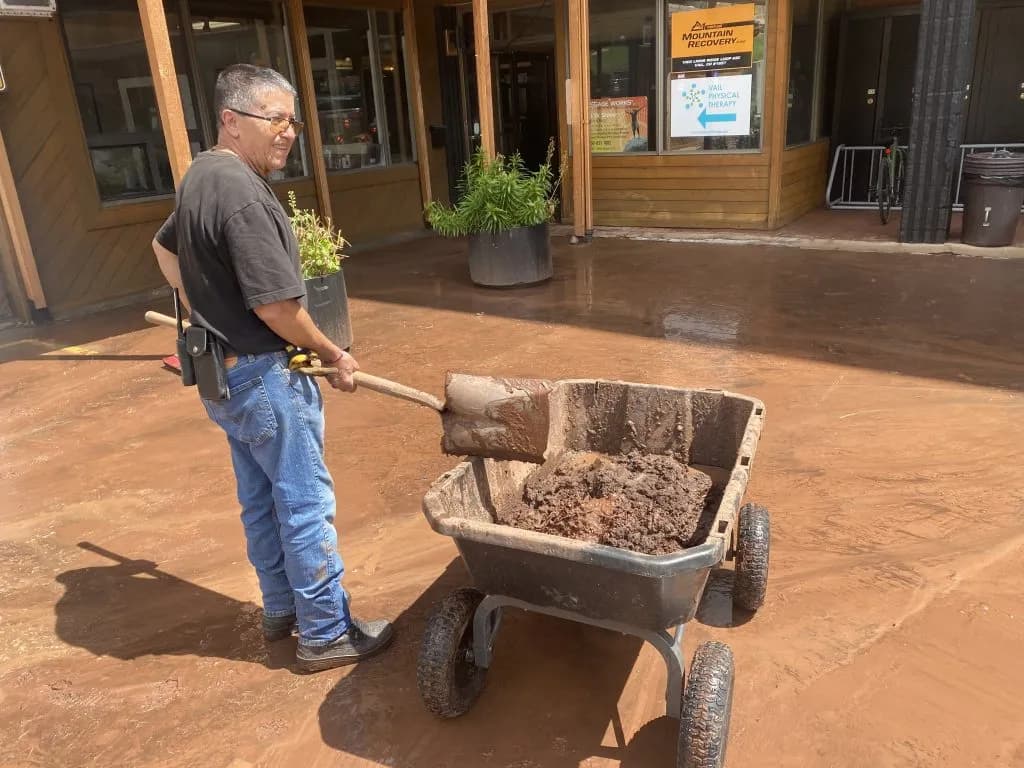
Luis Sinaloa, who works the front desk at Vail Run, described the scene with a mix of exhaustion and relief. He noted that the storm hit around 5:20 p.m., sending water cascading down from the dirt-road section of Red Sandstone Road. It traveled along the paved stretch, moved down Vail View Road to its intersection with Lionsridge Loop, and finally funne into the parking lot behind the condominium building.
“My manager said we were going to get hit pretty hard, but I honestly didn’t think we would just because the weather is so unpredictable around here, you never know,” Sinaloa told Vail Daily. “But then it just started pouring rain, and the water that was coming down the road was all red.”
The result was a layer of earth that felt almost geological in its thickness. Sinaloa reported mud deposits standing two feet high behind the building, with six inches covering other areas. He watched crews remove pile after pile of mud throughout the day, noting that the lack of recent rain had left the dirt loose and ready to move.
“Because it just hasn’t been raining at all, when it did, all that loose dirt came pouring down,” he said. He added with a laugh that their fish ponds, which had been dry all season, were suddenly full — a small silver lining in the mess.
While Sinaloa used the term “mudslide” to describe the event, town of Vail communications manager Kris Widlak was more precise. The town is describing the phenomenon as washouts, a distinction that matters when assessing infrastructure damage versus structural collapse.
Meteorologist Brooke Scholtens with the National Weather Service in Grand Junction provided the broader context, explaining why Vail bore the heaviest load. She noted that the cloud layer holding precipitation stayed parked over the area, allowing it to saturate the ground while other regions moved on.
“Vail saw that peak last night, and it will probably be less so tonight and less so on Friday as well,” Scholtens said, noting that conditions would look less active in the coming days.
For now, the red hue of Gore Creek is fading back to clarity, but the mud remains. It sits in piles along Lionsridge Loop and fills the empty fish ponds at Vail Run, a quiet testament to a storm that moved fast but left its mark.
Keep up with Aspen
The day's Western Slope news, one email each morning. Free.