Vail Writer Warns AI Will Make Spam Harder To Delete
Tom Newmann argues in the Vail Daily that AI will complicate spam filtering, taxing users' attention as detectors struggle to distinguish genuine signals from automated noise.

Aspen —The most efficient way to delete a spam email is to never have received it in the first place. Or, failing that, to simply ignore the phone when it says “May be spam.”
Tom Newmann makes a compelling, if slightly circular, argument in the Vail Daily: our current digital annoyances are manageable precisely because they are simple. A bot calls, you don’t answer. An algorithm sends a generic email about your non-existent online store, you hit delete. The friction is low. The stakes are minimal.
Newmann challenges the obvious take that AI will solve our communication problems. He argues it will make them exponentially worse by introducing a layer of complexity that current tools can’t handle. We currently use AI detectors to spot AI-generated content. It’s a bit like using a flashlight to find a lightbulb in the dark; it works, but only until someone makes the bulb transparent.
Let’s do the math on this logic. If AI generates the spam, and AI detects the spam, we have a cat chasing its own tail. Newmann points out that as AI becomes more sophisticated, the detectors will struggle to keep up. The technology used to create the detectors is, itself, AI. In practice, this means we are building a shield out of the same material as the sword trying to cut us.
The Vail Daily piece leans into a specific, dystopian scenario: a future where humans sit in an artificial-tree forest, petting virtual dogs, and nostalgically wishing for the days when we could at least delete spam. It’s a sharp observation on where our digital lives are heading. We move from physical clutter to digital clutter, and now we’re moving toward a reality where the clutter is indistinguishable from the signal.
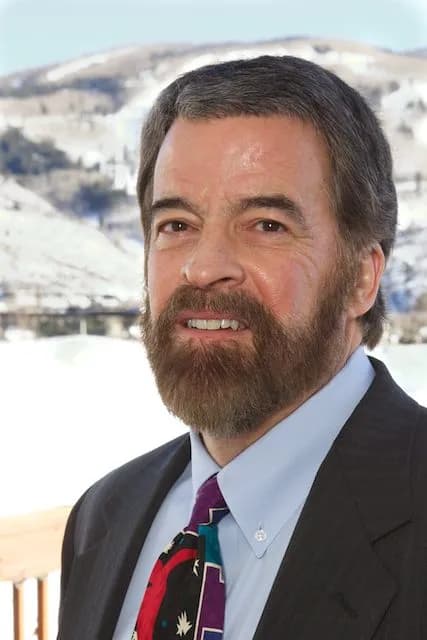
For context, Newmann splits his time between Edwards and Queenstown, New Zealand. He’s been commuting winter-to-winter since 1986 and worked as a journalist in Missoula, Montana. His perspective isn’t that of a tech evangelist; it’s that of someone who has lived through decades of technological shifts and watched them accumulate on top of one another.
The real cost isn’t just annoyance. It’s attention. Every time you check your phone because it says “May be spam,” you spend a few seconds of cognitive bandwidth on a non-event. Multiply that by the number of calls, emails, and notifications you get in a day, and it’s a significant tax on your mental energy. When AI ramps up, that tax rate increases.
Newmann doesn’t offer a solution. He offers a warning. The bots and trolls are already at their mischievous work, trying to eke their way into our daily lives. The challenge is to keep them out. But as AI becomes more prevalent, that challenge becomes a bit more… challenging.
We haven’t reached the stage where one version of AI outsmarts another, and in the process, outsmarts all of us. At least we don’t think we have. But the trajectory is clear. We are moving from a world where spam was a nuisance to a world where authenticity is a burden of proof.
The practical bottom line for locals in the valley: your inbox and phone are about to get noisier, not quieter. The tools we use to filter the noise will be built by the same hands that create it. You can’t delete what you can no longer identify. The good old days of simple spam are ending, replaced by a more complex, harder-to-escape digital static.
Keep up with Aspen
The day's Western Slope news, one email each morning. Free.