Vance and Iran Hold Secret Talks in Switzerland to Secure Strait of Hormuz
Vice President JD Vance meets Iranian officials in Switzerland for a 60-day sprint to lock in an interim deal, aiming to keep the Strait of Hormuz open while navigating tensions with Trump's threats and the Lebanon conflict.
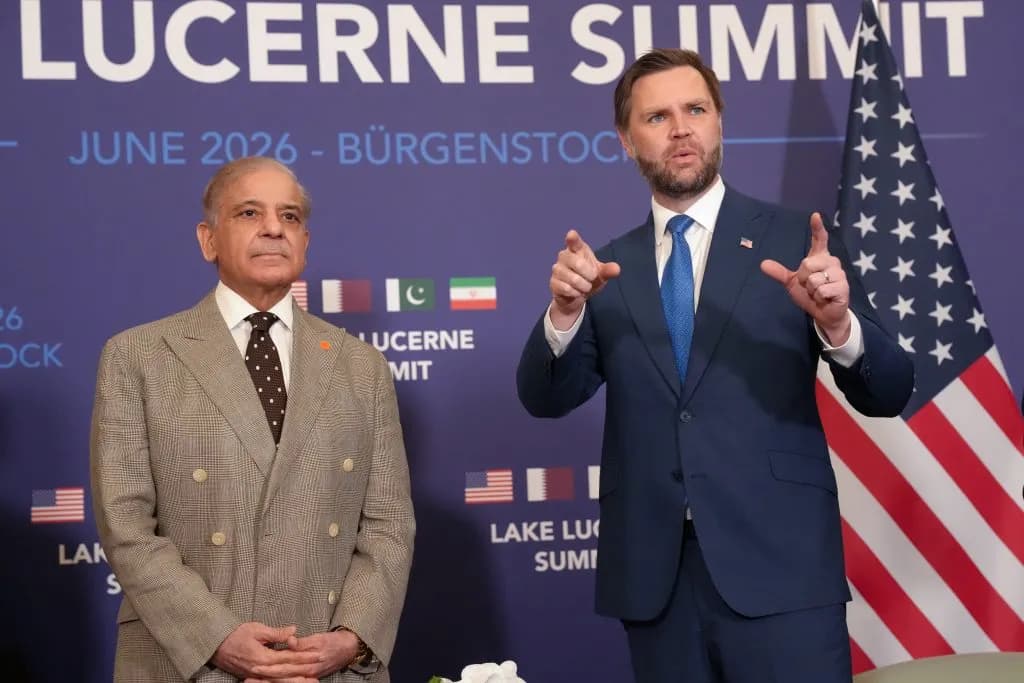
Aspen —JD Vance stood in the Swiss mountains this Sunday and asked a simple question: Can we turn over a new leaf?
The answer, so far, is a cautious yes. But the ground beneath the talks is shaking.
Vice President Vance met with Iran’s parliamentary speaker, Mohammad Bagher Qalibaf, and Foreign Minister Abbas Araghchi at a resort near Lake Lucerne. The meeting lasted about 80 minutes. Mediators from Pakistan and Qatar were in the room. The U.S. and Iran held separate private talks with those same mediators.
This isn’t just diplomacy. It’s a 60-day sprint to lock in the technical details of an interim deal reached last week. The goal is to end the war and, more importantly, keep the Strait of Hormuz open. That waterway carries about a fifth of the world’s traded oil. If it closes, the global economy sneezes. If it stays open, the market breathes easier.
Vance wants Iran committed to that openness. He wants Tehran to stop using its nuclear program as leverage for military purposes — a claim Iran denies, but one the U.S. refuses to ignore.
“The question before us now is how much more can we accomplish together?” Vance said. He framed it as a binary choice. Change relations in the Middle East permanently, or go back to the old way. The old way is war. The new way is negotiation.
But the old way is already back in the room.
Iranian officials aren’t looking at the nuclear file first. They want to focus on the bleeding in Lebanon. The conflict between Israel and Iranian-backed Hezbollah militants is on-again, off-again, and it threatens to derail everything before the ink dries. Iranian Foreign Ministry spokesman Esmail Baghaei said the team’s priority was clear: fix Lebanon first.
The stress test arrived immediately. Fighting escalated in Lebanon. Days after signing the interim agreement, Iran’s military announced it had closed the vital waterway again. A renewed ceasefire brokered on Saturday appeared to be holding, but fragile.
Vance said “great progress” had been made on Lebanon. He said it.
Minutes later, President Donald Trump took to social media and threatened Iran.
“If they don’t, we’ll hit Iran very hard again, just like we did last week, only harder!!!” Trump wrote.
That’s the disconnect. Vance is talking about a new leaf. Trump is talking about hitting them harder.
Iran remembers. The country approached these talks cautiously because the last time they sat down, massive military strikes interrupted the process twice in the past year. They know what happens when the talks fail. They know the cost.
The interim deal was signed last week. Now, the clock is ticking. 60 days to sort out the technicalities that will define the next decade of global security. If the Lebanon ceasefire holds, the window stays open. If it breaks, the deal dies.
The U.S. is betting that pressure from above — Vance’s diplomacy mixed with Trump’s threats, will force Tehran to commit. Iran is betting that the U.S. can’t keep its own promises of restraint while the guns are still firing in Lebanon.
It’s a high-stakes gamble. The world’s oil supply hangs in the balance. The choke point is the Strait of Hormuz. And right now, the hands holding the valve are shaking.
The short version: Vance wants a deal. Iran wants security. Trump wants leverage. And the clock is ticking down.
Keep up with Aspen
The day's Western Slope news, one email each morning. Free.
The digital counter on the side of the bus in Carbondale ticks over, but the seats inside are half-empty

Eagle County Launches Aging Well Roadmap To Keep Seniors Housed