Western Slope Gas Prices Drop to $4.15 Amid Supply Shifts
Western Slope gas prices fell to an average of $4.15, driven by local supply adjustments and global crude dips, though summer demand and geopolitical risks keep the relief fragile.
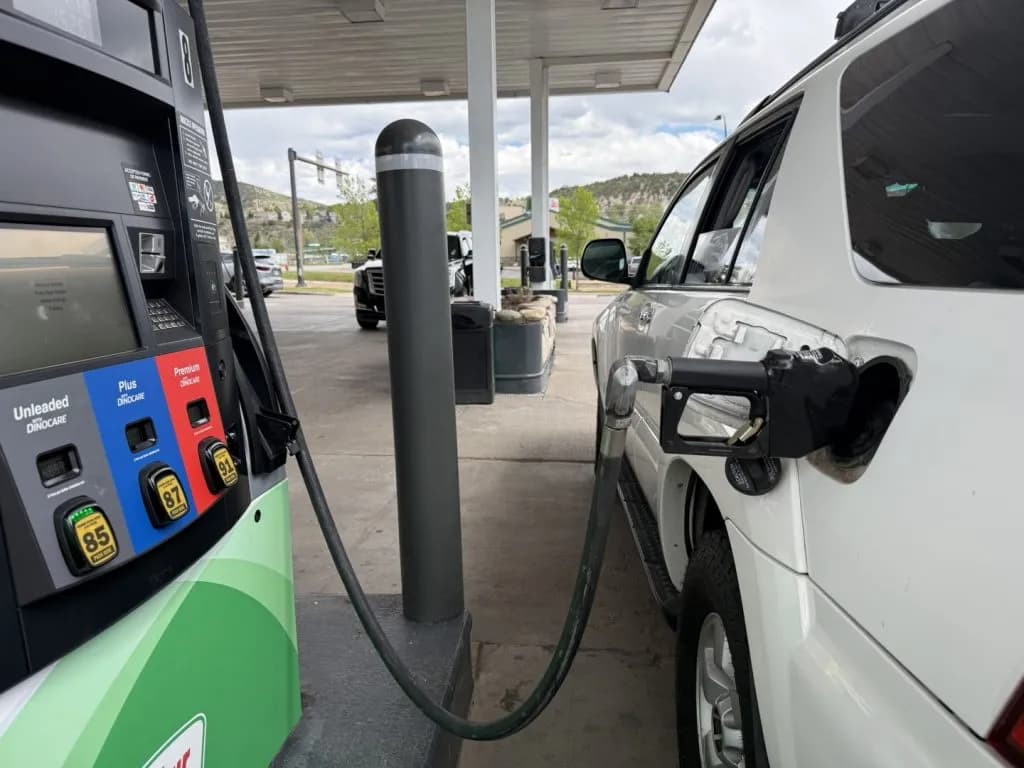
Aspen —A $4.15 average. That’s what you’re paying for a gallon of regular unleaded in Colorado right now, down 19 cents from last week. It’s a relief, sure. But if you’re driving up the valley or cruising along I-70, that drop feels less like a victory and more like a pause in a game that’s been rigged against your wallet for two years.
The Western Slope has been lagging behind the rest of the state. While Denver and the Front Range saw prices dip, locals here watched the pump tick upward for months. We hit multi-year highs in May. Patrick De Haan, GasBuddy’s vice president of petroleum analysis, was watching closely. He predicted Colorado was on track to shatter its own $5.02 record set in June 2022. He thought we’d break $5.00. He was right, but the new record never fully materialized. Instead, we’re stuck at $4.99, hovering just below the peak.
Let’s do the math on why this matters. The national average for a gallon of regular gasoline fell 16 cents to $4.216 on June 8. Colorado is sitting at $4.15. We are barely below the national average. This isn’t because we’re getting a special deal. It’s because we’ve seen a more significant drop than our western neighbors. We fell faster. We fell harder. Now we’re just trying to stay level.
Skyler McKinley, the Colorado regional director for the American Automobile Association, says this escape from the high half of the price scale is partly due to “some slowdowns in production locally that we’ve now caught up to.” That’s bureaucratic speak for: the oil companies slowed down the tap, and now the shelves are full enough that they have to lower the price to move the product. It’s a local supply issue, not a global miracle.
The broader picture is about crude oil. It dipped below $100 per barrel in May. That’s the biggest monthly drop on record. U.S. crude oil inventories are around 3% below the five-year average for this time of year. But here’s the catch: gasoline demand has also decreased. People aren’t buying as much fuel. The market is correcting itself.
But don’t get too comfortable. McKinley points to the Strait of Hormuz. It’s the choke point for global oil shipping. If ships can’t pass through, prices spike. If they can, prices might drop. Right now, speculators and major oil tanker operators are betting on the latter. They’re hoping for a reopening. But the U.S.-Israel war with Iran adds a layer of uncertainty that no one can fully predict.
The news release says oil prices will likely not decrease dramatically as summer travel peaks. That’s the key. Summer is here. Families are hitting the road. Demand is going up. If the Strait stays open, you might see a slow, steady decline. If it closes, or if the war escalates, you’re looking at a spike back to those $5 highs.
The bottom line is this: the relief you’re seeing at the pump is fragile. It’s built on local production slowdowns and global speculation. It’s not a structural change. It’s a temporary pause. You’re saving a few cents a gallon today. But if the Strait of Hormuz closes, those savings vanish. And when they do, they’ll vanish fast.
Keep up with Aspen
The day's Western Slope news, one email each morning. Free.


The digital counter on the side of the bus in Carbondale ticks over, but the seats inside are half-empty

Eagle County Launches Aging Well Roadmap To Keep Seniors Housed