Grand Mesa Community Prepares for NASA Artemis II Mission
The Grand Mesa community is preparing to witness the historic NASA Artemis II mission, marking the first human return to the moon since 1972.
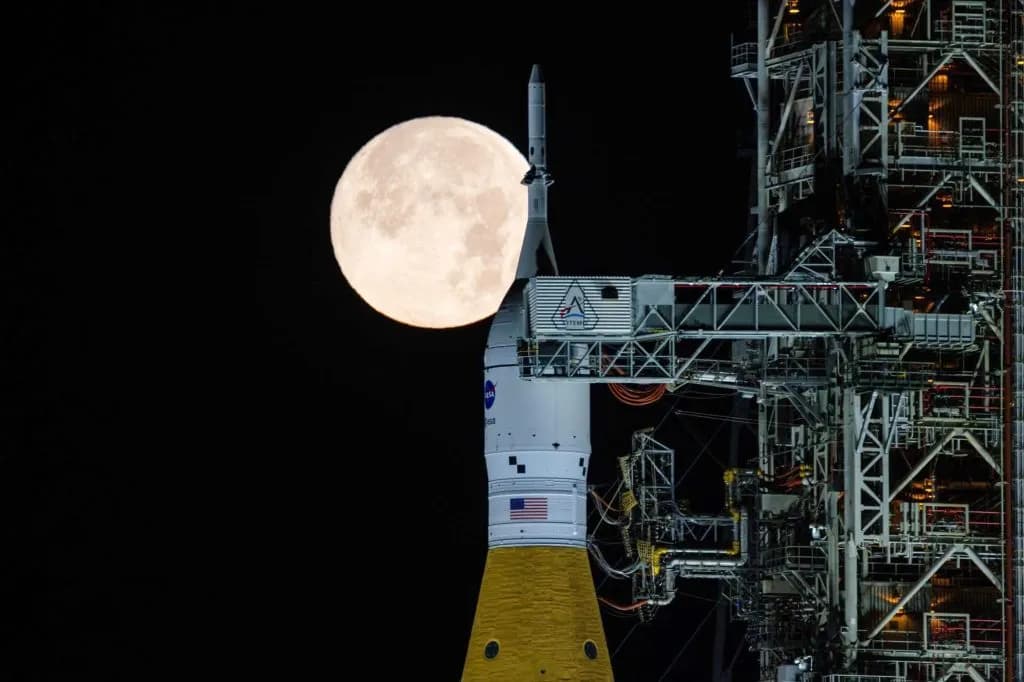
Vail —Standing at the edge of the Grand Mesa, the sky stretches out in a vast expanse, a reminder of the infinite possibilities that lie beyond our planet. As the community prepares to witness a historic event, the anticipation is palpable. NASA's Artemis II mission is set to launch, marking the first time humans will return to the moon since 1972.
The mission will send four astronauts - Reid Wiseman, Victor Glover, Christina Koch, and Jeremy Hansen - on a lunar fly-around, a journey that will take them several thousand miles beyond the moon and back. This crew is diverse and international, with Koch holding the record for the longest single spaceflight by a woman, and Glover being the first Black astronaut to live and work aboard the International Space Station. Hansen, a former fighter pilot, is the lone space rookie, while Wiseman, a retired Navy captain, will lead the crew.
The Space Launch System rocket, standing 322 feet tall, will carry the astronauts in the Orion capsule. This rocket is more powerful than the Saturn V rocket used in the Apollo program, thanks to a pair of strap-on boosters. However, the mission has faced setbacks, including hydrogen leaks that grounded the first SLS rocket test and repeated issues during a February fueling practice run.
As the Artemis II mission prepares to launch, locals are eager to witness this historic event, which promises to pave the way for future moonshots. The mission's success will depend on the crew's ability to navigate the lunar fly-around, using a free-return trajectory that relies on the moon and Earth's gravity to minimize fuel consumption.
Make no mistake, this mission is a significant step towards settling the moon, with NASA promising more boot prints in the gray lunar dust. The Artemis II crew will spend 25 hours circling Earth in a high, lopsided orbit, before hurtling towards the moon. They will use the separated upper stage as a target, practicing docking maneuvers for future missions.
The short version is that this mission is a crucial step towards a new era of space exploration. As people look up at the night sky, they are reminded of the infinite possibilities that lie beyond our planet. The community is worth watching, as they come together to witness this historic event.
Read that again - the last time humans visited the moon was in 1972. The Artemis II mission is a significant step forward, and folks around here are ready to play their part. As the launch date approaches, the anticipation builds, and the community is eager to see what the future holds.
The Mission's Impact on the Region
The Artemis II mission will have a significant impact on the local community, with residents eager to witness the launch and follow the crew's journey. The mission's success will depend on the crew's ability to navigate the challenges of space travel, and people will be watching with bated breath.
As the mission progresses, the area will be affected in various ways. The launch will attract tourists and space enthusiasts, boosting the local economy. The mission's success will also inspire a new generation of scientists and engineers, potentially leading to new opportunities and investments in the region.
However, there are also concerns about the mission's environmental impact. The Space Launch System rocket's fuel consumption and potential waste will need to be carefully managed to minimize harm to the environment. The community will be watching to see how NASA addresses these concerns and ensures a sustainable future for space exploration.
The Artemis II mission is a significant step forward, and the community is ready to play its part. As the launch date approaches, the anticipation builds, and people are eager to see what the future holds. This will cost taxpayers - the exact figure is not yet clear, but it's likely to be substantial.
In Delta County, where the Grand Mesa offers a glimpse into the vastness of space, the community is abuzz with excitement. The local economy is expected to benefit from the influx of tourists and space enthusiasts, but the long-term effects of this investment will be closely tied to the mission's outcome, with potential benefits and drawbacks that will become clearer over time. The county's road maintenance budget - $1.5 million - is a fraction of what this mission will cost, but the potential benefits are undeniable.
As the Artemis II mission prepares to launch, the community is holding its breath. The success of this mission will pave the way for future space exploration, and people are eager to be a part of it. The question on everyone's mind - what's next?
Keep up with Vail
The day's Western Slope news, one email each morning. Free.